
Buying secondhand shoes, handbags, and clothing can open up a much larger fashion archive than shopping new. A discontinued pair of designer heels, an older-season handbag, or a sold-out dress may still be circulating years after it disappeared from stores, often at a lower price than its original retail cost.
The challenge is knowing where to look and what you are actually buying. Resale sites operate differently: some receive and inspect merchandise before selling it, some manage the consignment process, and peer-to-peer marketplaces leave more of the listing and transaction process to individual users. Those differences can affect authentication, returns, fees, shipping, and how much information you have about an item’s condition.
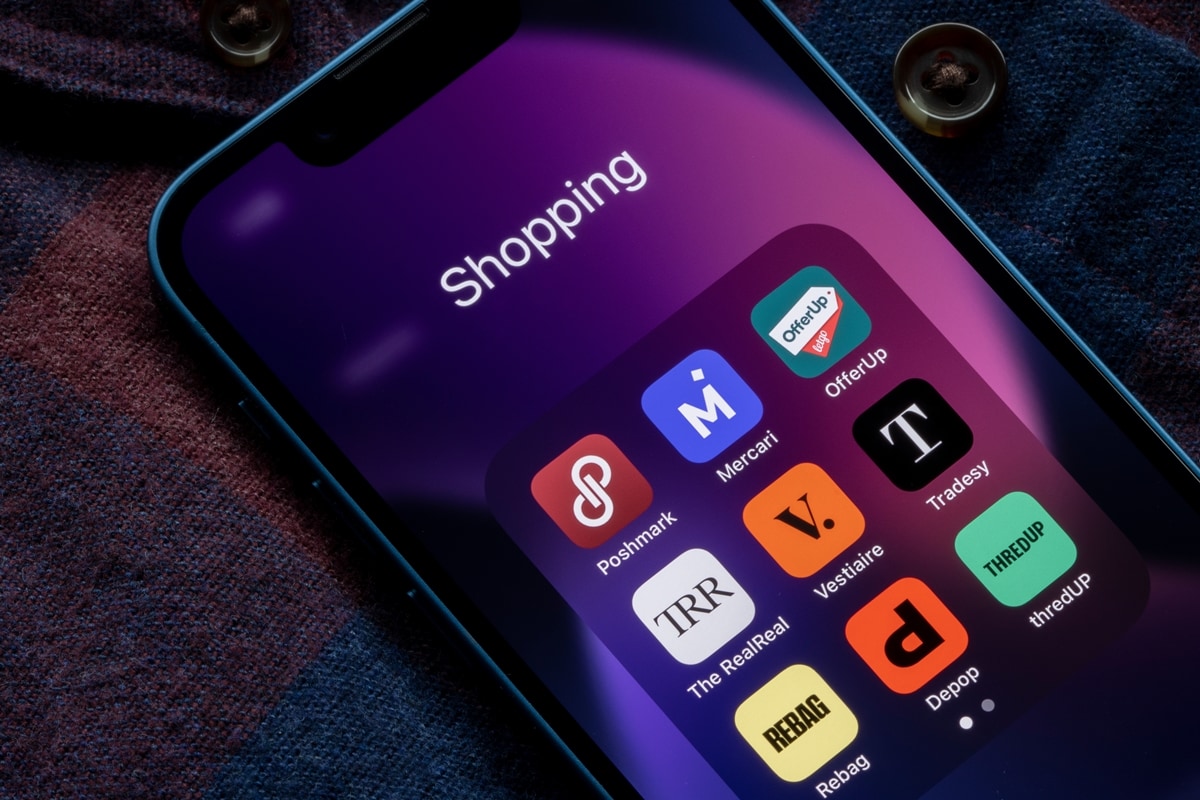 Resale apps including Poshmark, Mercari, The RealReal, Vestiaire Collective, thredUP, Rebag, and Depop bring secondhand clothing, shoes, bags, and accessories into one increasingly crowded market; Tradesy, pictured here, later became part of Vestiaire Collective (Credit: Tada Images / Shutterstock)
Shoes deserve particular scrutiny when buying secondhand. Look closely at outsole and heel wear, insoles, toe creasing, stretched straps, missing embellishments, and previous repairs. Fit can also be harder to judge online because different shoe toe shapes can change how much room your toes have, even when the marked size is familiar.
For designer shoes and bags, authentication policies vary by marketplace, so check what a platform actually verifies rather than assuming every listing has been authenticated. Below, we compare several established resale platforms, what each is particularly useful for, and what shoppers should consider before buying or selling.
🛍️ Jump to a Resale Platform:
- 1. The RealReal — Luxury Consignment
- 2. Rebag — Designer Bags & Accessories
- 3. thredUP — Everyday Secondhand Fashion
- 4. Vestiaire Collective — Global Luxury Resale
- 5. Fashionphile — Pre-Owned Luxury
- 6. Poshmark — Peer-to-Peer Fashion
- 7. eBay — Vintage & Collectible Shoes
- 8. Mercari — Everyday & Designer Finds
How to Buy Pre-Owned Shoes, Bags, and Clothing More Safely
1. Check What “Authenticated” Actually Means
Authentication can mean different things on different resale sites. Some eligible purchases are physically inspected before reaching the buyer, while other services authenticate only particular brands, categories, price levels, or items submitted for review.
For an expensive designer purchase, read the marketplace’s current authentication policy and examine the listing photographs carefully. Packaging, labels, logos, hardware, stitching, materials, receipts, serial numbers, date codes, and other identifying details can all provide useful clues, although none should be treated as proof on its own.
That is especially important with frequently counterfeited footwear. Our guide to spotting fake Gucci shoes explains details worth examining when considering a vintage or pre-owned pair.
2. Use Measurements Instead of Relying Only on the Size Tag
Sizing varies by brand, country, style, and production era. For clothing, compare measurements such as the bust, waist, rise, inseam, and garment length with something you already own.
For shoes, confirm whether the seller uses US, UK, European, or another sizing system, and look for comments about fit. Interior measurements can help when buying an unfamiliar or discontinued style, but consider them alongside the shape and construction.
3. Examine Condition Closely—Especially With Shoes
A condition label such as “excellent” can be a useful starting point, but photographs and a detailed description tell you more. With shoes, inspect the outsoles, heel tips, insoles, toe boxes, straps, hardware, lining, and where the upper meets the sole.
With heels, also look for excessive wear or damage around the heel itself. Our guide to different heel types can help you identify the construction and silhouette you are looking at.
Leather that has stretched to another wearer’s foot, worn-down heel tips, peeling interiors, sole separation, or substantial repairs can make an apparently inexpensive pair less appealing.
4. Compare the Final Price, Not Just the Listing Price
The advertised price isn’t necessarily what you will ultimately pay. Before checking out, look for shipping charges, taxes, import duties, authentication charges, buyer fees, and potential return costs.
This matters particularly when comparing the same style across several marketplaces. A slightly more expensive listing can sometimes be the better purchase if its condition, authentication process, return policy, or total delivered cost is better.
5. Read the Return Policy Before Making an Offer
Return rights differ between marketplaces and sometimes between items on the same platform. An accepted offer or purchase from an individual seller may also carry different conditions from merchandise sold directly by a resale company.
Check the current policy before negotiating or buying, particularly with shoes, where a pair can be the correct labeled size and still not fit comfortably.
1. The RealReal: Luxury Consignment for Designer Shoes, Bags, and Fashion
The RealReal is one of the better-known names in luxury consignment, with pre-owned merchandise spanning designer clothing, handbags, shoes, jewelry, watches, and accessories. For shoe shoppers, the broad inventory can be especially useful when searching for older colorways or styles no longer available at conventional retailers.
Unlike a basic peer-to-peer listing service, The RealReal operates a consignment model in which the company handles the merchandise. That distinction matters when comparing it with platforms where an individual seller photographs, describes, and ships the item.
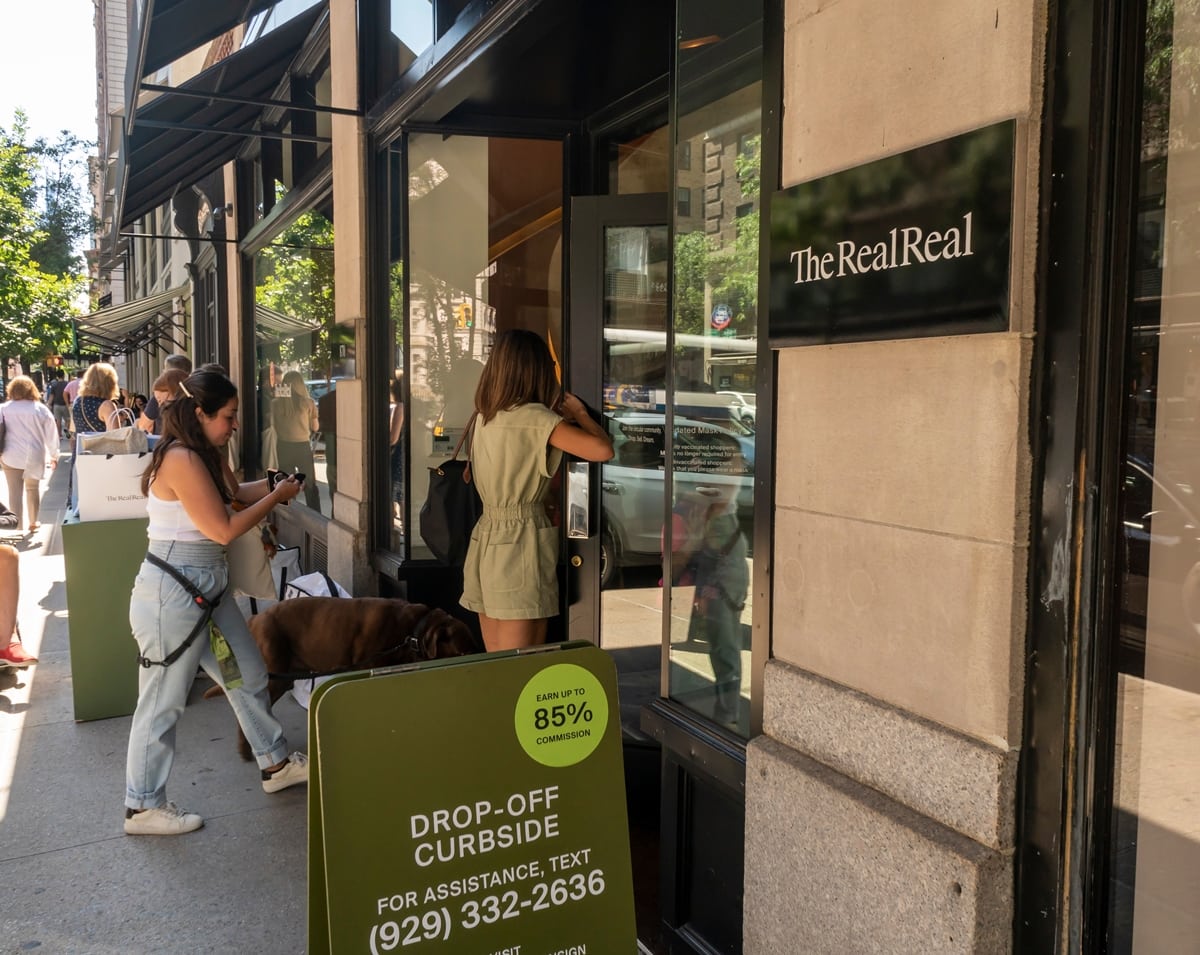 Shoppers visit The RealReal, which sells pre-owned designer fashion, including luxury shoes, handbags, clothing, jewelry, and accessories (Credit: Rblfmr / Shutterstock)
The large selection is both an advantage and a reason to shop carefully. Compare condition notes and photographs between listings rather than assuming two examples of the same shoe or handbag are equivalent. A lightly worn pair with its original box and dust bag may justify a different price from one with substantial sole wear or missing accessories.
The RealReal also offers a First Look membership that gives you early access to new arrivals. Membership prices and benefits can change, so check the current terms before subscribing.
For designer footwear in particular, it is worth doing your own homework in addition to considering a marketplace’s authentication process. Christian Louboutin is a good example: our guide to identifying fake Christian Louboutin shoes covers details such as the red soles, insoles, logos, stitching, heel construction, boxes, and dust bags.
2. Rebag: Luxury Resale for Designer Bags and Accessories
Rebag began as Rebagg before shortening its name, and it remains most strongly associated with luxury handbags and accessories. Shoppers can find pre-owned pieces from labels such as Chanel, Hermès, Louis Vuitton, Gucci, and Celine, while the company’s inventory has expanded beyond its original bag-only focus.
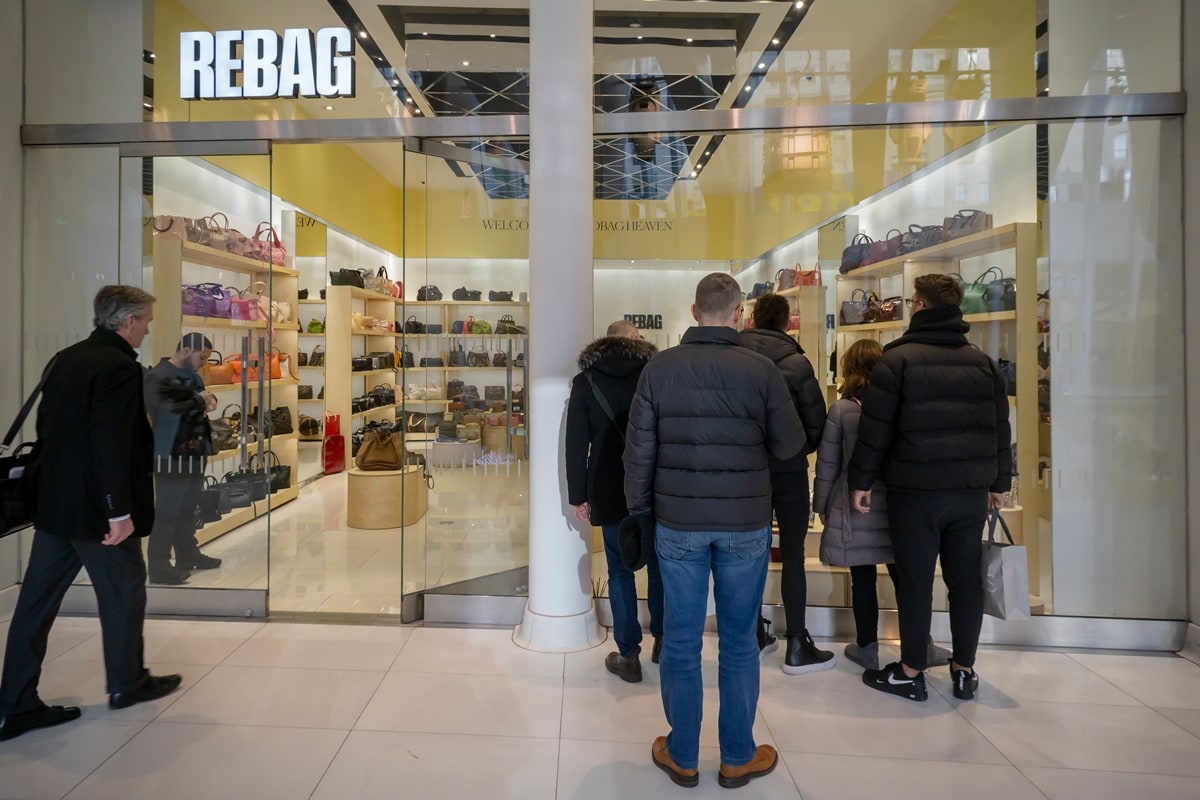 Customers browse designer handbags at Rebag, a luxury resale specialist known primarily for pre-owned bags and accessories from major fashion houses (Credit: Rblfmr / Shutterstock)
Its selling process differs from a conventional peer-to-peer marketplace. Depending on the selling method available for an item, Rebag can evaluate merchandise before it is offered for resale rather than requiring the owner to manage an individual listing and negotiate directly with a buyer.
For shoppers, condition should still factor into the decision. Pay attention to corner wear, handles, straps, hardware, interior staining, alterations, repairs, and exactly what accessories accompany a bag.
Counterfeit bags are also a longstanding issue across the secondary market. Our guide to spotting fake designer handbags explains key construction, hardware, logo, material, and seller details to check before buying.
3. thredUP: Secondhand Shoes and Fashion for Everyday Shopping
Not every secondhand shopper is searching for Chanel or Hermès. thredUP covers a much broader range of women’s and children’s clothing, shoes, handbags, and accessories, making it useful for everyday wardrobe shopping as well as occasional designer finds.
That wider assortment sets it apart from resale businesses focused primarily on high-value luxury goods. Instead of searching only for an investment handbag or rare designer shoe, shoppers can browse familiar mall, contemporary, athletic, and premium labels alongside more expensive brands.
 thredUP focuses on online resale across a broad range of secondhand clothing, shoes, handbags, and accessories, spanning everyday labels and designer brands (Credit: T. Schneider / Shutterstock)
For buyers, the same basic secondhand rules apply: read the condition description, enlarge the photographs, confirm sizing, and compare the final price with both other resale listings and the cost of buying an equivalent item new.
For sellers, thredUP’s Clean Out options, acceptance criteria, service charges, and payout structure can change. Check its current terms before sending clothing or shoes rather than relying on old payout percentages quoted in resale guides.
Not every wearable pair is worth the time or expense of reselling. If shoes are clean, structurally sound, and still comfortable enough for someone else to wear, donation may be the better option. Our guide to where to donate used shoes explains which types of footwear different charities and organizations accept, including everyday shoes, athletic footwear, work-appropriate styles, and formal shoes.
If you are using secondhand shopping to build a smaller wardrobe rather than hunt for one particular designer piece, our guide to versatile shoes that work with a wide range of outfits can help narrow the styles worth searching for.
4. Vestiaire Collective: Global Resale for Luxury Shoes, Bags, and Fashion
Vestiaire Collective specializes in pre-owned designer and luxury fashion, with listings spanning clothing, shoes, handbags, jewelry, watches, and accessories from sellers worldwide.
That international reach can be particularly useful when searching for an older designer shoe or handbag that rarely appears in your domestic resale market. It also matters to check where an item is located, the shipping process, possible import costs, and the authentication option attached to the purchase.
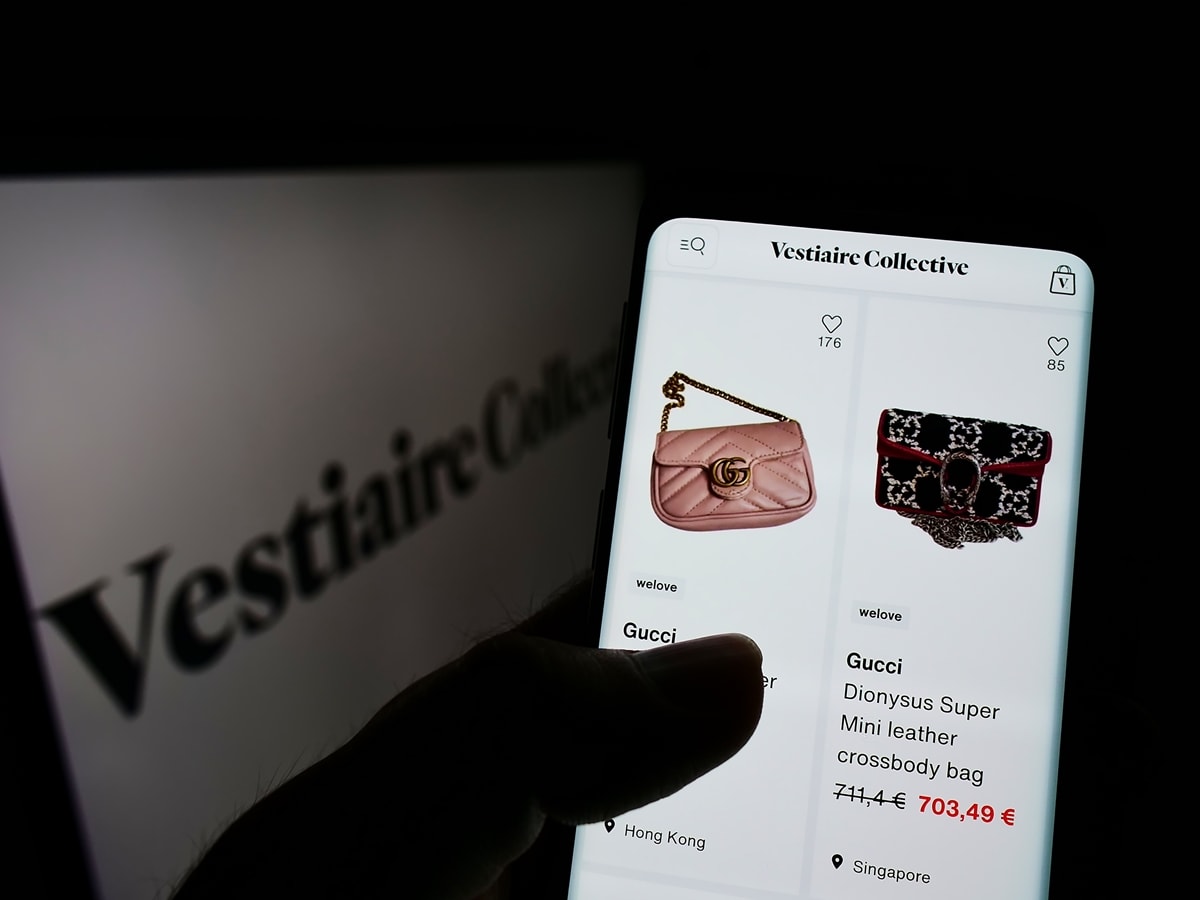 Pre-owned Gucci handbags displayed on Vestiaire Collective, a global resale marketplace specializing in designer and luxury fashion, shoes, bags, jewelry, and accessories (Credit: T. Schneider / Shutterstock)
Sellers generally create their own listings and set their asking prices, while Vestiaire provides marketplace services around the transaction. Because selling fees, processing charges, authentication options, and other terms can vary by market and change over time, check the current fee schedule rather than relying on percentages published in older guides.
What happened to Tradesy? Vestiaire Collective acquired U.S. resale marketplace Tradesy in 2022. Tradesy stopped processing new orders in December of that year and remained accessible into early 2023 while it transitioned accounts and credits. It no longer operates as a separate resale marketplace, which is why readers may still see the Tradesy name in older articles and photographs even though Vestiaire Collective is now the relevant active platform.
The merger also makes the image at the beginning of this article a useful snapshot of how quickly the resale industry changes: platforms can merge, alter their fee structures, expand their authentication services, or disappear entirely.
5. Fashionphile: Pre-Owned Luxury Bags and Accessories
Fashionphile is another option for shoppers focused on higher-end designer goods. Its inventory centers heavily on luxury handbags and accessories, making it particularly useful when comparing multiple examples of an established bag style from houses such as Chanel, Hermès, Louis Vuitton, and Gucci.
Fashionphile receives and evaluates merchandise before selling it, rather than simply serving as a meeting place for buyers and sellers. It says every piece it sells is authenticated and accompanied by a digital certificate of authenticity.
Condition remains important even when authenticity is addressed. Check the individual listing for scratches, corner wear, discoloration, hardware wear, interior marks, repairs, alterations, and any included original accessories.
Fashionphile’s connection to collectible footwear extends beyond resale. In 2026, the company followed its Assouline collaboration The Book of Iconic Bags with The Book of Iconic Shoes, a coffee-table book devoted to 25 influential shoe designs, including Christian Louboutin’s red-soled So Kate pumps, Manolo Blahnik’s Hangisi, and Maison Margiela’s Tabi.
 Christian Louboutin’s signature red soles frame Fashionphile and Assouline’s The Book of Iconic Shoes, released in 2026 as a celebration of 25 enduring footwear designs, alongside a silver Chanel bag
For readers researching a specific brand, YNS also has authentication guides that can provide another reference point. Our guide to spotting fake Coach bags and accessories, for example, examines logos, construction, hardware, stitching, and other details associated with genuine Coach products.
6. Poshmark: Peer-to-Peer Resale for Shoes, Clothing, and Bags
Poshmark is much broader than a luxury consignment store. Individual sellers list everything from everyday clothing and shoes to handbags, accessories, and designer fashion, so the experience feels more like browsing thousands of personal closets than shopping a tightly edited luxury inventory.
That variety can lead to worthwhile finds, especially when searching for a specific shoe model, discontinued color, or older collection. It also puts more responsibility on the shopper to evaluate each listing.
Check seller photographs rather than relying only on stock images, read the description carefully, and ask questions when wear or sizing is unclear. If the seller accepts offers, compare comparable listings before deciding what the item is worth to you rather than assuming a fixed percentage is always an appropriate discount.
Poshmark also provides authentication for qualifying luxury purchases, but eligibility and terms can change. Check whether the individual listing is covered before treating authentication as part of the purchase.
7. eBay: Finding Discontinued, Vintage, and Collectible Shoes
eBay’s enormous inventory makes it particularly useful when the goal is not simply “designer shoes,” but a specific model, size, colorway, or discontinued release.
That matters for shoe collectors. Older Christian Louboutin pumps, archival designer platforms, limited-edition sneakers, and seasonal footwear can remain in circulation long after the original retailer has sold out.
YNS frequently encounters this while documenting celebrity footwear. Once a recognizable style is discontinued, readers searching for the same pair may have little choice but to explore the secondary market.
For example, older designer heels can appear in several different silhouettes, so it helps to know the terminology before searching. Our overview of the major types of women’s shoes covers pumps, sandals, boots, flats, sneakers, and other common categories.
Because individual sellers create the listings, review the photos, condition description, sizing, seller history, and identifying details before buying. Our guide to buying shoes on eBay safely goes deeper into evaluating listings and photographs when hunting for hard-to-find footwear.
eBay’s Authenticity Guarantee applies only to eligible purchases in supported categories and markets. Look for the applicable authentication information on the individual listing rather than assuming every designer product receives the same inspection.
8. Mercari: Secondhand Shoes, Fashion, and Designer Finds
Mercari is another peer-to-peer marketplace where individual sellers list clothing, shoes, handbags, accessories, and goods well beyond fashion. Its broad inventory makes it useful for inexpensive everyday purchases and occasional designer finds.
As with other seller-driven marketplaces, listing quality can vary considerably. Clear original photographs, a detailed condition description, seller history, and responsive answers to questions matter more when the platform itself doesn’t provide the product description.
Mercari also offers authentication services for eligible designer items, but shoppers should check exactly what the service covers and whether a particular listing qualifies.
For lower-priced shoes, authentication may be less important than condition and fit. For an expensive designer pair, all three deserve attention.
How to Choose the Right Resale Site for What You’re Buying
No single resale site works equally well for every purchase. The better choice depends on what you are trying to find and how much involvement you want the marketplace to have in authentication, inspection, shipping, and returns.
A shopper searching for a luxury handbag may prefer a specialist that receives and evaluates merchandise before resale. Someone hunting for a discontinued pair of heels may have better luck searching a large peer-to-peer marketplace, while a shopper building an inexpensive secondhand wardrobe may care more about selection and combined value than luxury authentication.
Whatever platform you use, treat the individual item—not simply the marketplace—as the purchase. Compare condition, photographs, measurements, seller information, authentication coverage, return terms, and the final delivered price before committing.
For more ways to shop footwear without paying full retail, see our guide to the best websites for discounted shoes. Readers comparing broader fashion retailers can also explore our TJ Maxx vs. Marshalls comparison and guide to affordable online clothing stores.