
Spotting a fake designer handbag isn’t always as simple as checking the stitching or looking for a misspelled logo. Counterfeiters can reproduce convincing leather textures, metal hardware, packaging, and identification markings, making some imitation bags hard to spot in photos alone.
Whether you’re considering a pre-owned Louis Vuitton Neverfull, Chanel Classic Flap, Hermès Birkin, or another luxury handbag, the most useful starting point is identifying the exact model and its production period. Leather, lining, stitching, hardware, and interior markings can reveal inconsistencies, but the seller’s reputation, authentication process, and return policy matter just as much.
 Luxury boutiques such as Louis Vuitton and Gucci offer a direct way to purchase authentic designer handbags, avoiding the uncertainty that can accompany third-party resale listings (Credit: Ehrlif / Shutterstock)
👜 Before Buying a Pre-Owned Designer Bag:
- Identify the exact model: Compare its dimensions, materials, hardware, and interior details with documented examples from the same production period.
- Request detailed photographs: Examine the logos, stitching, interior, hardware engravings, corners, and identification markings.
- Check the seller: Review authentication procedures, buyer protection, return terms, and authenticity-dispute policies.
- Don’t rely on accessories: Receipts, authenticity cards, boxes, dust bags, and serial numbers can be copied or separated from the original bag.
- Consider professional verification: For expensive or uncertain purchases, use an experienced authenticator familiar with the particular brand and model.
🔎 Jump to an Authentication Check:
- Designer Bags Commonly Counterfeited
- 1. Price, Seller & Provenance
- 2. Hardware, Zippers & Logos
- 3. Stitching & Construction
- 4. Leather, Canvas & Materials
- 5. Packaging, Serial Codes & Chips
- Why Superfakes Are Harder to Identify
- AI & Professional Authentication
- Buying Pre-Owned Bags Safely
- Designer Handbags on Celebrities
Designer Handbags Commonly Targeted by Counterfeiters
Counterfeiters frequently reproduce recognizable luxury handbags, especially established designs with strong resale demand. Examples include the Louis Vuitton Neverfull and Speedy, Chanel Classic Flap and Boy Bag, Hermès Birkin and Kelly, Gucci Marmont and Dionysus, Dior Saddle and Book Tote, Prada Galleria, and Saint Laurent Sac de Jour.
Other familiar silhouettes include the Fendi Baguette, Céline Luggage Tote, Balenciaga City Bag, Saint Laurent Niki, Givenchy Antigona, and Michael Kors Selma.
Which details to check depends on the handbag. Our Dior handbag guide examines styles such as the Lady Dior, Saddle, and Book Tote, while our Fendi authentication guide explores the Baguette, Peekaboo, and the brand’s changing identification methods. For quieter designs, our Celine handbag guide covers the Luggage Tote, Triomphe, and other recognizable silhouettes. You can also explore Gucci’s signature handbag styles to better understand the designs behind its familiar branding.
Popularity alone doesn’t show how often a model is counterfeited, and counterfeit activity changes over time. The important point for buyers is that widely recognizable bags may attract imitation sellers, making model-specific verification worthwhile.
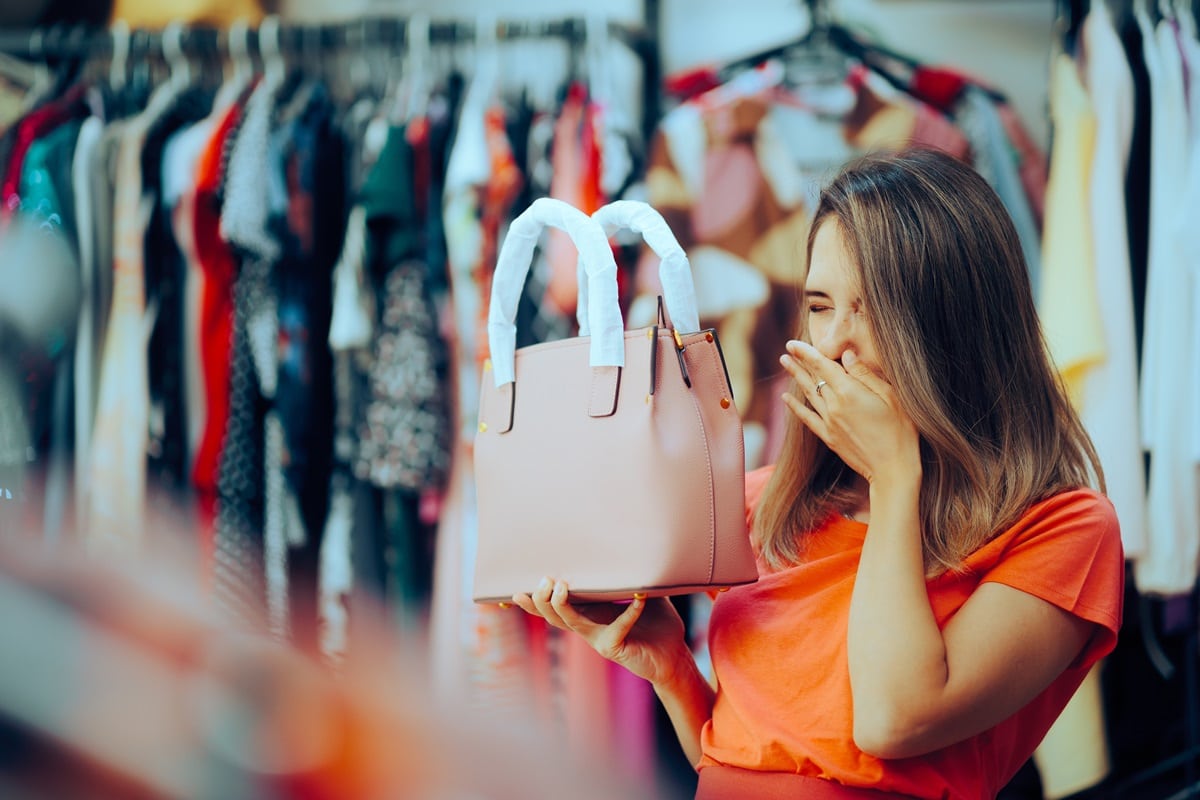 When shopping for a designer handbag, examine the leather, stitching, handles, hardware, and interior details—but remember that appearance alone cannot establish authenticity (Credit: Nicoleta Ionescu / Shutterstock)
1. Check the Price, Seller, and Bag’s Provenance
A price far below comparable listings can be a warning sign, particularly for highly sought-after models such as the Hermès Birkin or Chanel Classic Flap. However, no universal discount threshold proves a bag is counterfeit.
Prices vary with condition, age, rarity, demand, repairs, missing accessories, and the seller’s circumstances. An unusually low price warrants more questions, but an expensive listing can also be fake.
Start by researching the model’s typical resale range, then examine the seller’s history and the listing itself. Look for clear photographs of the actual bag, an accurate condition description, and a documented authentication or dispute process.
For a broader comparison of consignment services and marketplaces, see our guide to the best resale sites for designer shoes and handbags.
2. Examine Hardware, Zippers, Logos, and Engravings
Hardware is a useful inspection point because the finish, weight, attachment, and engraving of metal components can reveal differences between a handbag and a documented example of the same design.
Inspect zipper pulls, clasps, buckles, locks, metal feet, and logo plaques. Look for rough edges, inconsistent plating, poorly aligned engravings, or components that do not match the model’s known construction.
However, not all authentic designer handbags use matching hardware finishes throughout. Mixed metals, decorative variations, and different production runs can be intentional.
Likewise, a zipper that moves smoothly or a logo that looks correct does not establish authenticity on its own.
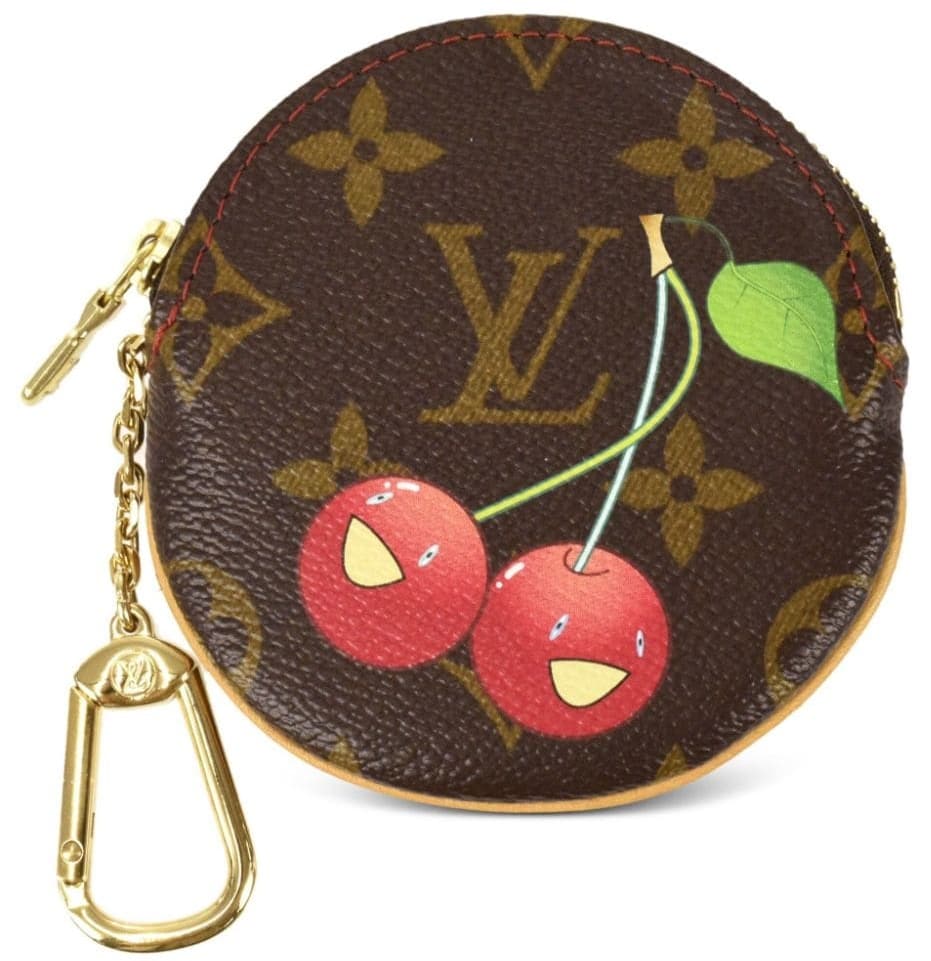 Inspect the finish, engravings, attachment, and operation of handbag hardware, comparing each detail with documented examples of the same model and production period
For example, a Prada Galleria handbag and a nylon Prada shoulder bag may use different types of hardware and construction. Our Prada handbag authentication guide explains how to assess logo typography, triangle plaques, zippers, interior branding, and other model-specific details together.
3. Inspect Stitching, Seams, and Overall Construction
Stitching can reveal construction issues, especially when loose threads, irregular seam placement, uneven tension, or poorly finished edges appear alongside other inconsistencies.
Look at how the handles attach to the body, how the lining fits inside the bag, and whether the seams follow the design’s shape. Examine corners and areas around pockets, straps, and zippers, where construction differences may be more noticeable.
But don’t assume every authentic bag has perfectly identical stitches. Luxury houses use different materials, construction methods, and manufacturing techniques, while vintage handbags may show wear or repairs.
Sophisticated counterfeits can also reproduce neat, even stitching.
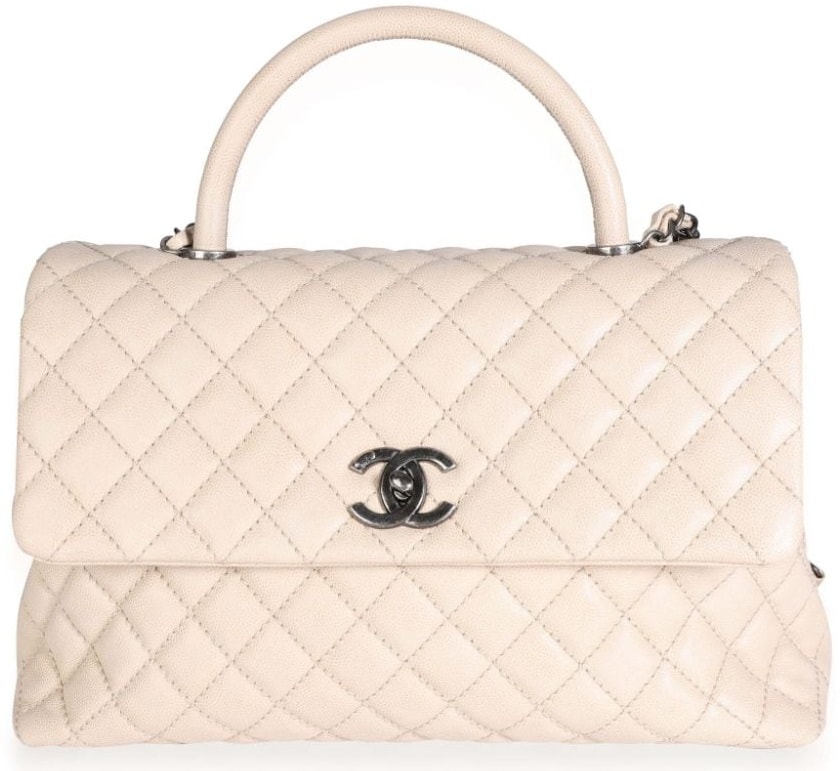 Chanel’s diamond quilting provides useful points of comparison, including stitch spacing, alignment, and panel construction, but no single stitching detail proves authenticity
The most reliable comparison uses photographs or authenticated examples of the exact model. A Chanel quilted flap bag, for instance, should not be assessed using construction rules developed for an unrelated tote or wallet.
Watch: How to Spot a Fake Designer Bag in 30 Seconds
In an April 27, 2026 segment on ITV’s This Morning, pawnbroker Dan Hatfield compares genuine and counterfeit designer handbags, including two Chanel bags that appear similar at first glance.
He examines the sharpness of interior engravings, differences in metal hardware, stitch spacing, lining quality, and packaging. The demonstration shows how small inconsistencies become more noticeable when genuine and counterfeit items are examined side by side.
What to look for in the demonstration:
- Interior labels and engravings: Hatfield compares the clarity and finish of branding inside the Chanel bags.
- Stitching: He counts stitches along the diamond quilting and examines differences in their spacing and precision.
- Hardware: The comparison highlights variations in metal weight, plating, and surface finish.
- Lining and packaging: He examines interior construction, labels, dust bags, and other finishing details.
- Price: A substantial difference from the expected market value is treated as a reason to investigate further.
Important: The stitch counts and other differences shown apply to the particular bags in the demonstration. They are not universal authentication rules for every Chanel model or production year. Smell, packaging, and apparent hardware quality can also be misleading, especially with sophisticated counterfeits.
4. Compare Leather, Canvas, Lining, and Edge Finishing
Leather quality matters, but it is not a definitive authenticity test. Some counterfeits use genuine leather, while authentic designer handbags may incorporate coated canvas, nylon, suede, textiles, or synthetic components.
A bag’s material should match its documented model and production period.
Look at leather grain, surface finish, flexibility, edge paint, lining, and how the material behaves around seams and corners. Uneven glazing, peeling finishes, or unusual stiffness may raise questions, particularly when other details also appear inconsistent.
However, age, storage, cleaning, and repairs can affect the condition of genuine bags.
The smell of leather is especially unreliable. Adhesives, dyes, storage conditions, fragrances, and cleaning products can all influence a handbag’s odor.
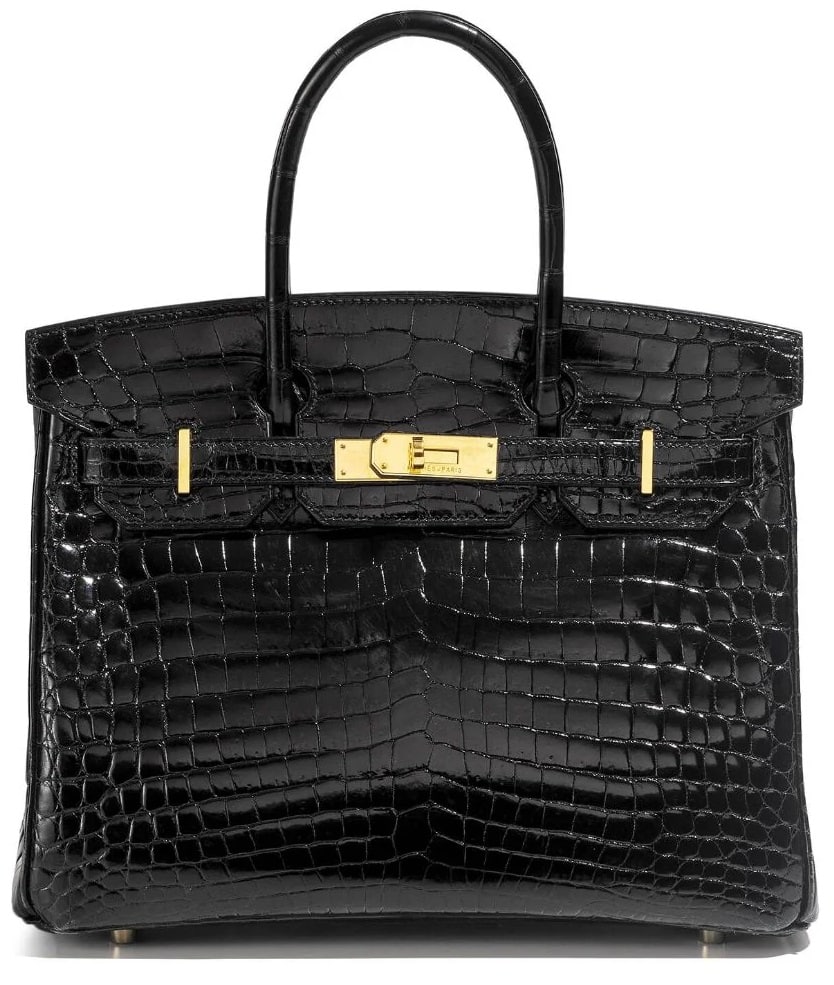 The Hermès Birkin’s structured shape, rolled handles, and distinctive closure provide recognizable design references. Exotic-leather versions require particular attention to materials, construction, and provenance
Assess a Hermès Birkin made with exotic leather differently from a smooth-leather Birkin or a coated-canvas Louis Vuitton Speedy. Similar principles apply to Prada’s cross-hatched Saffiano leather and nylon designs.
The goal isn’t to decide whether a bag simply feels expensive, but whether its materials and construction match the specific design it claims to be.
5. Check Packaging, Serial Numbers, Date Codes, and Electronic Tags
Dust bags, boxes, receipts, care booklets, authenticity cards, and branded packaging can provide context about a handbag’s history, but none independently establishes authenticity.
Counterfeiters can reproduce these accessories, and genuine pre-owned handbags may have lost their original packaging over time.
Compare logos, typography, printed information, and materials where relevant, but focus primarily on the handbag itself.
Identification methods also change between brands and production periods.
- Louis Vuitton: Older bags commonly feature stamped date codes, while many newer pieces use embedded identification technology following the brand’s transition away from traditional date codes beginning in 2021.
- Chanel: The brand began replacing serial-number stickers and authenticity cards with interior metal identification plates around 2021. Older and newer handbags therefore require different checks.
- Prada: Interior factory or quality-assurance tags can provide useful information on some bags, while certain newer products incorporate NFC technology. Neither feature should be treated as a universal requirement.
- Michael Kors: Interior manufacturing labels, style numbers, and branding can vary by collection and production period.
Our Chanel authentication guide examines the brand’s quilting, logos, interior markings, and identification changes. For Michael Kors, our bag authentication guide explains how style numbers and manufacturing tags fit into a broader inspection.
A serial number or electronic tag does not guarantee authenticity. Counterfeiters may copy visible markings or create electronic tags that direct shoppers to imitation websites.
If a QR code or NFC tag opens a webpage, verify the actual domain carefully rather than assuming that a branded-looking page is legitimate.
Why Sophisticated Counterfeit Handbags Can Be Difficult to Identify
Some counterfeit handbags, often called “superfakes,” reproduce luxury designs with convincing materials, stitching, hardware, and interior details.
This makes visual authentication harder, especially when shoppers have only a few listing photos.
Instead of relying on a single characteristic, examine the bag as a complete product. Its proportions, materials, logos, hardware, stitching, lining, identification markings, and provenance should all match the claimed model and production period.
Even then, a visual inspection has limitations. Genuine handbags may show manufacturing variations, aging, or repairs, while counterfeiters can reproduce details that were once considered reliable indicators.
For an expensive or uncertain purchase, professional authentication is a sensible additional step.
Can AI and Professional Authentication Identify Fake Designer Bags?
Luxury resale businesses and independent authentication services use different methods to evaluate handbags. Some rely on experienced specialists who inspect construction, materials, branding, and historical product details.
Others incorporate specialized imaging and artificial intelligence. Entrupy, for example, uses close-up imaging and machine-learning technology to compare material and construction details against its reference data.
These tools may help identify inconsistencies that are difficult to evaluate in ordinary photographs, but authentication services are not infallible.
Before paying for a service, check which brands and product categories it supports, whether it will examine the actual item, what documentation it provides, and what happens if you dispute the conclusion.
For high-value handbags, professional authentication works best alongside a reliable seller, clear transaction records, and meaningful buyer protection.
How to Buy Pre-Owned Designer Handbags More Safely
When buying secondhand, the sale circumstances can be as important as the handbag’s physical details.
Ask whether the seller has photographed the actual item rather than using stock images. Request additional photos if the listing doesn’t clearly show the interior, corners, hardware, and identification markings.
Pay attention to these warning signs:
- Unusually low prices: Compare the asking price with similar bags in comparable condition rather than relying on the original retail price alone.
- Incomplete photographs: Be cautious when a seller refuses to show important details or supplies inconsistent images.
- Unclear authentication claims: Check whether the bag was physically inspected, digitally reviewed, or merely listed under a marketplace’s general policies.
- Limited buyer protection: Review the return policy and procedures for reporting a counterfeit or receiving an item that differs from its description.
- Pressure to pay outside the platform: Avoid transactions that remove established payment protection or dispute procedures.
A reputable resale service may reduce some purchasing risks, but shoppers should still examine the bag’s condition and understand the limits of any authenticity guarantee.
Designer Handbag Details: Louis Vuitton, Chanel, Hermès, and Givenchy on Celebrities
Celebrity photographs can help readers recognize the silhouettes and design features of popular handbags. They serve as useful fashion references, but they cannot authenticate a separate bag offered for resale.
Kim Kardashian’s Black Hermès Birkin
 Kim Kardashian carries a black Hermès Birkin with gold-tone hardware. Its rolled handles, structured body, and belted closure are recognizable design features (Credit: WENN)
The Birkin’s distinctive construction includes two rolled handles, a flap closure, leather straps, and a central turn-lock mechanism. However, authentic examples vary in size, leather, hardware, and production details.
Gigi Hadid and Khloé Kardashian’s Structured Black Handbags
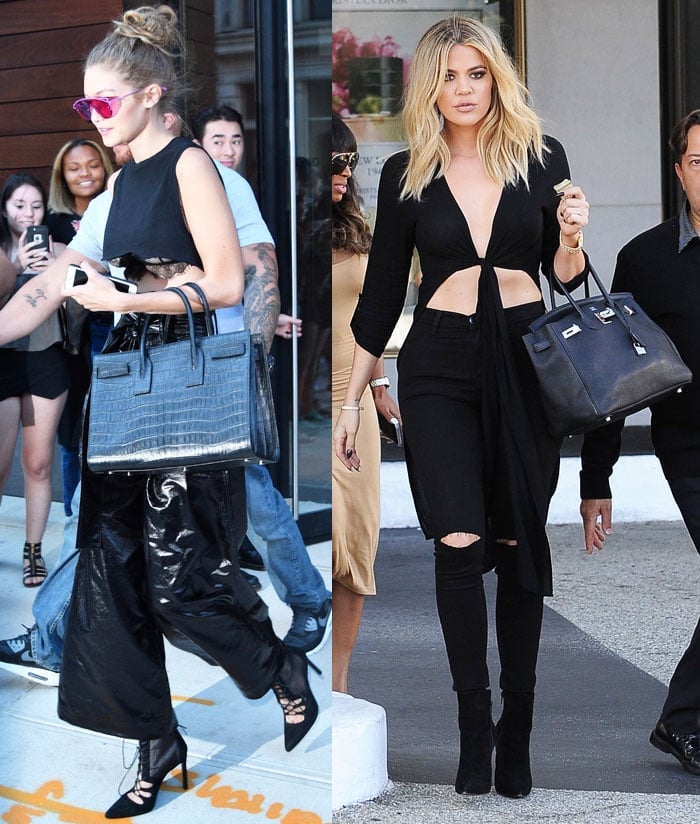 Gigi Hadid and Khloé Kardashian demonstrate two approaches to structured black handbags, from textured leather to the recognizable Birkin silhouette (Credit: WENN)
Even bags with similar shapes can differ substantially in their construction. Examine the correct model rather than assuming that all structured black totes share the same authentication features.
Kylie Jenner’s Printed and Embellished Handbags
 Kylie Jenner’s contrasting handbag choices show how prints, materials, charms, and decorative details can vary across designer collections (Credit: WENN)
Printed and embellished handbags require particular attention to collection-specific details. Compare pattern placement, hardware, lining, and decorative elements with documented examples of the same design.
Bella Hadid’s Black Givenchy Handbag
 Bella Hadid carries a black Givenchy handbag with a rounded silhouette, textured leather, and prominent zipper detailing (Credit: WENN)
Givenchy’s structured handbag designs show why silhouette and collection matter. The house’s Lucrezia bag, carried by Amanda Seyfried during Paris Fashion Week in 2013, features a recognizable duffel-style shape with top handles and a zippered opening.
Comparing different Givenchy designs can help identify the correct style, but you shouldn’t use one model’s construction as an authentication checklist for another.
Selena Gomez and Meghan Markle’s Contrasting Handbag Styles
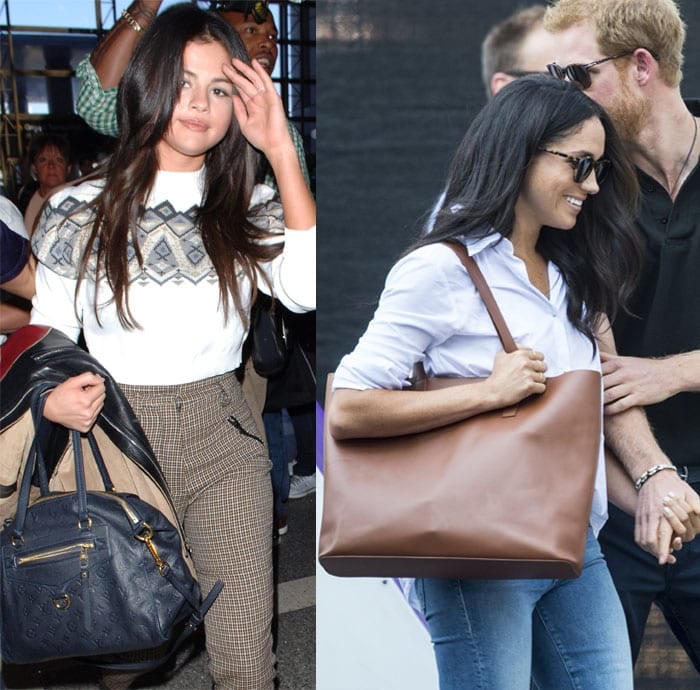 Selena Gomez carries a Louis Vuitton monogram handbag, while Meghan Markle opts for a minimalist brown leather tote, illustrating the range of materials and construction used in designer accessories (Credit: WENN)
A coated-canvas monogram bag and a minimalist leather tote require different inspection methods. Logo alignment may matter for one design, while leather finishing, stitching, and handle construction may matter more for another.
How to Spot a Fake Designer Handbag: Final Checks Before You Buy
👜 The Bottom Line: No single detail can prove that a designer handbag is authentic. Perfect-looking stitching, substantial hardware, genuine leather, serial numbers, and original packaging can all appear on sophisticated counterfeits.
Before buying, identify the exact model and production period, compare its construction with reliable examples, and check the seller’s authentication process, return policy, and buyer protection. If an expensive or collectible bag still raises questions, consider independent professional authentication.
🔎 Explore Brand-Specific Handbag Authentication Guides:
- 🧳 Louis Vuitton: Monogram Canvas, Vachetta Leather & Date Codes — understand how classic Speedy and Neverfull construction details differ from newer identification methods.
- 👜 Coach: Creed Patches, Signature Canvas & Hardware — examine the details that distinguish vintage, mainline, and contemporary Coach handbags.
- ✨ Gucci: GG Monograms, Interior Tags & Logo Hardware — compare recognizable Gucci design details, from monogram canvas to metal closures and branding.
- 🖤 Givenchy Antigona: Leather, Handles & Zippers — explore the structured Antigona’s distinctive construction, reinforced handles, and hardware.
- 💼 Saint Laurent: Kate, Sac de Jour & YSL Branding — examine interior heat stamps, logo typography, leather finishing, and identification markings.
- 🎀 Kate Spade: Bags, Shoes & Style Numbers — understand how branding, materials, and construction differ across mainline, outlet, and older collections.
- 🤎 Brighton: Registration Patches & Signature Hardware — explore the label’s decorative metalwork, interior identification details, and handbag construction.
One final rule: If the seller cannot provide clear photographs, reliable product information, or reasonable purchase protection, it’s better to walk away than risk buying a counterfeit.