
Prada handbags are among the most recognizable designer bags, from structured Saffiano leather totes to the house’s nylon and Re-Nylon styles. That familiarity also makes Prada a frequent target for counterfeiters, so buying pre-owned or through an unfamiliar third-party seller requires more than checking whether the triangle logo looks convincing.
Counterfeit Prada bags can reproduce obvious details such as dust bags, authenticity cards, logo plaques, and packaging. A better inspection considers several features together: the logo typography and spacing, materials, stitching, lining, hardware, interior branding, and — where appropriate for the model and era — factory tags and newer NFC authentication technology.
The stakes are real. In November 2019, Prada handbags were among luxury goods worth more than $2.2 million seized at Washington Dulles International Airport. No single detail can authenticate every Prada bag, but the checks below can help you spot inconsistencies before you buy.
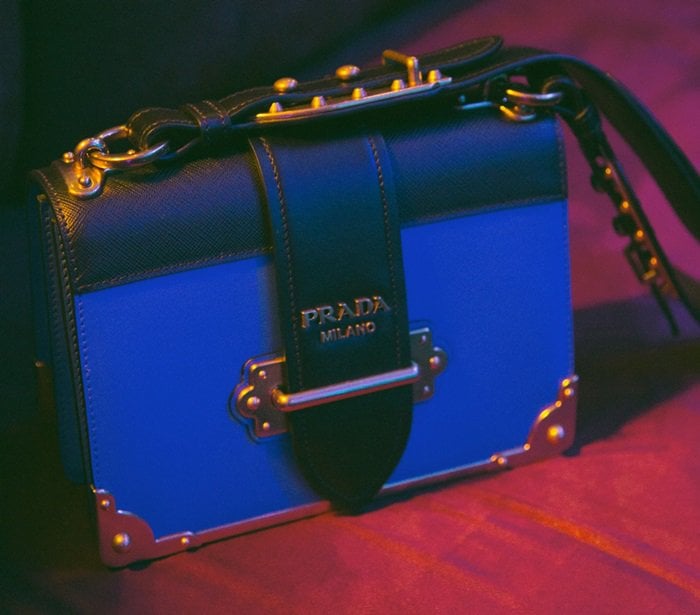 Prada’s structured Cahier shoulder bag combines leather panels with prominent metal hardware and a front Prada Milano wordmark
👜 Jump to the Prada Authentication Guide:
- Where to Buy Authentic Prada Bags
- 1. Dust Bags, Cards & Paperwork
- 2. Prada Logo Typography & Spacing
- 3. Interior Prada Plaques & Branding
- 4. Factory Tags & NFC Technology
- 5. Hardware, Engravings & Zippers
- 6. Interior Lining & Logo Jacquard
- 7. Saffiano Leather, Nylon & Materials
- 8. Stitching & Overall Construction
- Prada Design Codes in Shoes
- Prada Authentication FAQs
- Prada Bags on Celebrities
Where to Buy Authentic Prada Bags With Confidence
Buying directly from Prada or an established luxury retailer is the simplest way to reduce authenticity concerns. Selection varies by season and market, but these are reliable places to shop for Prada bags and accessories:
If you’re shopping secondhand, our guide to the best resale sites for designer shoes and bags compares established platforms for buying pre-owned luxury fashion. A reputable resale platform can help reduce some of the risks of buying secondhand, but its authentication process shouldn’t replace checking the Prada bag itself.
1. Check Prada Dust Bags, Authenticity Cards, and Paperwork
Packaging can provide useful context, but never treat it as proof that a Prada bag is genuine. Dust bags have changed over time, and vintage or pre-owned bags may no longer have their original packaging.
Many Prada bags come with a soft fabric dust bag bearing the Prada logo. When one is present, inspect the printing, spacing, and overall quality and compare the typography with the branding elsewhere on the bag.
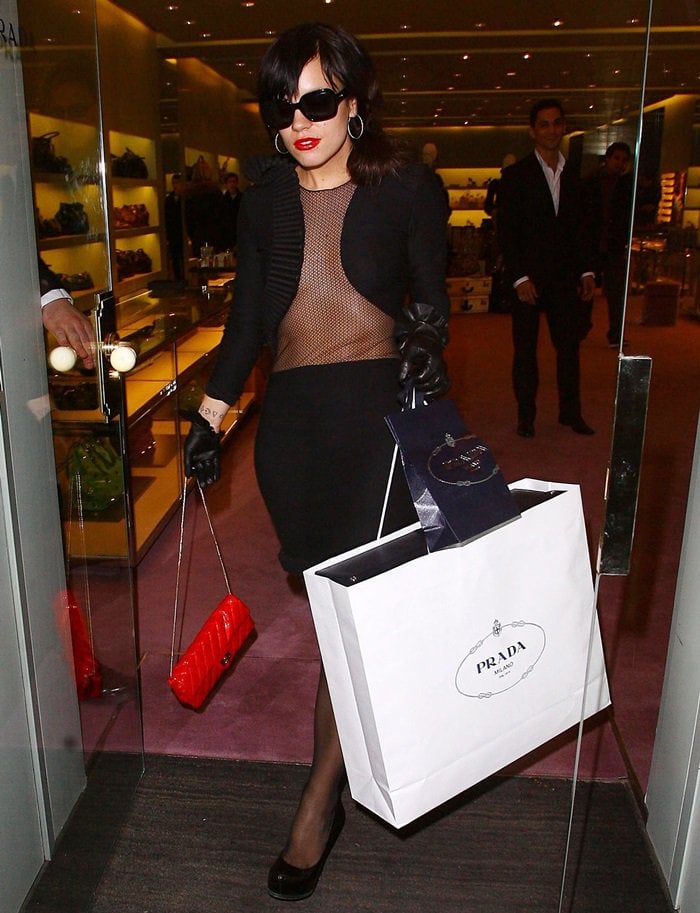 Lily Allen exits a Prada store in London on December 19, 2008 (Credit: WENN)
Depending on its age and model, a bag may also have care materials or an authenticity card containing product information. However, missing paperwork does not automatically mean a vintage or secondhand Prada is fake, and a card does not prove authenticity.
Counterfeiters can reproduce packaging, dust bags, and cards convincingly. Treat these accessories as supporting evidence and inspect the bag itself.
2. Examine Prada Logo Typography, Kerning, and Spacing
Prada’s branding is one of the most useful areas to inspect because the wordmark appears across exterior plaques, interior labels, hardware, and many shoe designs.
Genuine logo plaques should look cleanly finished, with consistent spacing and carefully formed lettering. On bags using Prada’s inverted triangle plaque, inspect the alignment of the wordmark, “Milano” text, border, and other elements rather than judging the bag from the triangle shape alone.
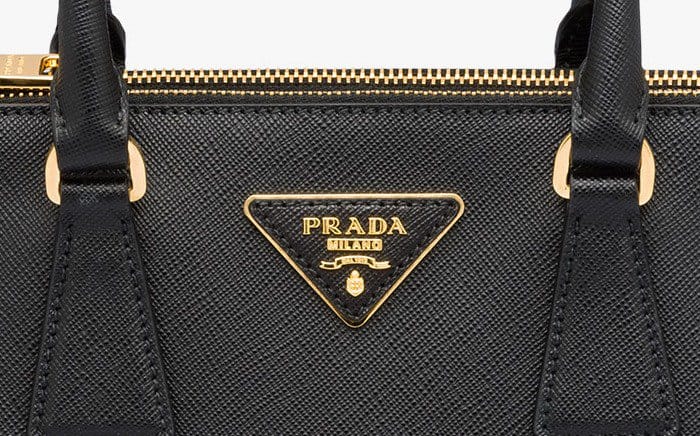 Prada’s inverted triangle plaque provides several details to compare, including letterforms, spacing, alignment, and finish
Some Prada designs use a standalone Prada Milano wordmark rather than the familiar triangle plaque.
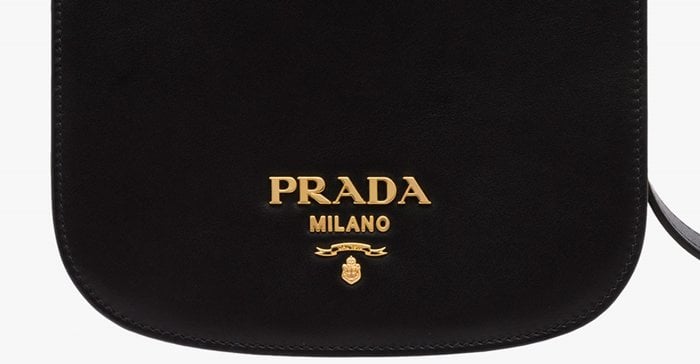 Prada branding varies by design, so compare the logo with the correct model and production period
Pay particular attention to the letterforms and kerning. On many exterior Prada wordmarks, the “R” has a distinctive shape where its diagonal leg joins the bowl, while the “A” also has characteristic proportions and detailing.
Don’t apply a single typography rule blindly to every Prada marking. Interior jacquard patterns and branding from different periods can use different treatments, which is why the bag’s overall construction matters more than any one letter.
The same attention to proportion and branding extends into Prada footwear. The house’s triangle logo is particularly prominent on its chunky Monolith loafers, making Prada a useful example of how a luxury brand carries recognizable design codes between bags and shoes.
3. Inspect the Interior Prada Plaque and Branding
Prada handbags commonly include interior branding, but its exact form varies with the style, material, and production period.
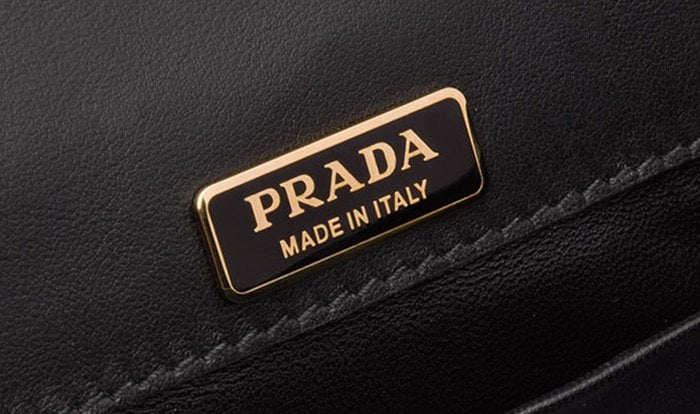 Interior Prada branding should be examined for clean lettering, alignment, and finish
Older examples may display “Prada Milano Made in Italy” across three lines, while other bags use a two-line treatment. Depending on the design, the branding may appear on a plaque or leather patch.
Rather than using the number of lines as a universal authenticity test, compare the interior branding with verified examples of the same model and approximate production period. Look for clean lettering, even placement, and construction consistent with the rest of the bag.
4. Check Prada Factory Tags and Newer NFC Technology
Many Prada handbags include a small white quality-assurance or factory tag sewn into an interior seam or pocket. These tags typically carry a short number printed in black and can provide another useful point of comparison when examining a pre-owned bag.
A factory tag is not a standalone guarantee of authenticity. Counterfeiters can reproduce small internal details, while features can differ between models and production periods.
Newer Prada products may also incorporate NFC technology. Prada says NFC tags used with eligible products are generally hidden within the item. On leather goods, their position can vary, including locations near the exterior logo or buckle, around the interior “Made in” label, or on a dedicated external card.
Prada also participates in digital authentication and ownership initiatives through the Aura Blockchain Consortium. These newer systems should not be confused with the physical authentication features found on older bags.
For that reason, don’t reject a vintage Prada simply because it lacks NFC technology, and don’t assume that something resembling an electronic tag proves a modern bag is genuine. Materials, typography, hardware, construction, provenance, and model-specific details still need to agree.
5. Inspect Prada Hardware, Engravings, and Zippers
Hardware is another useful comparison point because poorly made counterfeits often show inconsistencies in engraving, plating, edges, zipper operation, or how individual components are attached.
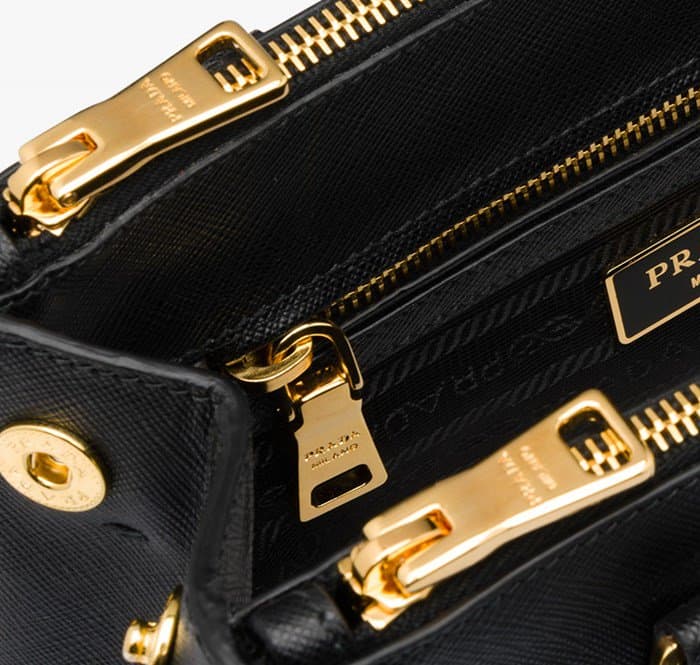 Compare Prada zipper pulls, engravings, plating, and other hardware with verified examples of the same bag
On an authentic bag, metal components should be well finished and appropriate for the design. Look closely at Prada engravings on zipper pulls, buckles, locks, buttons, and feet when those details are present.
Prada has used hardware from established zipper manufacturers on different products and production runs. Rather than assuming one zipper brand must appear on every genuine bag, check whether the zipper and its markings fit the particular model.
Prada’s more decorative footwear shows the same emphasis on hardware. The brand’s archival Spring 2012 Flame sandals, for example, demonstrate how metal, patent finishes, sculptural embellishment, and shoe construction can become defining Prada design details.
6. Compare the Interior Lining With the Correct Prada Model
The interior deserves the same scrutiny as the exterior. Prada has used different linings across its handbag collections, including logo-jacquard fabric and leather.
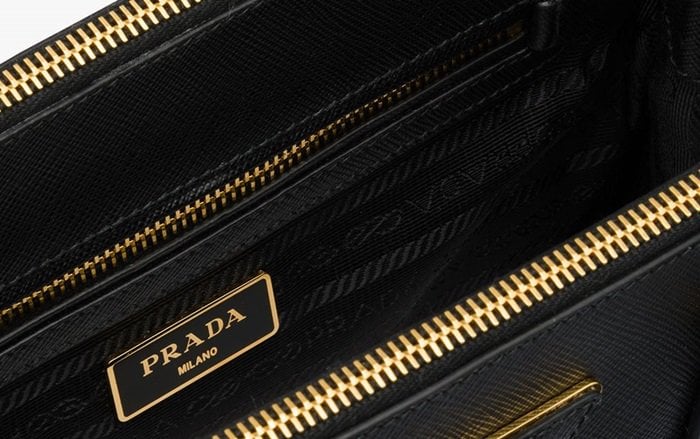 Some Prada bags use recognizable logo-jacquard lining, but lining varies by model and era
On bags with Prada logo jacquard, inspect the weave, spacing, alignment, and consistency of the repeating pattern. Don’t assume every authentic Prada bag must have the same lining or that the exterior wordmark rules apply identically to woven interior branding.
Some designs use leather interiors or other constructions instead.
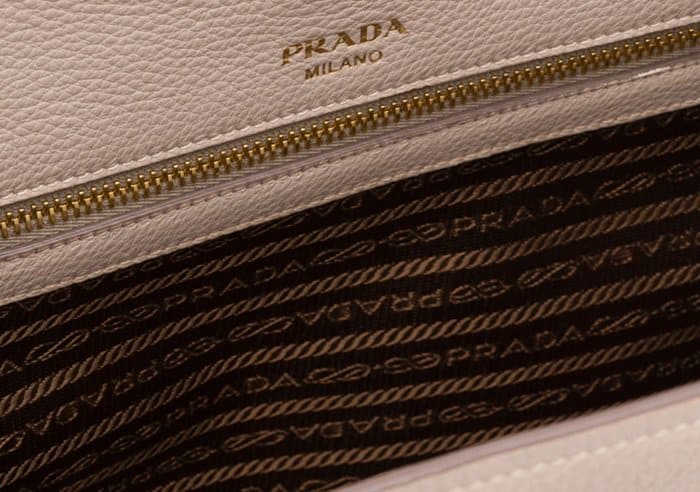 Interior materials should be consistent with the specific Prada style rather than judged by one universal lining rule
The most useful question is therefore not “Does it have Prada lining?” but “Is this the lining Prada used for this particular model and period?”
7. Check Saffiano Leather, Nylon, and Other Prada Materials
Prada uses multiple leathers and textiles, so no single texture defines every authentic Prada bag.
Saffiano is especially associated with the house and is recognizable for its fine cross-hatched surface. When examining a Saffiano bag, compare the grain, structure, finish, and edge work with verified examples of the same design rather than relying simply on whether the material feels stiff or soft.
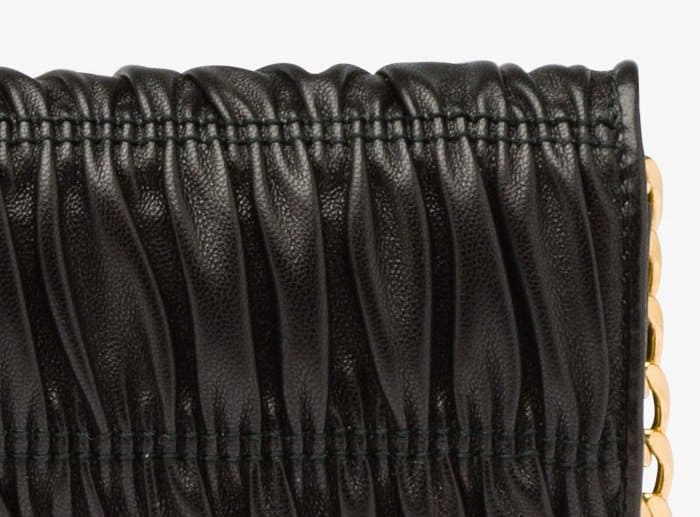 Leather grain, edge finishing, and construction should be assessed together rather than relying on touch alone
Prada also has a long history with nylon. Its contemporary Re-Nylon material is made using regenerated ECONYL nylon, so an authentication guide should not assume that every Prada bag is made from calf leather.
Printed and decorated bags also require model-specific comparisons.
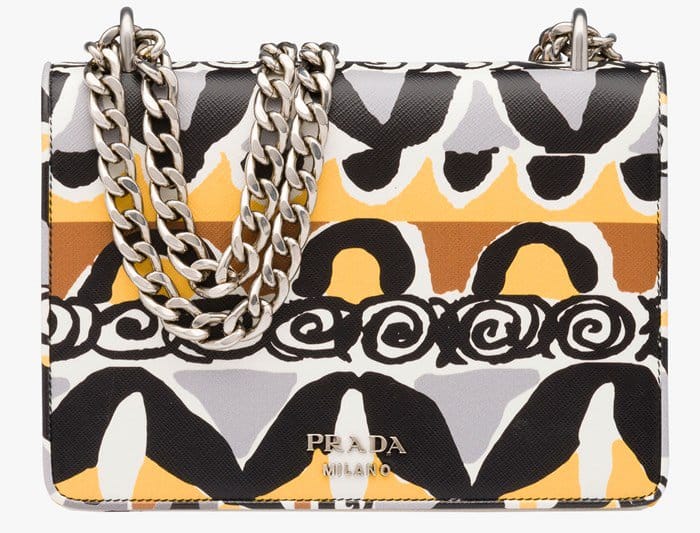 For printed Prada bags, compare the material, pattern placement, finish, and branding with verified examples of the same style
Color, weight, odor, or softness can sometimes raise questions, but none should be used as an automatic pass-or-fail test. Materials can age differently, and Prada’s constructions vary substantially between collections.
8. Examine Prada Stitching and Overall Construction
Uneven stitching, loose threads, poorly finished edges, or obvious construction problems can be warning signs, particularly when they appear alongside other inconsistencies.
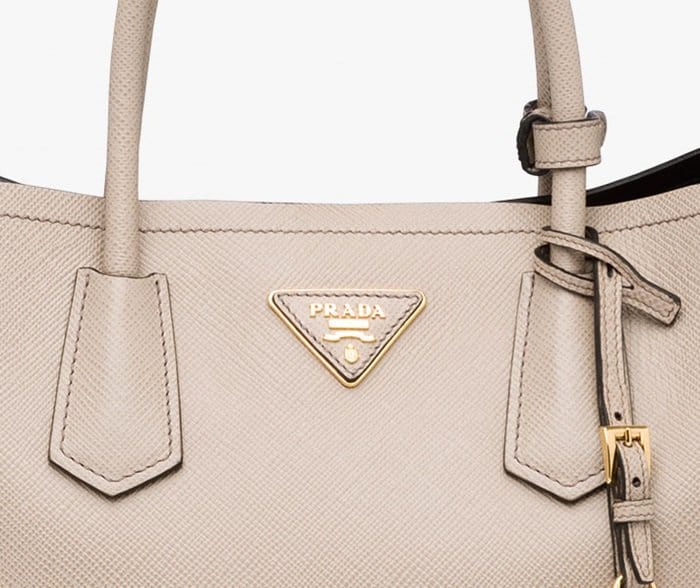 Inspect stitch spacing, seams, thread, and edge finishing throughout the bag
However, avoid treating one stitch angle as a universal Prada signature. Construction varies with the leather, textile, model, seam, and production period.
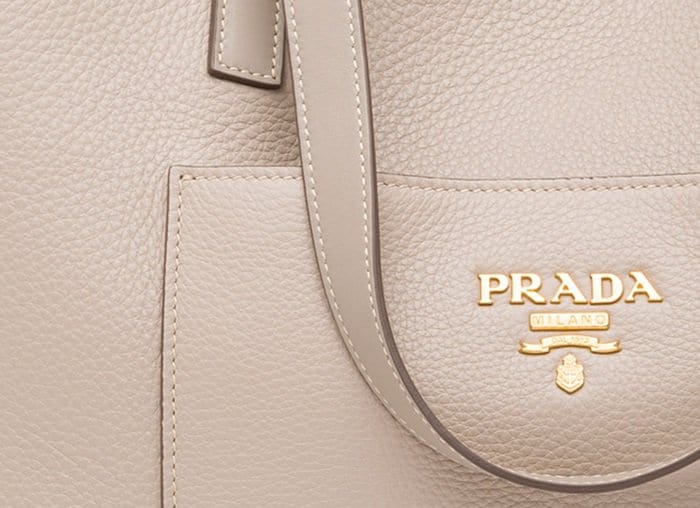 Consistent construction across multiple details is more meaningful than relying on a single stitch as proof of authenticity
Look at the bag as a complete object. Logo execution, materials, lining, stitching, hardware, interior markings, factory details, and provenance should tell a consistent story.
How Prada Shoes Reveal the House’s Signature Design Codes
Prada’s recognizable details aren’t limited to handbags. Its footwear repeatedly uses the same broader vocabulary of precise branding, distinctive materials, exaggerated proportions, and recognizable hardware.
The contrast is easy to see across different Prada shoe families. Kate Middleton’s 85mm navy suede Prada pumps represent the house’s restrained pointed-toe court shoes, while Uma Thurman’s Prada bow-detail slingback pumps combine glossy leather, a pointed toe, bow detailing, and a low-profile heel.
Prada can also push familiar footwear into more exaggerated territory. Its platform shoes and chunky loafers show how changing the sole can alter an otherwise established silhouette — a construction principle explained in our guide to platform heels, heel pitch, and shoe silhouettes.
Keep that range in mind when authenticating Prada. A detail that is correct for one product family may be completely inappropriate for another, which is why model-specific comparison is more reliable than a universal checklist.
Prada Authentication FAQs: Manufacturing, Pricing, and More
Where Are Authentic Prada Handbags Made?
Prada is an Italian fashion house, but a “Made in Italy” label should not be treated as a universal authenticity test for every product the company has sold.
According to The Wall Street Journal, Prada has historically manufactured a portion of its collections outside Italy. The company has also used production facilities and suppliers in multiple countries.
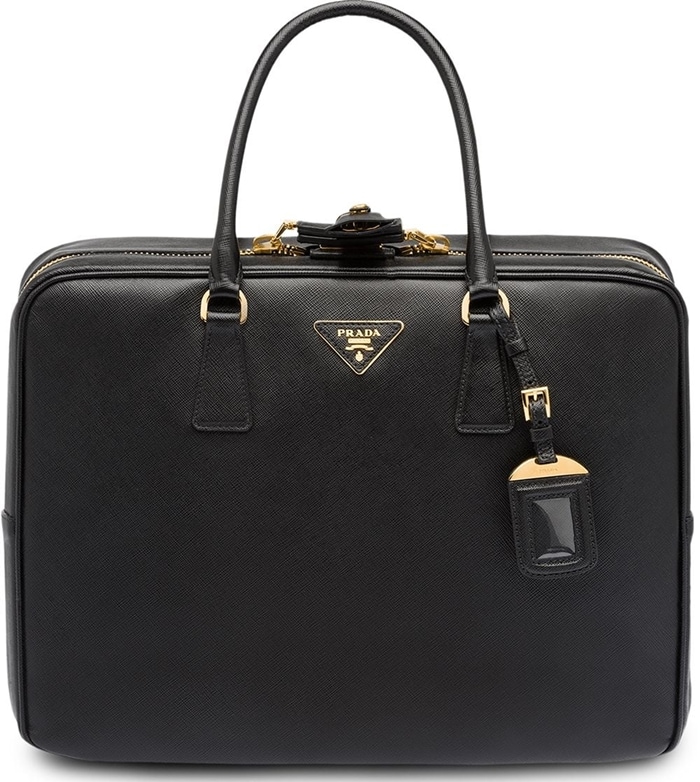 Prada’s Saffiano leather has become one of the house’s most recognizable materials
Prada also operates manufacturing facilities in Italy, including its industrial operations in Tuscany. More broadly, luxury manufacturing in the region involves a complex network of factories, workshops, and workers, a subject examined by The New Yorker.
When authenticating a bag, compare its country-of-origin marking with reliable information for the particular model rather than assuming that one country automatically proves or disproves authenticity.
What Does Prada Mean?
The Italian luxury fashion house was founded in Milan in 1913 by Mario Prada and his brother Martino as Fratelli Prada, or Prada Brothers.
Prada is the family’s surname. While surname histories can suggest geographic or linguistic origins, those theories don’t help authenticate the company’s products.
Do Prada Bags Ever Go on Sale?
Prada pricing and availability change over time. Seasonal or discontinued products may sometimes appear through authorized retailers, outlets, or established resale channels, while core styles may be less frequently discounted.
For a pre-owned bag, an unusually low price can justify extra scrutiny, but price alone cannot establish whether a Prada product is authentic.
Is Prada an Expensive Luxury Brand?
Yes. Prada operates in the luxury market across handbags, footwear, ready-to-wear, and accessories. Retail prices vary considerably by material, size, construction, and collection, so fixed price ranges quickly become outdated.
That is especially true across footwear: a minimalist pump, chunky Monolith loafer, archival statement sandal, and embellished runway shoe can occupy very different price points and design categories.
Prada Bags on Celebrities: Saffiano Totes, Nylon Bags, and More
Prada’s handbag archive looks very different from one era to the next. Structured Saffiano totes, compact nylon shoulder bags, top-handle styles, and more decorative designs have all found their way into celebrity wardrobes. The examples below help show those differences in proportion, material, hardware, and styling.
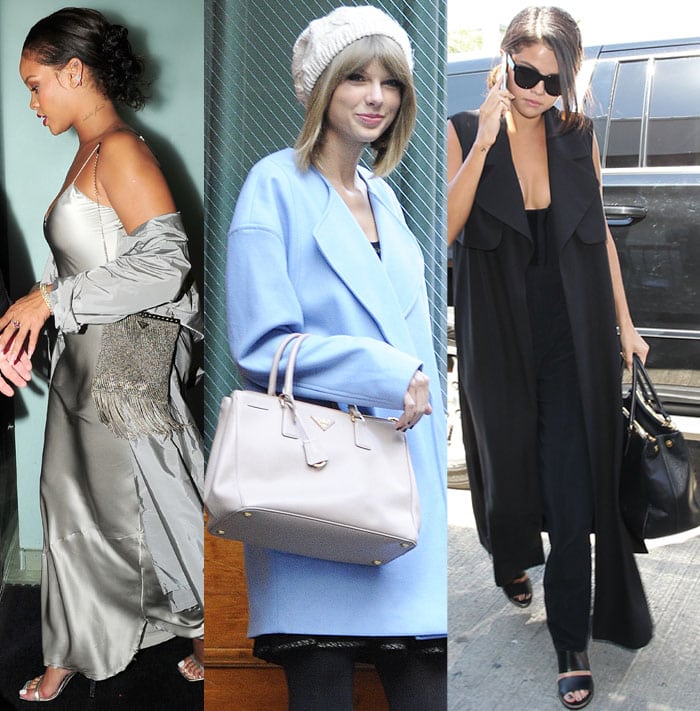 Rihanna, Taylor Swift, and Selena Gomez demonstrate the variety of Prada handbag shapes and materials seen in celebrity wardrobes (Credit: WENN)
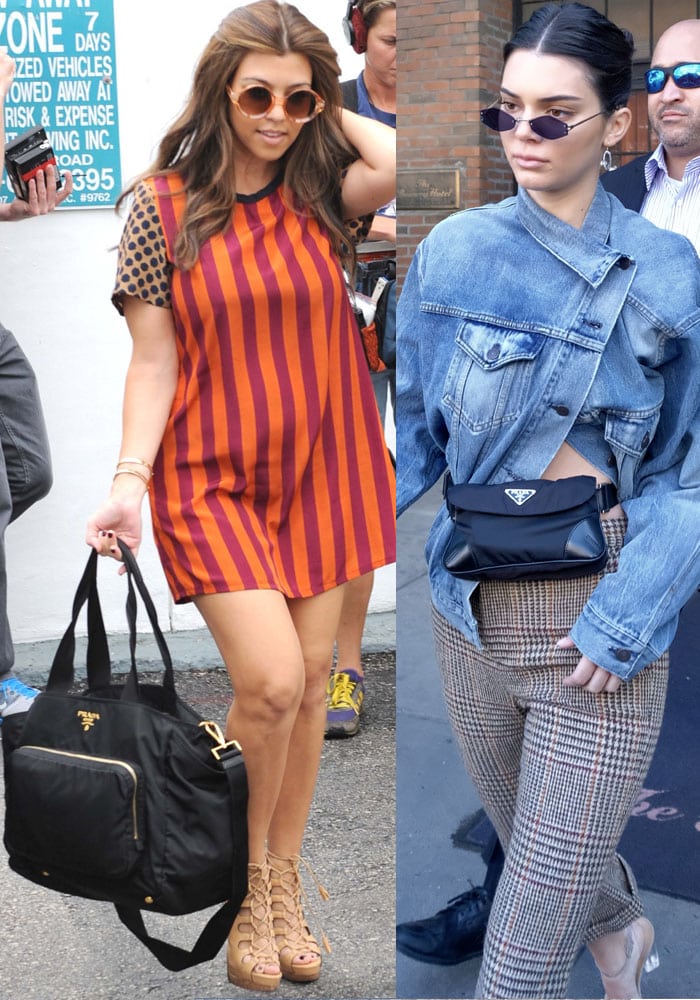 Kourtney Kardashian and Kendall Jenner carry Prada bags from different periods and design families (Credit: WENN)
 Emily Ratajkowski carries Prada’s structured Cahier bag, recognizable for its trunk-inspired construction and prominent metal hardware (Credit: Emily Ratajkowski’s Instagram)
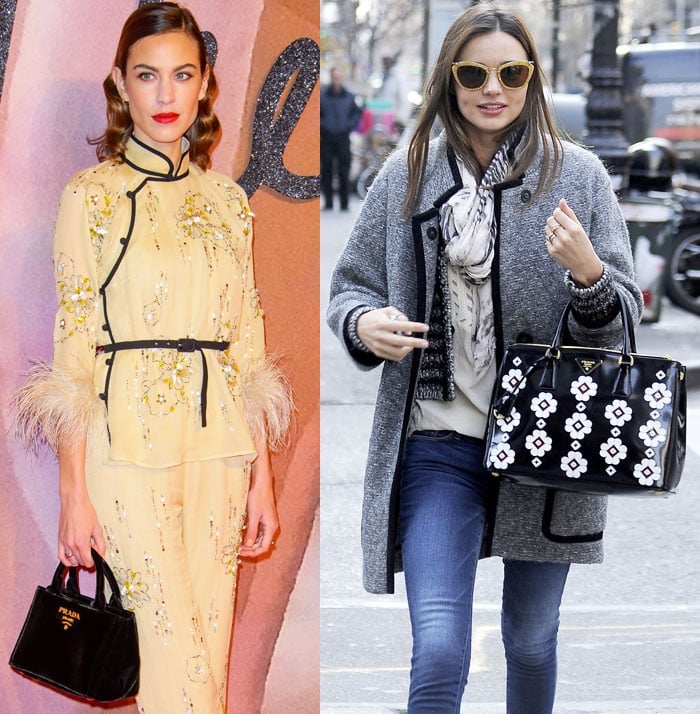 Alexa Chung and Miranda Kerr with Prada top-handle bags, showing two interpretations of the house’s structured handbag aesthetic (Credit: WENN)
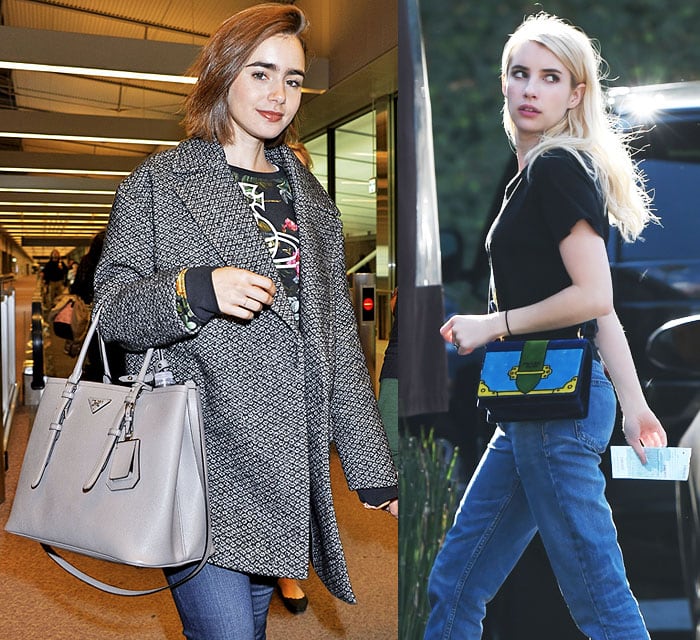 Lily Collins and Emma Roberts carrying Prada handbags in contrasting structured designs (Credit: WENN)
👜 Explore Prada Bags in Celebrity Style:
- 🌸 Lily Collins carried a nude Prada Saffiano Lux tote with a floral midi skirt, showing how the structured leather bag can sharpen an otherwise relaxed summer look.
- 🩷 Taylor Swift paired a blush-pink Prada Saffiano Lux tote with a striped Topshop mini dress and tasseled Saint Laurent Oxford heels for one of her polished New York street-style looks.
- 💙 Petra Němcová made a pastel-blue Prada Pyramid tote the centerpiece of her New York Fashion Week look, pairing the structured Spring 2012 bag with nude platform pumps.
- 🌺 Miranda Kerr carried a floral Prada tote with skinny jeans and Tabitha Simmons ankle boots, bringing one of Prada’s more decorative handbag designs into an otherwise tough biker-inspired outfit.
- 🖤 Kendall Jenner carried a black Prada mini hobo while Hailey Bieber chose a Prada shoulder bag, showing how the label’s compact bags work with sneakers and pared-back athleisure.
- ❤️ Addison Rae repeatedly worked Prada’s Re-Edition 2000 nylon shoulder bag into her off-duty wardrobe, styling red and black versions with leggings, sneakers, and chunky Prada Monolith shoes.
- ✨ See how Prada’s best-known handbag families differ, from the book-inspired Cahier and structured Galleria to the Cleo, Re-Edition nylon bags, bucket bags, and other house signatures.
How to Authenticate a Prada Bag With More Confidence
A genuine Prada bag should feel like a complete product. Instead of relying on one supposedly foolproof detail, compare the logo, typography, materials, lining, hardware, stitching, interior markings, factory details, and provenance with verified examples of the exact model whenever possible.
The same model-specific approach applies across Prada’s wider design archive. A Saffiano tote, Re-Nylon bag, Monolith loafer, pointed pump, and sculptural runway sandal can all carry recognizable Prada design codes while using very different materials and construction.
If a high-value secondhand bag still raises questions after a visual inspection, professional authentication or evaluation through Prada is more appropriate than making a purchasing decision from a single logo, card, tag, or stitch.
From Prada Bags to Shoes: Recognizing the House Beyond the Logo
Prada’s identity extends well beyond the triangle plaque. Across handbags, loafers, pumps, sneakers, and statement sandals, the house repeatedly plays with precise shapes, distinctive materials, and unexpected proportions. These Prada moments show how those design codes translate from accessories to footwear and complete looks.
👠 Explore More Prada Shoes & Style:
- 🖤 Bella Hadid’s sharp black Prada satin pumps brought an elongated pointed toe and tapered heel to an ivory Prada look at the 2026 Vanity Fair Oscars party.
- 👞 Bella Hadid styled classic Prada leather loafers with oversized tailoring, showing the polished side of the house’s flat-shoe vocabulary.
- 👟 Gigi Hadid grounded layers of powder-blue tulle with Prada Double Wheel sneakers, recognizable for their nylon uppers, logo patches, and thick ridged soles.
- ✨ Maisie Williams made Prada’s Baroque sandals the focal point of a black Olivier Theyskens dress, with gold-trimmed scrollwork giving the suede heels their ornate finish.
- 👠 Emilia Clarke’s Prada shoe archive moves from metallic sandals to triple-strap heels, offering a broader look at the label’s red-carpet footwear alongside her Miu Miu and Christian Louboutin styles.
- 🇮🇹 See Prada in the wider story of Italy’s most influential fashion and footwear houses, from heritage luxury labels to designers known for stilettos, platforms, sneakers, and statement shoes.