
Platform shoes aren’t one specific style. The defining feature is a thick sole beneath the front of the foot, which can appear on everything from high heels and wedges to sneakers, sandals, loafers, and boots. Depending on the construction, a platform can add substantial height without creating the same foot angle as a conventional heel of equal overall height.
That versatility helps explain why platforms keep reappearing in fashion. Salvatore Ferragamo experimented with sculptural cork platforms in the 1930s; exaggerated versions became closely associated with 1970s style; the Spice Girls helped make platform sneakers a pop-culture signature in the 1990s; and designers have continued adapting the elevated sole to new shoe silhouettes.
👠 Jump to a Platform Shoe Topic:
- 1. What Are Platform Shoes? Understanding the Elevated Sole
- 2. Platform Shoe History: From Ferragamo to the Spice Girls
- 3. Are Platform Shoes Comfortable? What to Consider
- 4. The 5 Main Types of Platform Shoes
- 5. Platform Heels: Understanding Height and Pitch
- 6. Platform Sneakers: Casual Shoes With Extra Height
- 7. Men’s Platform Shoes: Oxfords, Sneakers & Lug Soles
- 8. Platform Sandals & Wedges: How They Differ
- 9. Platform Boots: From the Lita to Chunky Lug Soles
- 10. How to Choose the Right Platform Shoes
What Are Platform Shoes? Understanding the Elevated Sole
A platform shoe has a noticeably thick sole beneath the forefoot. The platform may be relatively even from front to back, form part of a wedge, or sit beneath the toe box while a separate heel raises the back of the foot.
That distinction matters when comparing platforms with ordinary high heels. A shoe can have a very high overall heel while its platform reduces the height difference between the heel and forefoot. That difference—often described as the shoe’s effective heel height or pitch—affects how steeply the foot is positioned.
Platform thickness varies considerably. Rather than judging a shoe only by its total height, look at both the height beneath the forefoot and the height of the heel, along with the width, rigidity, weight, and stability of the sole.
Platform Shoe History: From Ferragamo’s Rainbow Sandal to the Spice Girls
Elevated footwear existed long before the modern fashion platform, but one of the most important 20th-century examples came from Salvatore Ferragamo. The Italian shoemaker experimented with cork and other materials when conventional shoemaking supplies were difficult to obtain.
His famous Rainbow sandal, created for Judy Garland in 1938, made the platform itself the shoe’s visual focus. Its sculptural sole was built from layers of cork covered in brightly colored suede.
 Salvatore Ferragamo created the Rainbow sandal for Judy Garland in 1938, building its sculptural platform from layered cork covered in multicolored suede
Platforms became particularly visible again during the 1970s, when thick-soled shoes and boots appeared across disco, glam rock, and mainstream fashion. Their proportions changed again in the 1990s as exaggerated platform sneakers and boots became closely associated with pop style.
The Spice Girls were especially influential in making towering platform footwear recognizable to a new generation. Buffalo’s exaggerated sneakers became closely associated with the group’s look and helped establish the chunky platform sneaker as one of the era’s most recognizable shoe shapes.
 The Spice Girls helped turn exaggerated platform sneakers and boots into defining footwear of late-1990s pop style, pictured here in London’s Docklands in 1997 (Credit: WENN)
Later versions ranged from towering designer sandals and concealed-platform pumps to chunky sneakers, loafers, and ankle boots. Rather than belonging to one fashion era, the platform has become a shoe construction that designers can apply to very different silhouettes.
Are Platform Shoes Comfortable? 3 Things to Consider
A platform can change a shoe’s angle, but a thick sole doesn’t automatically make footwear comfortable or easy to walk in. Weight, sole width, rigidity, heel height, pitch, fit, traction, and ankle support can all affect how a platform feels.
1. Consider the Platform Material and Weight
Start by looking at the sole’s width and weight. A narrow or unstable base can be more difficult to balance on, while an especially heavy platform may feel cumbersome over longer periods.
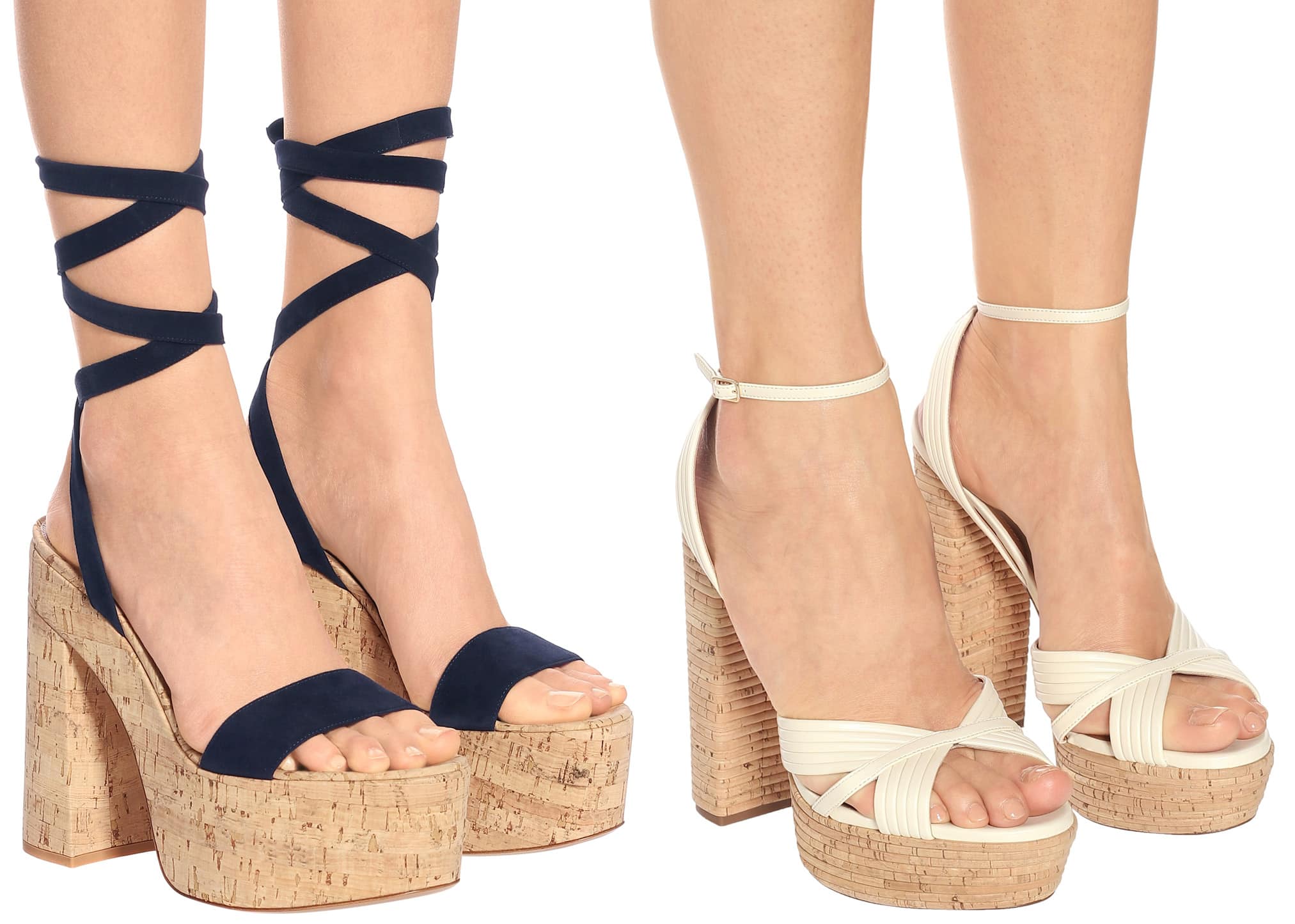 Cork platforms can create substantial height while keeping the material visually lighter than a solid rubber or wood sole
Cork is a material commonly used in platform shoes and wedges. It can provide substantial volume without the weight of some denser sole materials. You can learn more about cork, leather, rubber, and other materials in our guide to common shoe materials.
Cork also has an important place in platform-shoe history: Ferragamo used it to create the layered sole of his Rainbow sandal, turning a practical material into one of his most recognizable designs.
2. Start With a Flatter Platform
If you’re new to elevated soles, a flatform can be a more approachable introduction than combining a substantial platform with a very high heel.
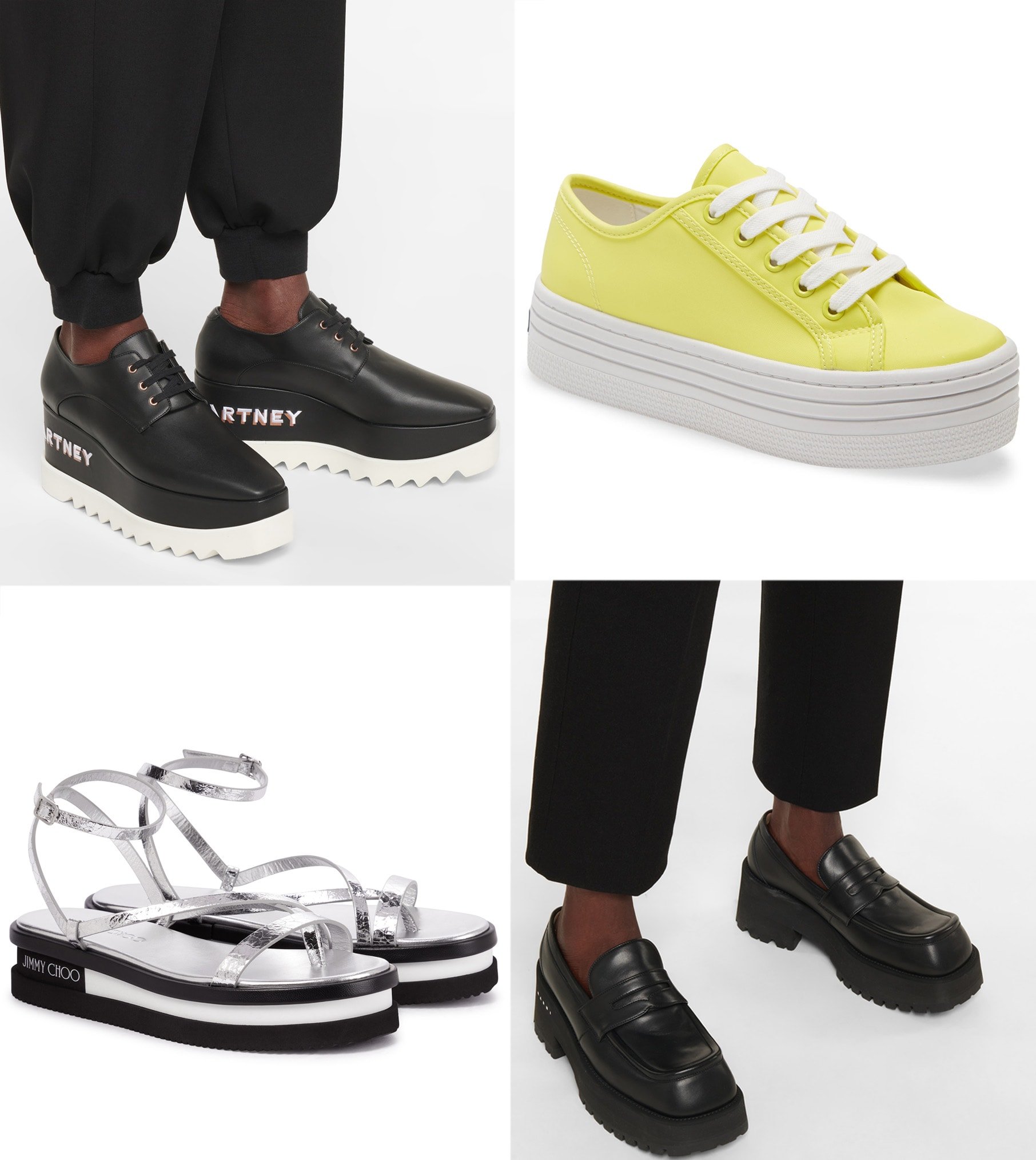 Platforms aren’t limited to high heels: thick soles can transform oxfords, sneakers, sandals, and loafers while adding height and visual weight
Flatform sneakers, sandals, and oxfords can add height while keeping the heel and forefoot closer to the same level. Stability still depends on the width, flexibility, traction, and overall construction of the sole.
3. Pay Attention to Fit and Cushioning
A platform doesn’t compensate for a poor fit. Your heel should feel secure, your toes should have adequate room, and your foot shouldn’t slide excessively inside the shoe.
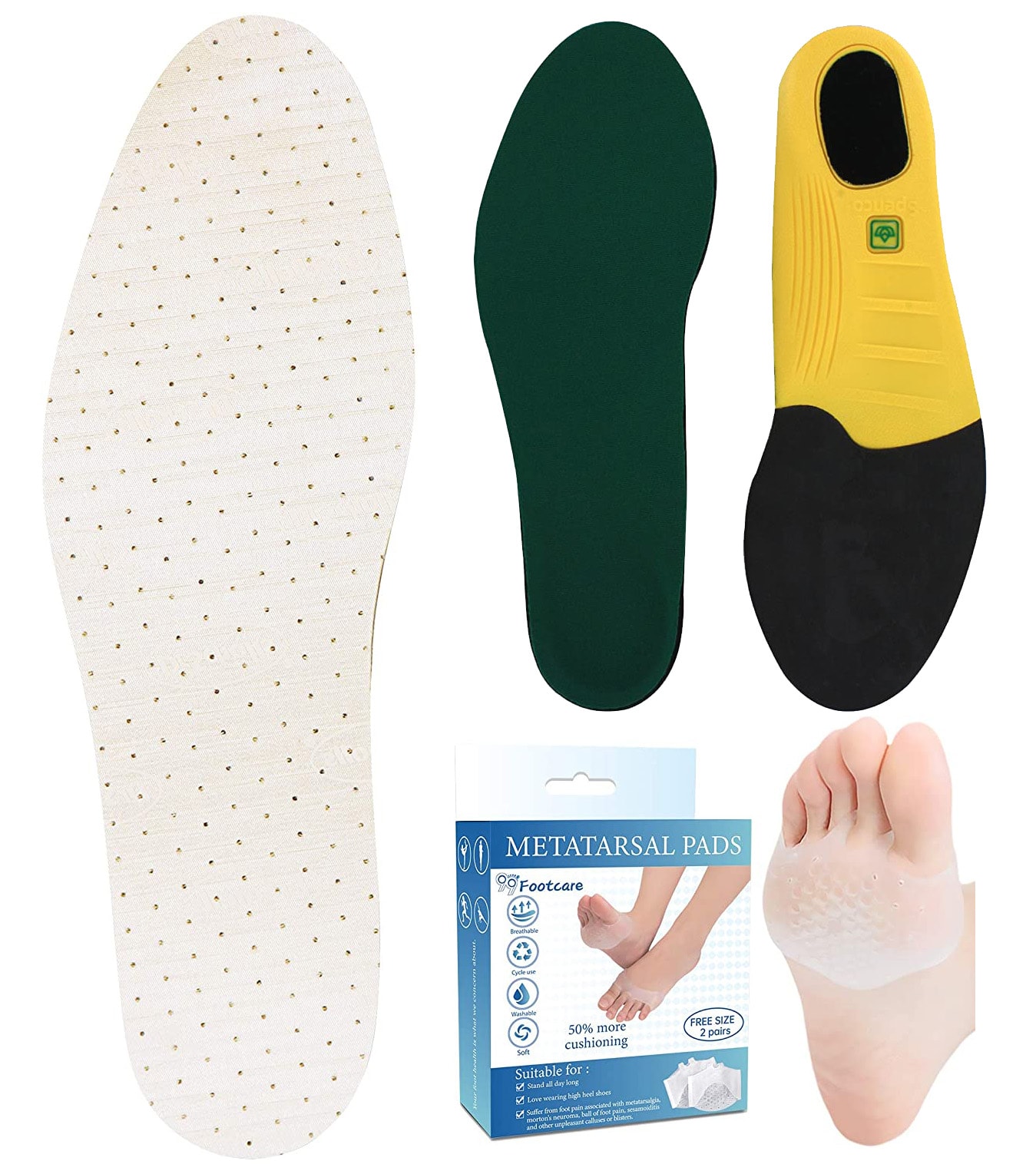 Insoles and metatarsal pads can add cushioning or refine the fit of some shoes, but inserts should not make the toe box uncomfortably tight
An appropriate insole or gel pad may add cushioning or help refine the fit of a roomy shoe. Avoid adding an insert if it crowds the toe box or changes the fit enough to create pressure elsewhere.
5 Types of Platform Shoes and How They Differ
The platform is a construction, not a single silhouette, which is why it appears across such a wide range of footwear. Some platforms are designed primarily to create dramatic height, while others use a relatively modest thick sole to change the proportions of a sneaker, sandal, loafer, or boot.
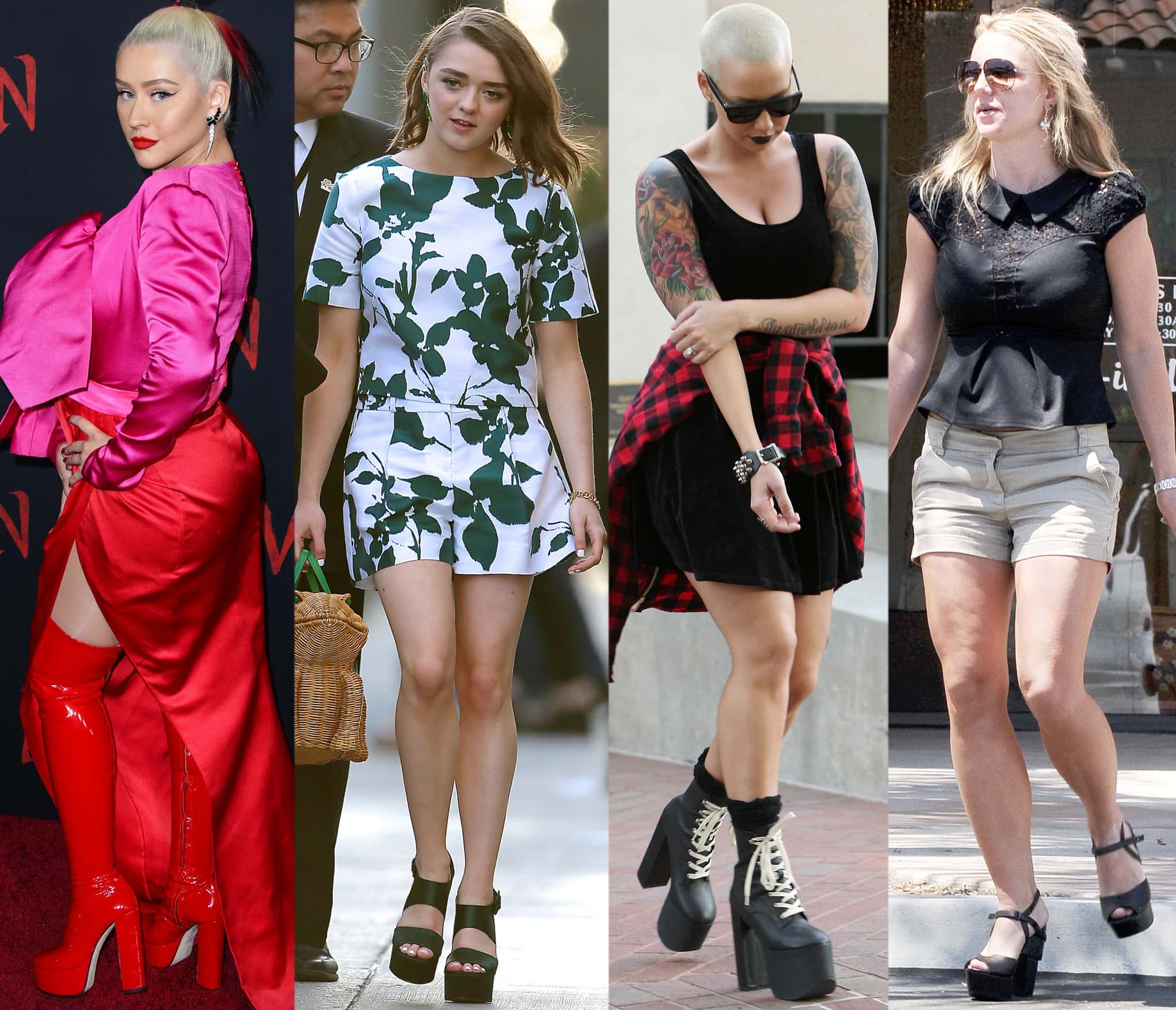 Christina Aguilera, Maisie Williams, Amber Rose, and Britney Spears demonstrate how the platform sole can appear across boots, sandals, and other elevated shoe silhouettes (Credit: Avalon / Michael Wright / JP / JFXimages / WENN)
1. Platform Heels: More Height With a Lower Effective Pitch
Platform heels combine an elevated forefoot with a separate heel. Because both ends of the foot are raised, a platform can make a shoe considerably taller without increasing the foot’s angle by the same amount as an equally tall heel with a thin forefoot sole.
For a deeper look at how platform height affects effective heel height, the different silhouettes that use this construction, and examples worn by celebrities, see our complete guide to platform heels.
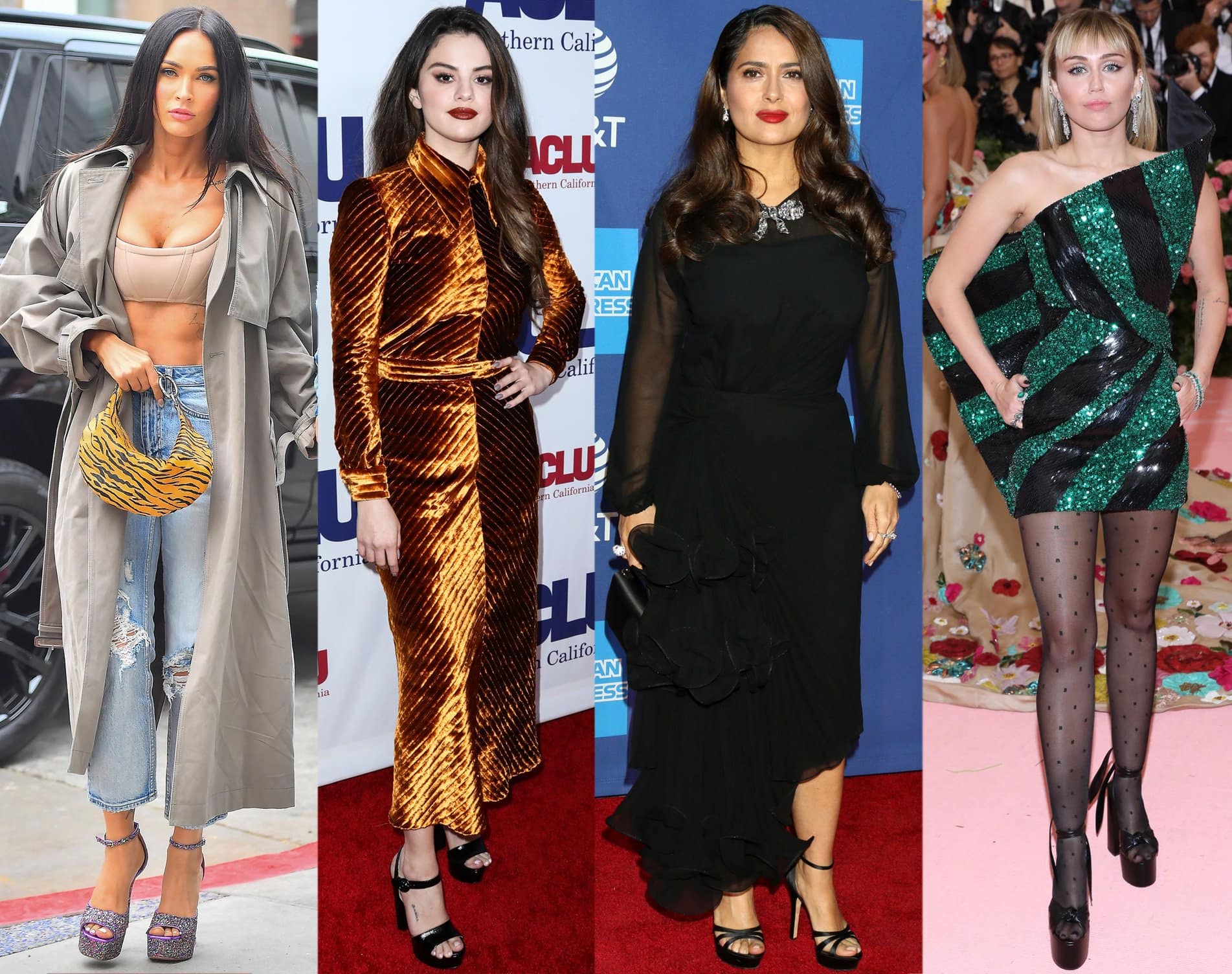 Megan Fox, Selena Gomez, Salma Hayek, and Miley Cyrus show how platform heels can range from glittering sandals and classic evening styles to towering statement shoes (Credit: Mega / Avalon / Nicky Nelson / Andres Otero / WENN)
That doesn’t necessarily make every platform heel easier to walk in. Very tall, narrow, heavy, or rigid platforms can still be challenging, particularly when combined with a high heel. Naomi Campbell’s famous fall in towering Vivienne Westwood platforms during a 1993 runway show remains an extreme example of how dramatic platform proportions can test balance.
Open-toe sandals are one of the most recognizable platform heel styles. A key designer example is the Saint Laurent Tribute, which combines a substantial forefoot platform with a high heel and interwoven straps.
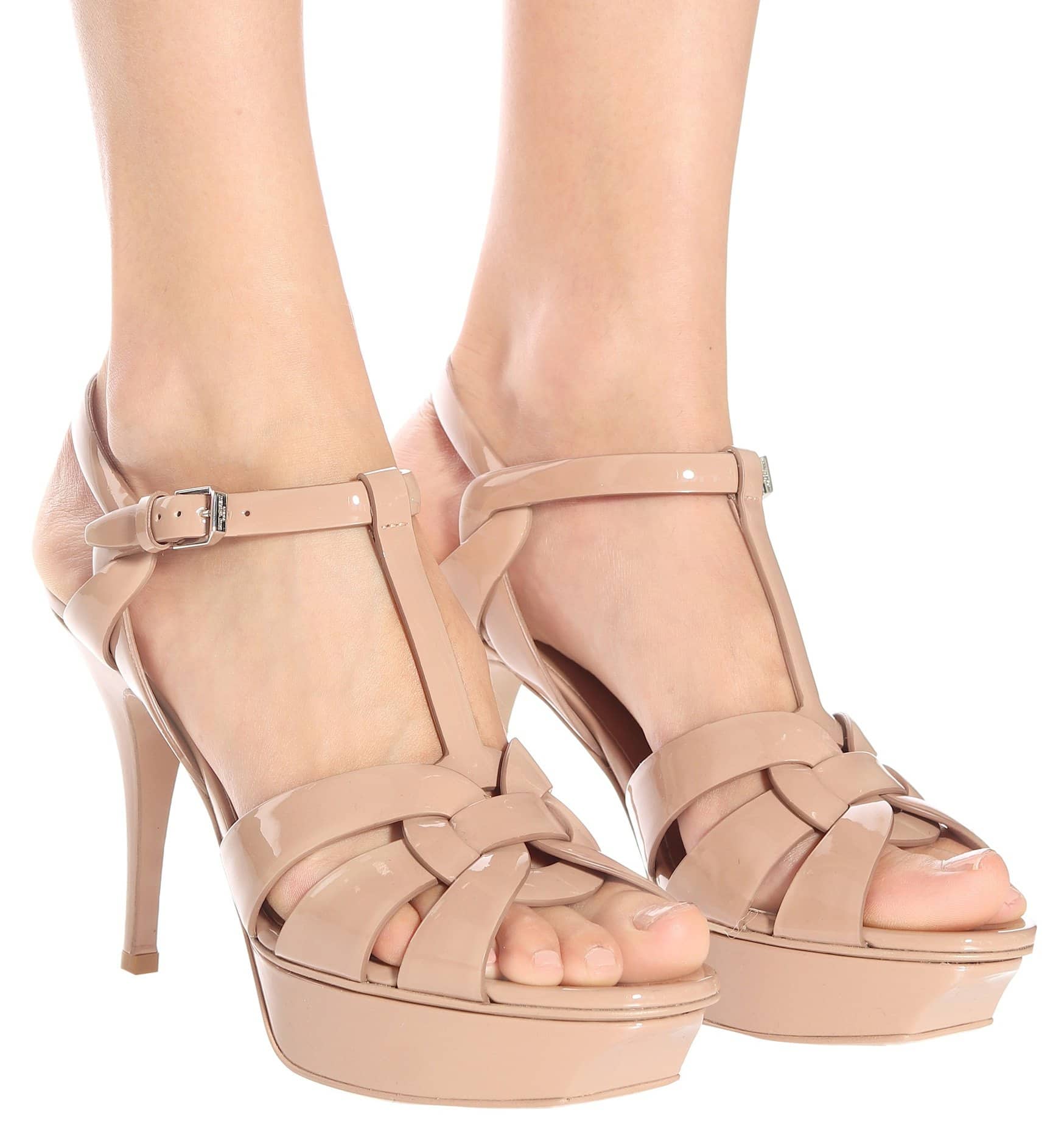 The Saint Laurent Tribute combines a substantial forefoot platform with interwoven straps and a high stiletto heel, making the relationship between platform height and heel height easy to see
The Saint Laurent Tribute platform illustrates why you should consider platform height and heel height together, rather than treating heel height alone as an indicator of how a shoe positions the foot.
Platforms can also be concealed inside a closed-toe pump. The Yves Saint Laurent Tribtoo became one of the defining celebrity platform pumps of the late 2000s and early 2010s, combining a rounded almond toe with a towering heel and hidden forefoot platform. Compared with the strappy Tribute, the Tribtoo shows how dramatically different two shoes can look while relying on the same basic platform principle.
2. Platform Sneakers: Casual Shoes With an Elevated Sole
Platform sneakers use a thick sole to add height without the separate elevated heel found on a platform pump or sandal. Depending on the design, the sole may be relatively uniform or rise gradually toward the heel.
High-top sneakers can combine the exaggerated sole with an upper that extends around the ankle, while low-tops and slip-ons offer less coverage.
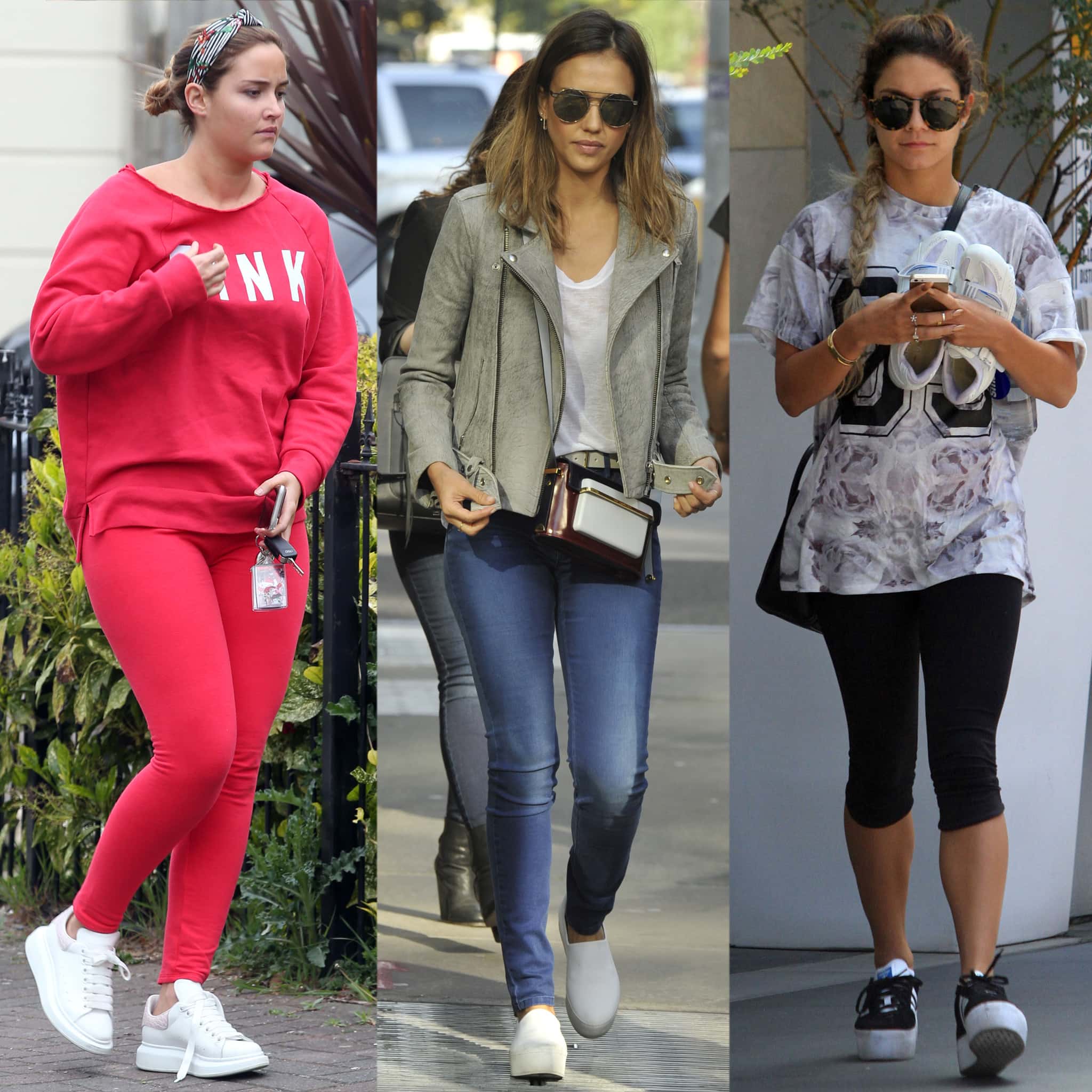 Jacqueline Jossa, Jessica Alba, and Vanessa Hudgens demonstrate three casual approaches to platform sneakers, from clean white low-tops to exaggerated thick soles (Credit: TNYF / WENN)
How the Spice Girls Made Platform Sneakers a ’90s Signature
Platform sneakers became particularly visible in late-1990s pop culture when the Spice Girls made exaggerated soles part of their signature footwear. German footwear brand Buffalo became closely associated with the towering sneaker styles the group wore, helping establish the chunky platform sneaker as one of the era’s most recognizable shoe shapes.
The silhouette outlasted the decade. Years later, Charli XCX wore Buffalo Classic platform sneakers, demonstrating how closely the oversized sole remains associated with ’90s-inspired pop and street style.
Contemporary versions range from streamlined leather sneakers to deliberately oversized soles. The platform can therefore be relatively discreet or become the defining visual feature of the shoe.
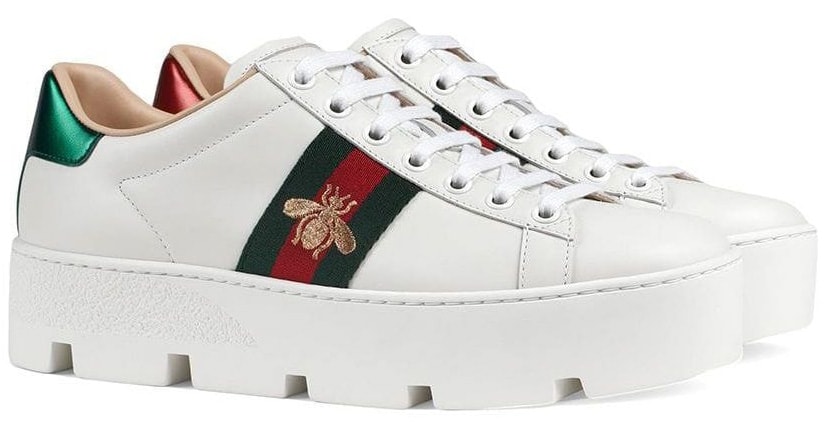 Gucci reworks the familiar low-top sneaker with an elevated lug sole, signature Web stripe, and embroidered bee
Gucci has similarly adapted its Ace silhouette with an elevated sole. Our Gucci shoe sizing guide explains the brand’s footwear sizing and fit for shoppers considering its sneakers and other shoe styles.
3. Men’s Platform Shoes: Oxfords, Sneakers, Loafers, and Lug Soles
Platforms aren’t limited to women’s footwear. Men’s shoes can incorporate thick external soles or more discreet height within sneakers, loafers, boots, and lace-up shoes.
Platform oxfords offer one route to the look, combining traditional lace-up uppers with exaggerated soles. Chunky sneakers and lug-soled shoes provide another interpretation without using a conventional high heel.
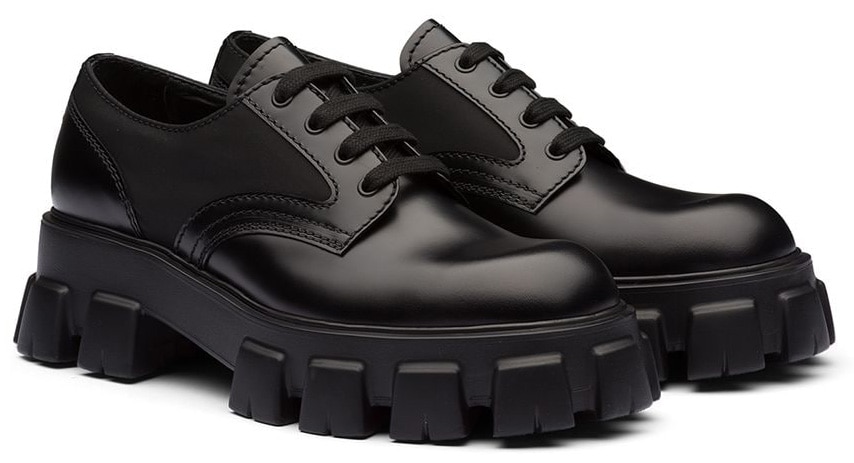 Prada’s Monolith exaggerates the proportions of a traditional leather lace-up with a thick, deeply treaded lug sole
Prada’s Monolith is a useful example of how luxury designers have incorporated exaggerated soles into traditional footwear shapes. The broader Monolith family extends from lace-up shoes to substantial combat boots, including the Prada Monolith 55 boots worn by Chrissy Teigen. Learn more about the relationship between Prada and Miu Miu and their different approaches to footwear.
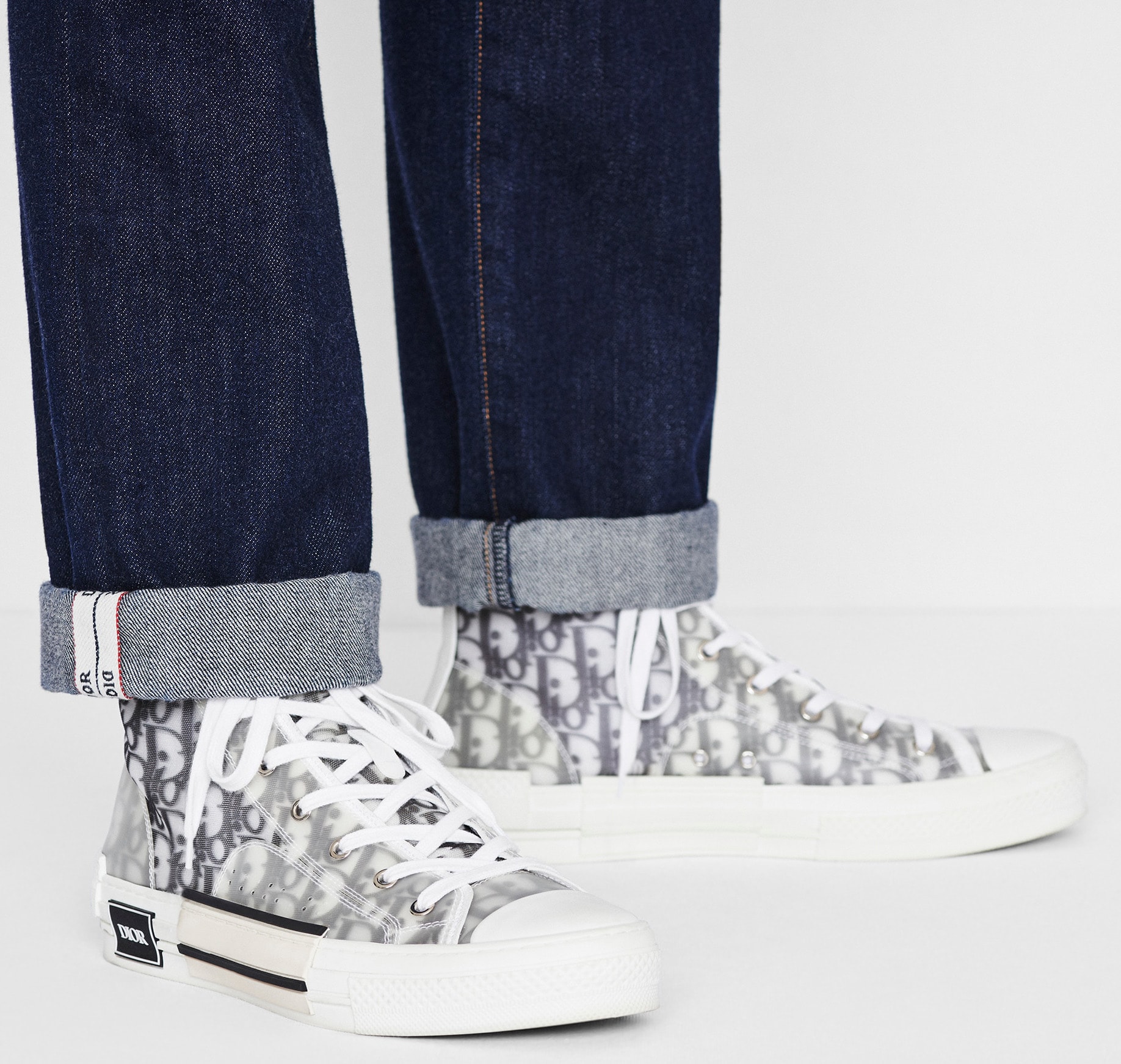 Dior’s B23 combines a high-top sneaker construction with translucent paneling, the house’s Oblique motif, and a substantial rubber sole
High-top sneakers provide another way to add visual weight beneath the foot. Dior’s B23 shows how a substantial rubber sole can be incorporated into a canvas high-top rather than treated as a separate heel.
4. Platform Sandals and Wedges: What’s the Difference?
Platform sandals can use either a separate heel or a continuous wedge. In a wedge shoe, the sole forms a continuous structure beneath the heel and forefoot rather than separating into a distinct heel.
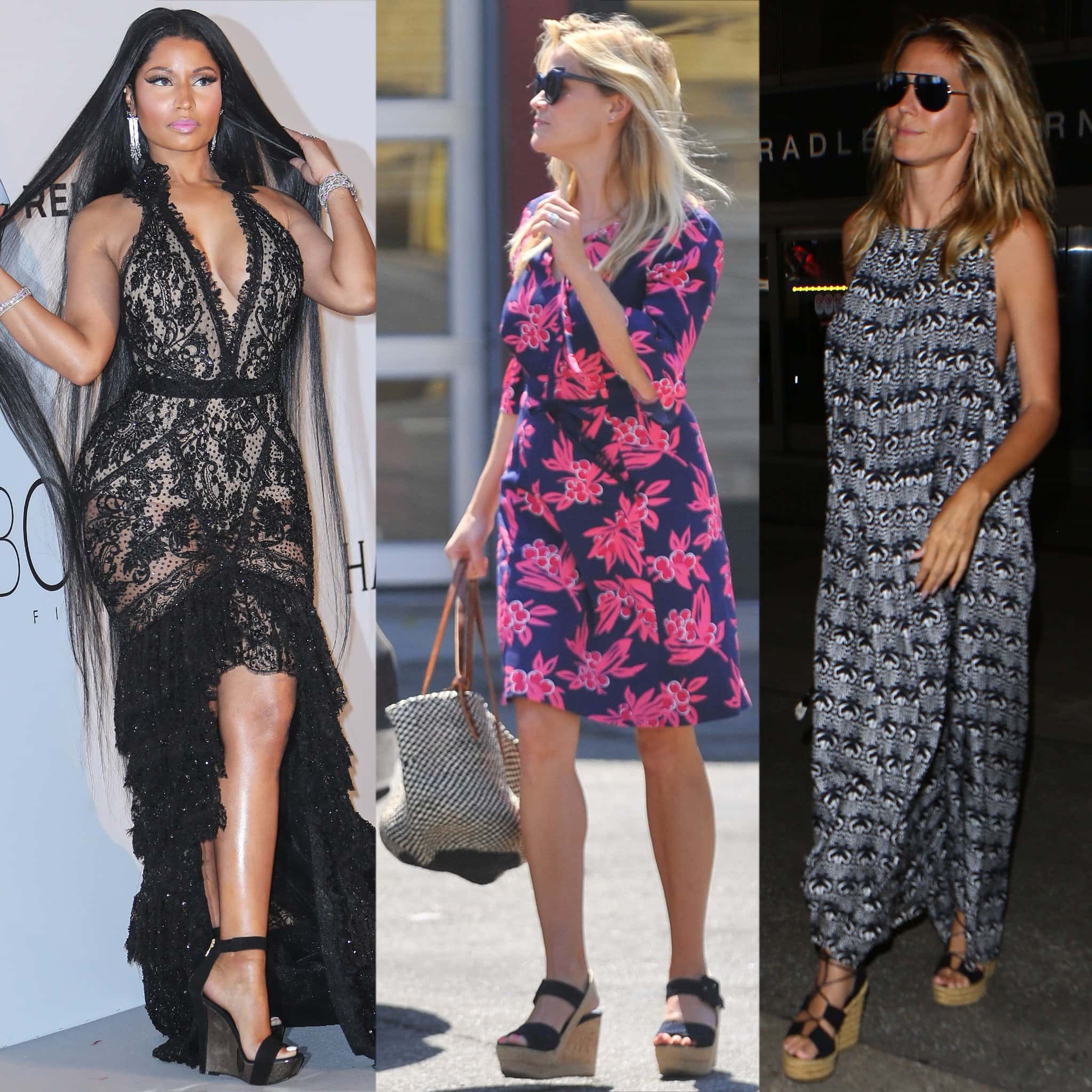 Nicki Minaj, Reese Witherspoon, and Heidi Klum show how platform wedges can range from dramatic statement shoes to more understated warm-weather sandals (Credit: John Rainford / WENN)
Espadrille wedges often use braided jute or a similar rope-effect material around the sole, while other platform wedges may be made from cork, rubber, leather-covered structures, or synthetic materials.
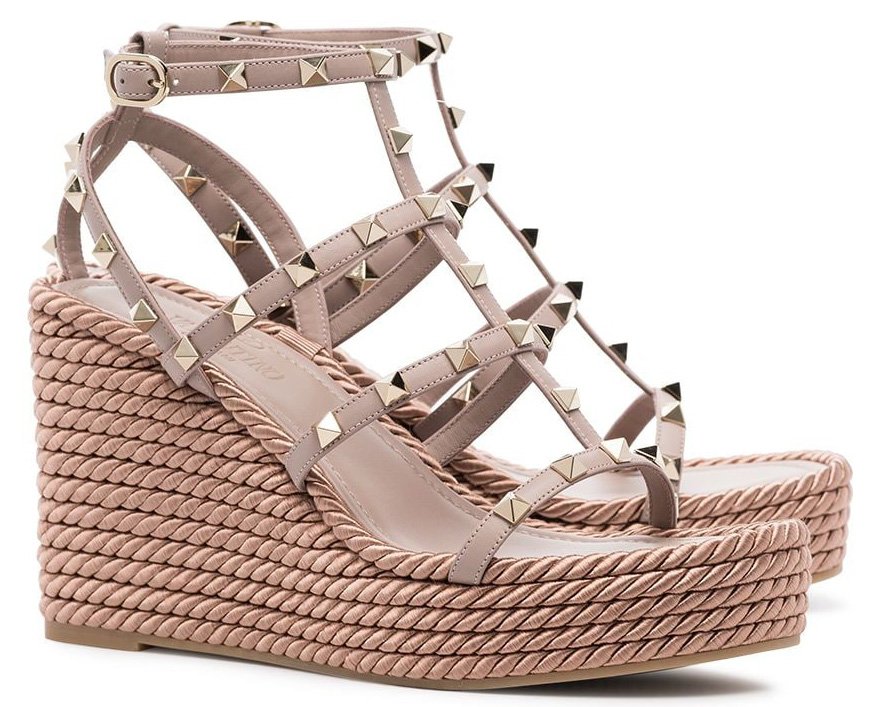 Valentino’s Rockstud wedge combines a continuous platform sole with the pyramid studs and caged straps associated with the Rockstud line
The Valentino Rockstud wedge demonstrates how embellishment can make the upper as visually prominent as the platform itself.
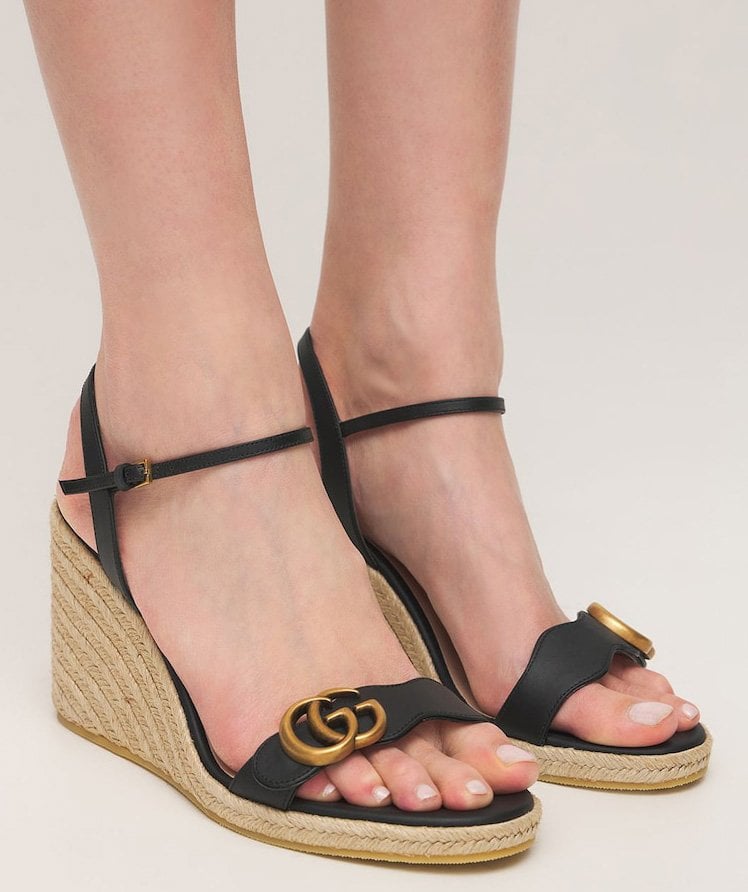 Gucci combines a jute-wrapped espadrille wedge with black leather straps and prominent Double G hardware
Platform espadrilles offer a different construction, pairing an elevated sole with the rope-wrapped look of traditional espadrille footwear. They are one of several variations covered in our broader guide to women’s shoe styles.
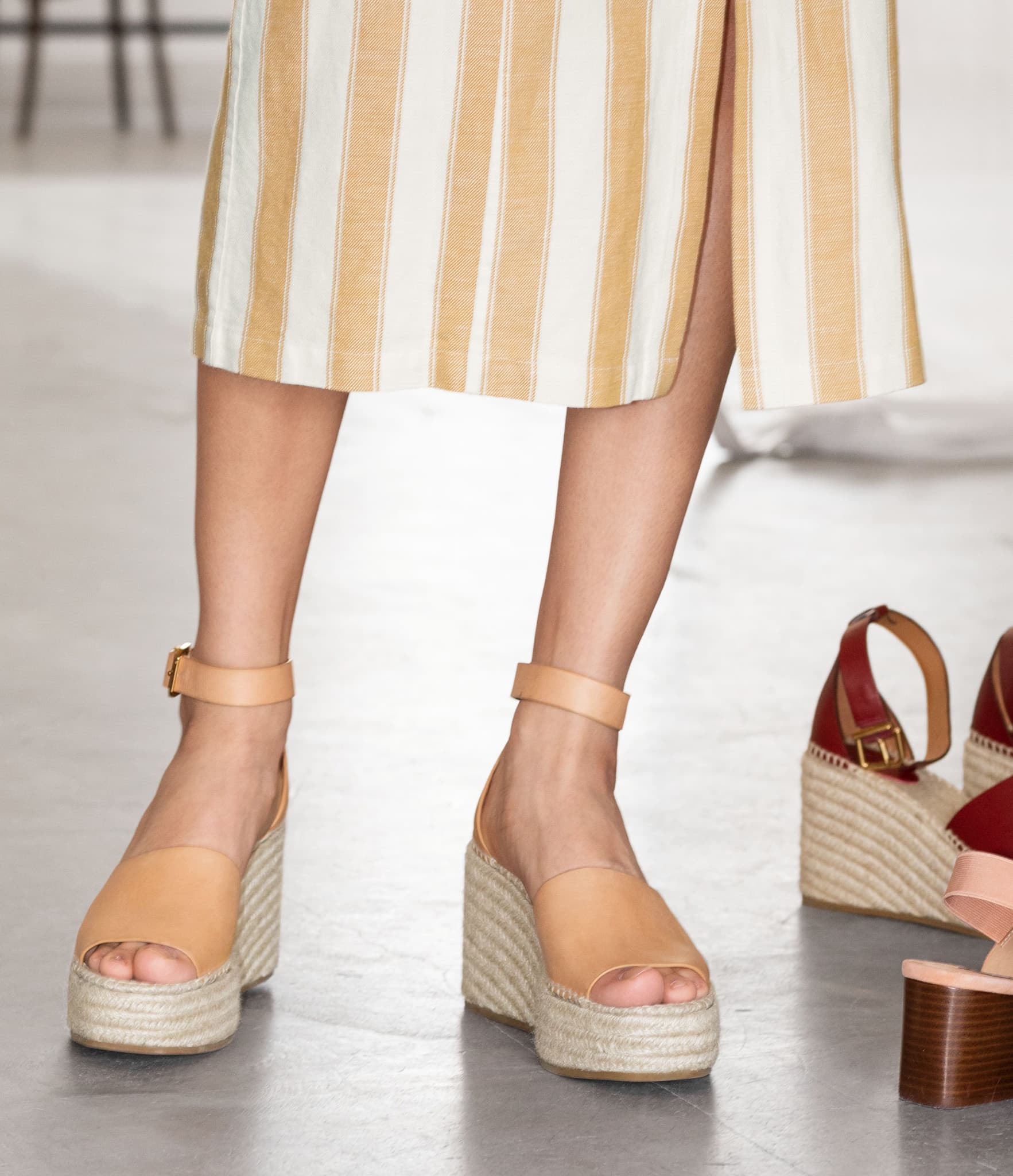 Platform espadrille wedges combine a raised forefoot with the continuous rise of a wedge and the rope-wrapped construction associated with espadrilles
5. Platform Boots: From the Lita to Chunky Lug Soles
Platform boots can take some of the most dramatic forms of the elevated sole. The construction has appeared on ankle boots, lace-ups, Chelsea boots, knee-high styles, and exaggerated high-heeled boots.
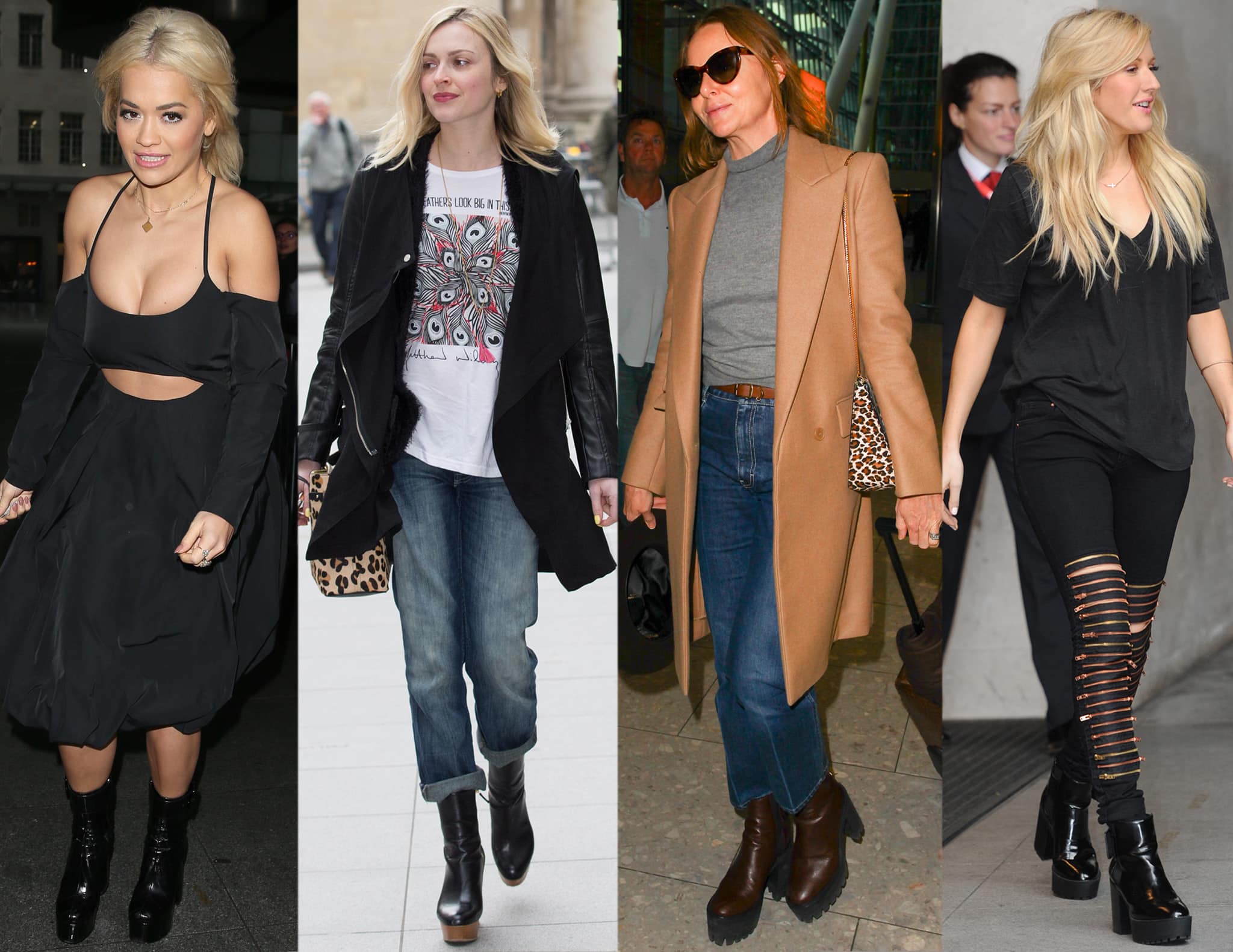 Rita Ora, Fearne Cotton, Stella McCartney, and Ellie Goulding demonstrate the range of platform boots, from ankle styles to taller silhouettes (Credit: Michael Wright / Mario Mitsis / WENN)
Some designs visually conceal the platform within the upper, while others deliberately emphasize an oversized sole. The same construction can also appear on taller knee-high boots.
How Jeffrey Campbell’s Lita Defined the Early-2010s Platform Boot
The platform ankle boot had a particularly visible fashion moment in the early 2010s with Jeffrey Campbell’s Lita boot. Named after Lita Ford, the lace-up design combined a thick forefoot platform with a very high block heel and became closely associated with the period’s fashion-blog and street-style imagery.
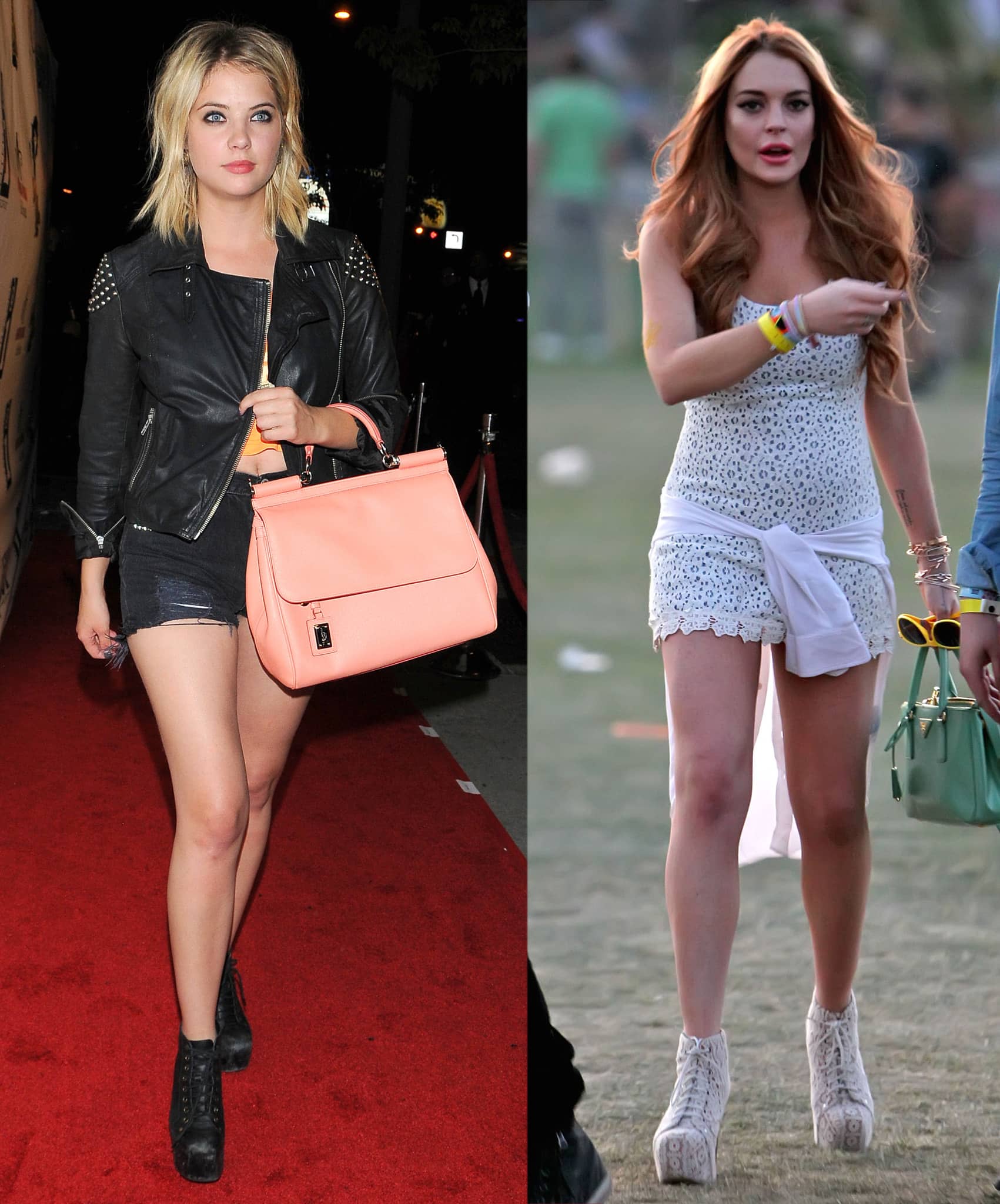 Ashley Benson wears black Jeffrey Campbell Lita boots while Lindsay Lohan steps out in a white lace-up platform style, illustrating the towering ankle-boot proportions associated with the early-2010s platform revival (Credit: WENN)
At the flatter end of the category, substantial rubber soles can create height without a separate high heel.
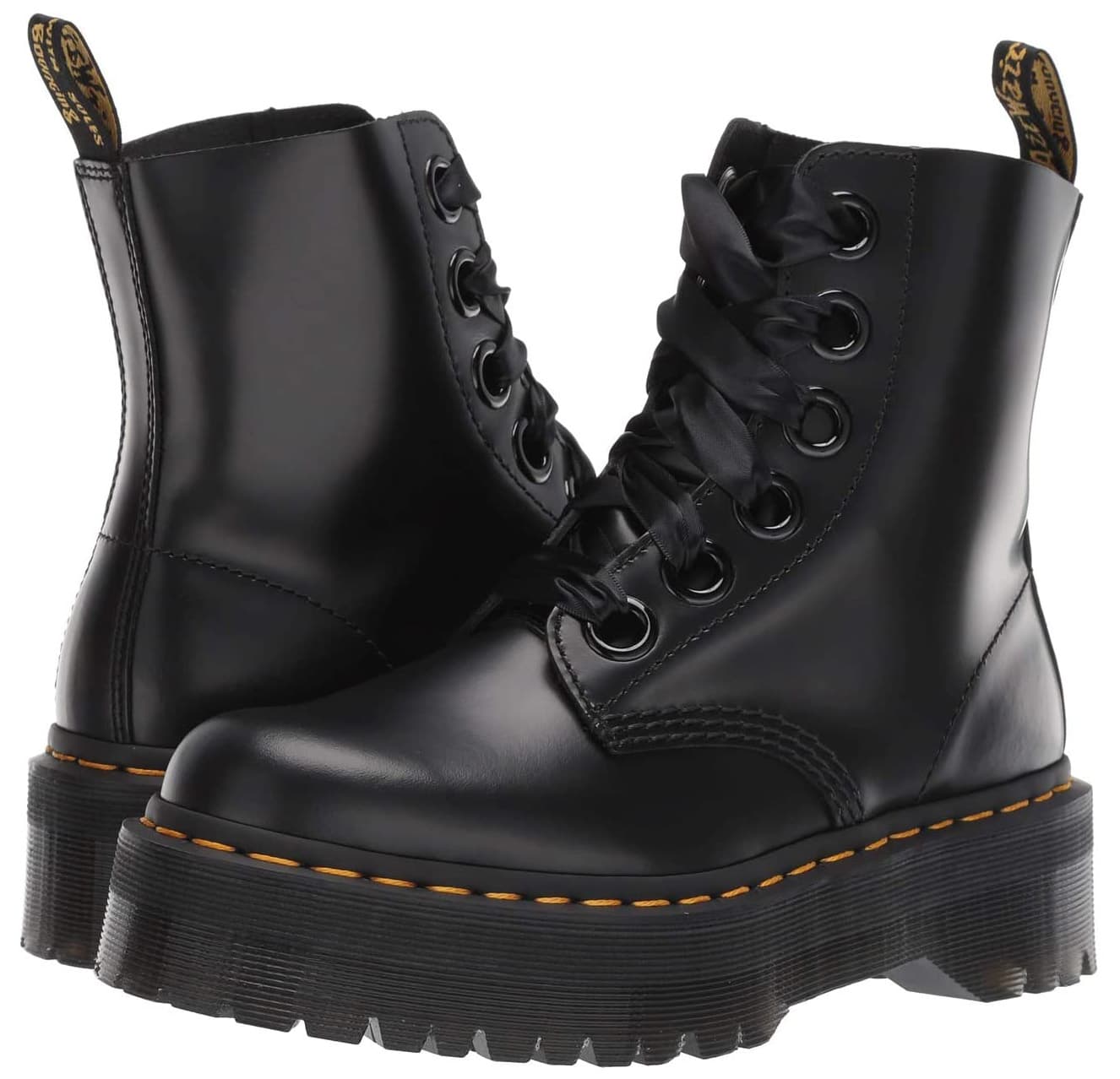 Dr. Martens’ Molly boot places oversized eyelets and ribbon laces above a chunky Quad sole, showing the flatter, lug-soled side of platform-boot design
Why Platform Shoes Keep Coming Back
From Ferragamo’s Rainbow sandal and the Spice Girls’ towering sneakers to Saint Laurent’s Tribute and Tribtoo heels and Jeffrey Campbell’s Lita boots, platforms have survived repeated fashion cycles because they aren’t tied to one silhouette. The defining idea—a raised sole beneath the forefoot—can be reworked as a sneaker, wedge, sandal, pump, loafer, or boot.
That variety is just as visible in contemporary celebrity footwear. In 2026, Kate Hudson wore metallic Aquazzura Aimée platforms beneath an Armani Oscars gown, Teyana Taylor paired sculptural platform pumps with Schiaparelli couture, and Sofia Vergara and Mel B approached dramatic height from opposite directions in crystal platform sandals and chunky platform boots. The proportions change, but the construction continues to give designers another way to play with height, shape, and visual weight.
👠 How Celebrities Are Wearing Platforms in 2026:
- ✨ Kate Hudson brings ’70s-inspired platforms to the Oscars, pairing silver Aquazzura Aimée sandals with double platforms and towering block heels with her shimmering jade-green Armani gown.
- 🌸 Naomi Watts, Jessica Chastain, Lily James, and Gugu Mbatha-Raw embrace bohemian platforms at Paris Fashion Week, showing how substantial soles can work with tailoring, leather, and romantic prints rather than only evening gowns.
- 🖤 Teyana Taylor gives the platform pump a couture treatment at Schiaparelli, grounding sheer Chantilly lace and dramatic tailoring with black satin pumps featuring thick platforms, pointed toes, and flared heels.
- 🔥 Sofia Vergara and Mel B show two completely different sides of the platform: sparkling Dolce & Gabbana Keira sandals for Vergara and towering croc-embossed triple-platform boots for Mel B.
- ⚡ Cynthia Erivo pushes platform proportions to the extreme in Vivienne Westwood, using towering boots to give custom tartan tailoring an unmistakable punk edge.
- 💗 Chase Infiniti contrasts romantic pink Louis Vuitton with heavy black platform heels, demonstrating how the visual weight of an oversized sole can deliberately counterbalance softer clothing.
How to Choose the Right Platform Shoes: Look Beyond Heel Height
The most useful question when choosing platform shoes isn’t simply how tall they are. Look at how much height sits beneath the forefoot, how that relates to the heel, how broad and stable the base feels, how easily the sole flexes, and whether the shoe holds your foot securely.
A flatform sneaker and a towering platform stiletto may add similar amounts of height while feeling—and looking—completely different. A wedge distributes that height differently again, while a chunky platform boot adds visual weight as well as elevation. Understanding those differences makes it easier to choose a platform for the way you actually intend to wear it rather than judging the shoe by heel height alone.