
Hobo bags are defined less by size than by shape: a soft, slouching body, usually with a curved or crescent profile and a single shoulder strap. The relaxed construction can range from roomy everyday bags to compact designer styles, but the characteristic drape remains the defining feature.
The silhouette has moved through decades of fashion, from its association with bohemian dressing to polished leather interpretations by luxury houses. Designers including Gucci, Bottega Veneta, Chloé, Miu Miu, Jimmy Choo, Etro, and Tory Burch have all explored variations on the relaxed shoulder bag.
Below, we explain what defines a hobo bag, how it differs from a tote or satchel, the advantages and drawbacks of its slouchy construction, and what to consider when choosing and styling one.
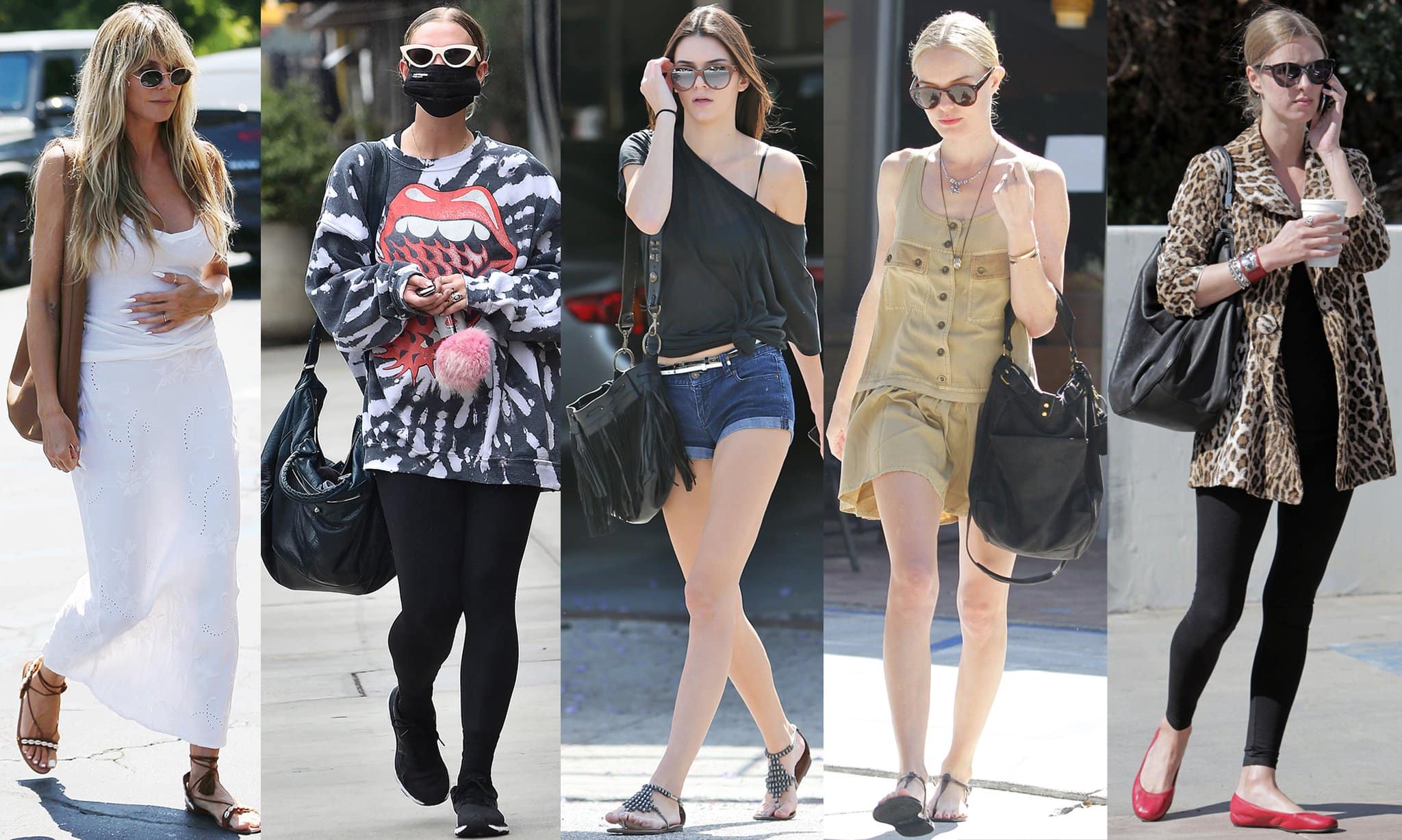 Heidi Klum, Ashlee Simpson, Kendall Jenner, Kate Bosworth, and Nicky Hilton show how the hobo silhouette can range from oversized leather bags to smaller, softer shoulder styles (Credit: Mega / Michael Wright / WENN)
👜 Jump to a Section:
- 1. What Is a Hobo Bag?
- 2. Why Is It Called a Hobo Bag?
- 3. How Designers Reinvented the Hobo Bag
- 4. Iconic Designer Hobo Bags
- 5. Hobo Bag vs. Tote vs. Satchel
- 6. Hobo Bag Pros & Cons
- 7. How to Choose a Hobo Bag
- 8. How to Style a Hobo Bag With Shoes
- 9. How Material Changes a Hobo Bag
- 10. Are Hobo Bags Practical?
What Is a Hobo Bag? The Shape, Strap, and Structure Explained
A hobo bag is typically identified by its soft construction, curved or crescent-shaped body, and single shoulder strap. Unlike a rigid tote, the body is designed to bend or drape rather than hold a sharply defined shape.
Although hobo bags became especially visible in celebrity style in the early 2000s, the silhouette isn’t limited to oversized bags. Designers produce everything from compact shoulder bags to roomy styles large enough for work or travel essentials.
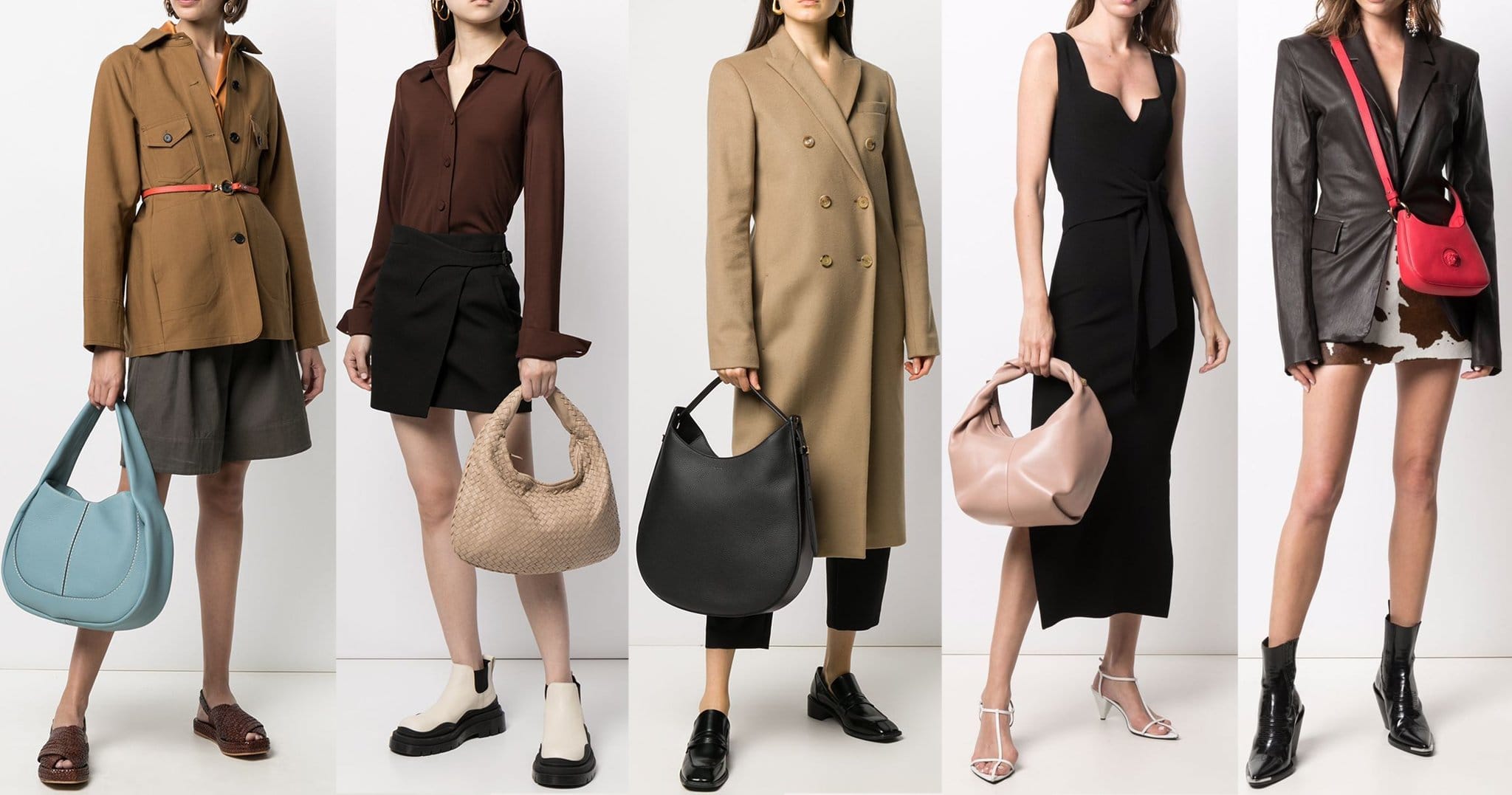 Hobo bags vary widely in size and structure, but a curved body, soft construction, and a shoulder-friendly handle are common
Soft leather and suede create the most pronounced slouch, while grained leather, coated fabrics, and more structured constructions hold their shape better. The material therefore changes not only how a hobo bag looks, but also how it carries and wears over time.
Why Is It Called a Hobo Bag? The History Behind the Name
The name refers to the bindle — a bundle of belongings traditionally depicted hanging from a stick over a traveler’s shoulder. The fashion version translates that visual idea into a soft bag that hangs and folds around its contents.
Over time, the silhouette became associated with relaxed and bohemian dressing, particularly during the 1960s and 1970s, before returning in different forms across later decades. The early-2000s revival is especially recognizable in celebrity street style, when oversized leather bags were frequently paired with casual off-duty outfits.
Mary-Kate and Ashley Olsen became particularly associated with oversized, relaxed silhouettes, an aesthetic they later developed through The Row. Their 2016 Met Gala appearance with bags from The Row shows how that preference for soft, voluminous accessories translated into their own luxury label.
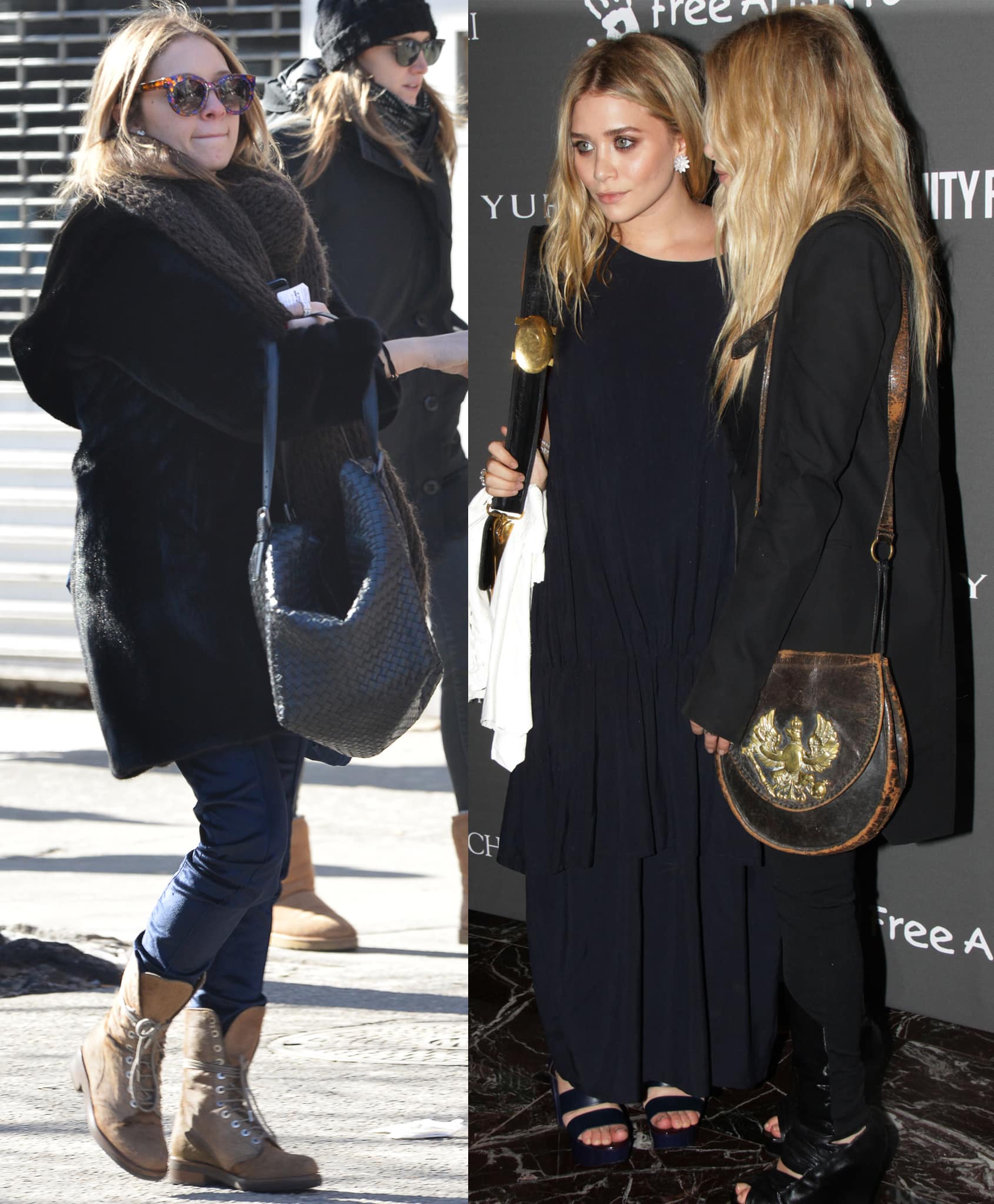 Mary-Kate and Ashley Olsen helped make oversized, slouchy bags a recognizable part of early-2000s bohemian celebrity style (Credit: TNYF / WENN)
The terminology itself has also attracted criticism because of its association with homelessness and itinerant workers. “Hobo bag” remains widely used as a fashion category, although some designers and retailers instead use terms such as slouch bag, crescent bag, or relaxed shoulder bag.
From Bohemian to Polished: How Designers Reinvented the Hobo Bag
The hobo bag has never been limited to one decade or aesthetic. What changes is the degree of structure, the scale of the bag, and the hardware and materials designers use around its familiar sloping silhouette.
Some versions are deliberately soft and almost collapse when set down, while others use firmer leather to create a more defined crescent. Exterior pockets, zippers, detachable crossbody straps, chain handles, woven leather, and prominent hardware can make two hobo bags look dramatically different while retaining the same basic idea.
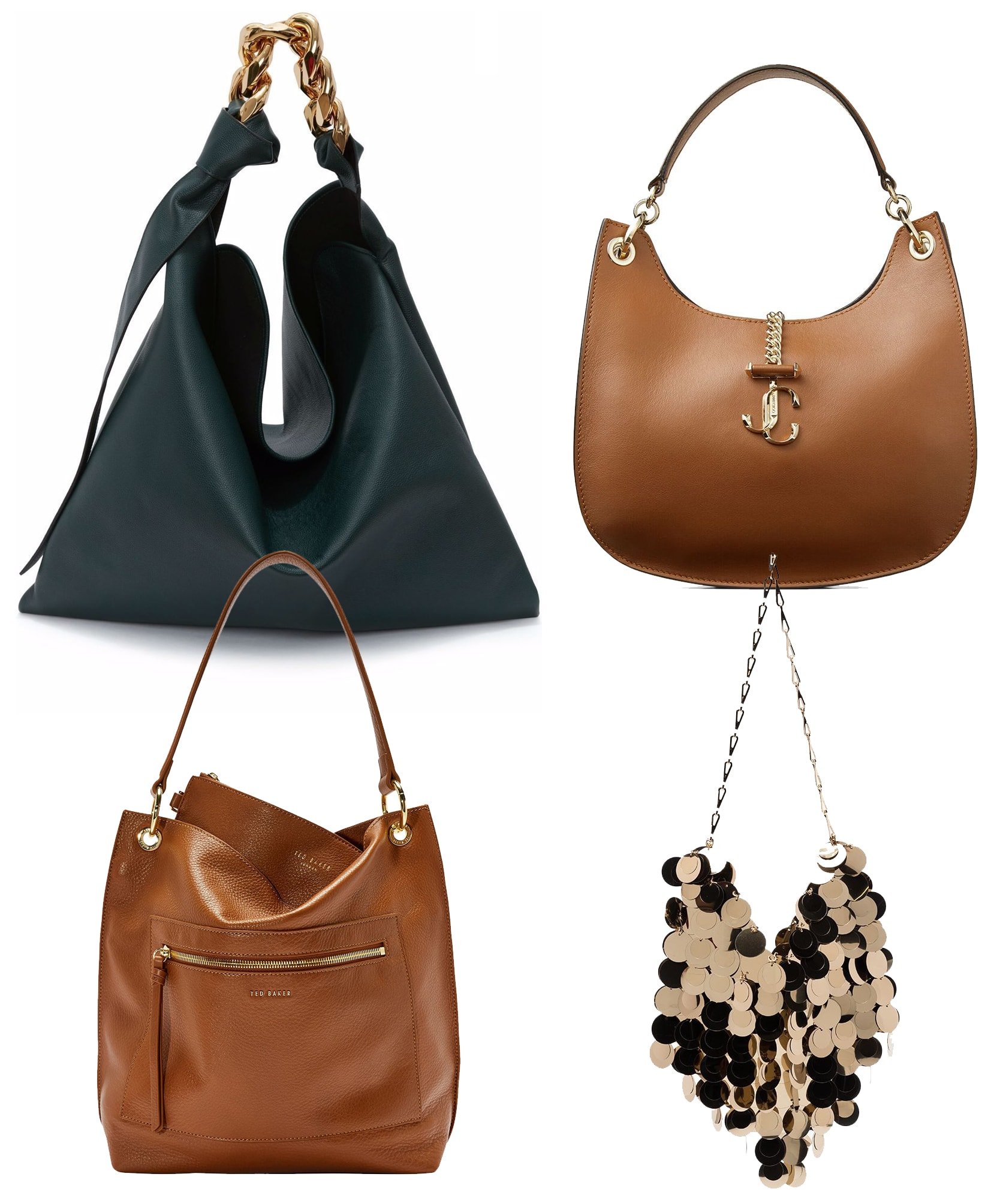 Modern hobo bags range from softly draped leather designs to more structured interpretations with woven finishes, hardware, and compact proportions.
Iconic Designer Hobo Bags: Gucci, Bottega Veneta, Miu Miu & Chloé
Luxury designers have repeatedly adapted the hobo shape, sometimes preserving its soft, bohemian character and sometimes turning it into something considerably more polished.
- Gucci Jackie: Closely associated with Jacqueline Kennedy Onassis, the Gucci Jackie has a curved half-moon shape and signature hardware. Its cleaner construction demonstrates how a hobo-like silhouette can look polished rather than overtly bohemian.
- Bottega Veneta: The house’s signature Intrecciato woven leather works particularly well with soft, flexible bags. YNS has documented Amanda Seyfried carrying a convertible Bottega Veneta Intrecciato design that could shift between folded satchel, hobo, and square-tote shapes.
- Miu Miu Wander: The compact Wander shows that a hobo doesn’t need to be oversized. Its rounded silhouette has appeared in leather and velvet interpretations, including versions styled for evening rather than everyday use.
- Chloé: The French house frequently leans into the softer side of the silhouette, using suede, rounded construction, and decorative hardware to emphasize the hobo bag’s bohemian associations.
These bags are not identical in construction, and not every designer labels every curved shoulder bag a “hobo.” Together, however, they show how the basic idea — a bag with a rounded profile designed to sit naturally against the body — can move between bohemian, minimalist, and polished styling.
Hobo Bag vs. Tote vs. Satchel: What’s the Difference?
The easiest way to distinguish these bags is to look at their shape, structure, and handles rather than their size.
A hobo bag typically has a curved, slouchy body and one main shoulder strap. Its soft construction allows the bag to conform to the body and expand around its contents.
A satchel is generally more structured and commonly includes a top handle, often with an additional shoulder or crossbody strap.
A tote usually has a broad, relatively structured body with two parallel handles. That construction can make totes particularly practical for carrying flat or rigid items such as documents and laptops.
Plenty of hybrids exist, so straps alone don’t determine the category. A crescent-shaped bag with a detachable crossbody strap, for example, can still retain the visual characteristics of a hobo bag.
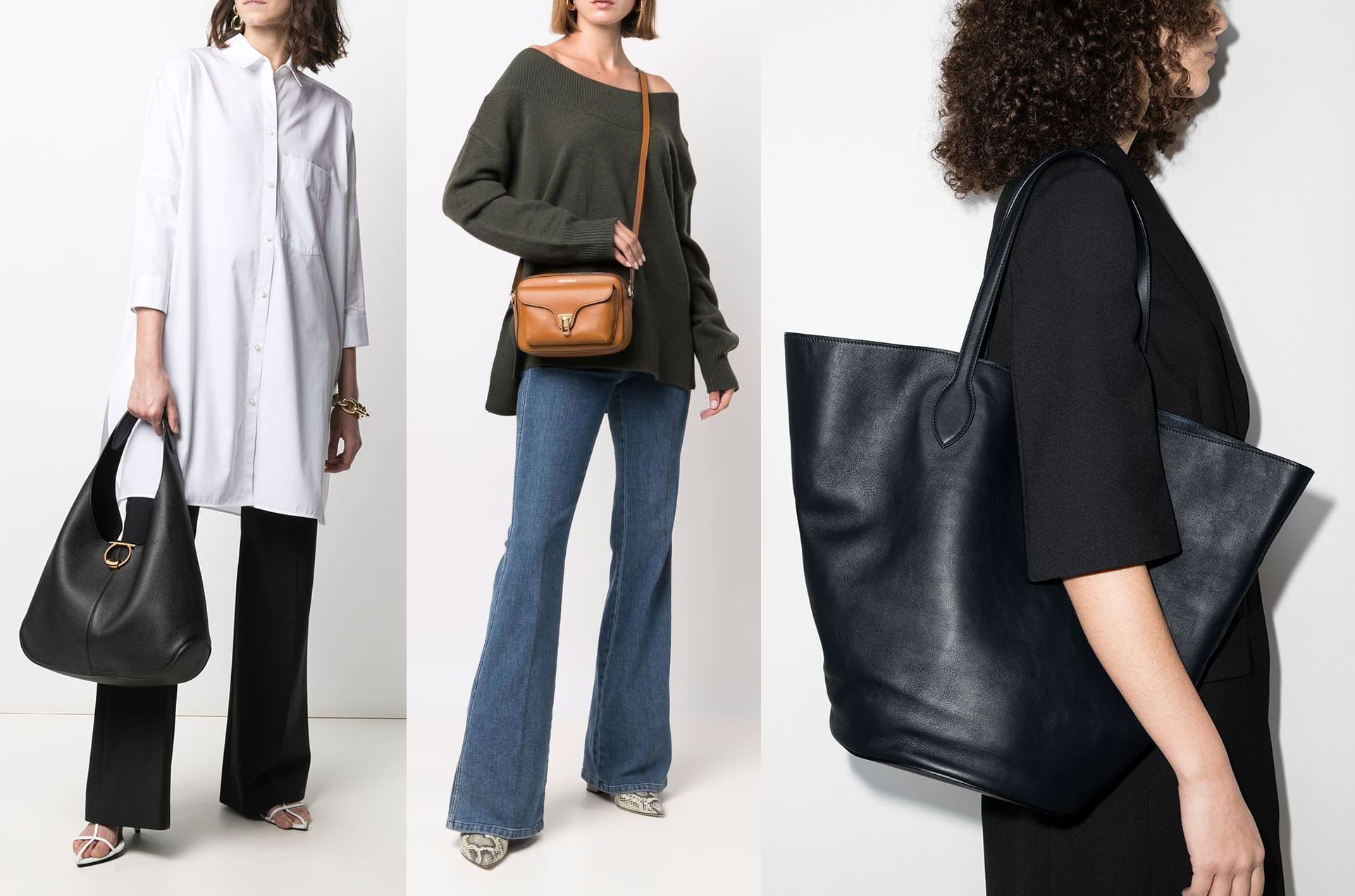 Hobo bags typically have a soft, curved body and one main shoulder strap; satchels are generally more structured and may offer multiple carrying options, while totes usually have two handles and a broader upright shape.
Hobo Bag Pros and Cons: Comfort, Capacity, Organization & Security
The relaxed construction that makes a hobo bag comfortable and visually distinctive also creates a few practical compromises.
- Comfort: A wide shoulder strap can spread the load more comfortably than narrow handles, particularly on larger bags.
- Flexible capacity: Soft sides can accommodate irregularly shaped belongings more easily than a rigid bag.
- Easy everyday styling: The curved silhouette works naturally with casual outfits but can also contrast nicely with tailored clothing.
- Limited organization: Large, unstructured interiors can make keys, cosmetics, and other small items difficult to find.
- Less protection: A very soft bag offers less support for laptops, tablets, glasses, and other items that benefit from a rigid structure.
- Variable security: Some hobo bags close only with a snap or magnetic fastening, so check the closure if you regularly commute or travel with the bag.
How to Choose a Hobo Bag: Size, Material, Closure & Strap
Start with how you intend to use the bag. A large hobo can work well for everyday essentials, but the lack of internal structure may be frustrating if you carry a laptop, documents, or many small items. A compact hobo keeps the characteristic curved silhouette without the weight and bulk of an oversized style.
Material matters. Suede and very soft calfskin create a pronounced drape but may require more care. Grained leather generally hides minor scratches more easily and tends to retain more structure. Canvas and coated materials can be lighter alternatives, depending on their construction.
The difference is easy to see in celebrity styling. Olivia Wilde carried Chloé’s Mini Bracelet Hobo in suede lambskin, where the soft material, rounded body, and bracelet handle reinforced the bag’s relaxed shape.
Check the closure and interior. An open or magnetic top provides quick access, while a zipper offers more security. If the bag has one large compartment, a lightweight organizer can keep smaller belongings accessible without substantially changing the exterior shape.
Consider the strap drop. A hobo bag should sit comfortably under the arm without feeling cramped, particularly when worn over a coat or jacket. Detachable straps add flexibility if you also want to wear the bag crossbody.
How to Style a Hobo Bag With Sneakers, Loafers, Boots & Heels
Because a hobo bag already adds volume and softness, proportion usually matters more than following a particular trend. An oversized slouchy bag can balance streamlined pieces such as straight-leg jeans, leggings, or fitted tailoring, while a compact hobo is easier to pair with dresses and more polished outfits.
Footwear can shift the mood of the same basic silhouette. Ballet flats and loafers reinforce its relaxed character, sneakers make it feel sportier, and pumps or heeled sandals can take a smaller hobo into evening territory. Boots provide another option, particularly when the bag is paired with layered separates or longer hemlines.
👠 Celebrity Hobo Bag & Shoe Pairings to Inspire Your Look:
- 🌸 Taylor Swift paired ballet flats with a mixed-print hobo bag and embroidered Free People dress while shopping in Los Angeles in August 2011, leaning into the silhouette’s bohemian side with soft shapes rather than heavy footwear.
- 👟 Hailey Bieber wore Casablanca x New Balance 327 sneakers with a cream Saint Laurent hobo bag, showing how a luxury shoulder bag can work naturally with oversized sportswear and retro running shoes.
- 🤎 Kate Bosworth grounded a Vanessa Bruno slouchy leather hobo with flat brown loafers, boyfriend jeans, and a red Isabel Marant knit for an understated off-duty combination.
- 🖤 Kendall Jenner matched The Row’s black Nuance hobo with the label’s sleek loafers, using similarly pared-back accessories with a red cashmere polo sweater and baggy jeans.
- 👢 Tessa Thompson contrasted a white Giorgio Armani hobo with By Far croc-embossed leather boots, giving the relaxed bag a sharper finish alongside layered MM6 Maison Margiela separates.
- ✨ Miley Cyrus coordinated a metallic Gucci Mini Jackie hobo with gold Gucci heels at the Gucci Love Parade in Hollywood, taking the curved bag silhouette into full evening glamour.
- ❤️ Selena Gomez paired a red JW Pei hobo bag with glossy Christian Louboutin heels and a custom crimson Giorgio Armani gown at the 2024 Golden Globes, demonstrating how a compact hobo can work within a monochromatic red-carpet look.
- 🌙 Sydney Sweeney carried a black Miu Miu Wander velvet hobo with Alevi Milano Camilla pumps in New York in March 2024, pairing the compact bag with patent pointed-toe heels, sheer tights, and a black Shushu/Tong mini dress.
The bag’s material and scale can help you decide which approach works best. Suede and heavily slouched leather tend to complement casual footwear particularly well, while a smaller hobo in smooth leather, velvet, or a metallic finish can sit comfortably alongside pumps and heeled sandals.
The bag and shoes don’t need to match exactly. Repeating a color or finish can create a coordinated effect, but contrasting a soft hobo with structured loafers, sharp boots, or streamlined sneakers can make the bag’s relaxed shape more noticeable.
Suede, Leather & Woven Hobo Bags: How Material Changes the Shape
The same basic silhouette can look dramatically different depending on material and construction. Suede tends to emphasize softness and movement, smooth leather can create a cleaner outline, and woven leather adds texture while retaining flexibility.
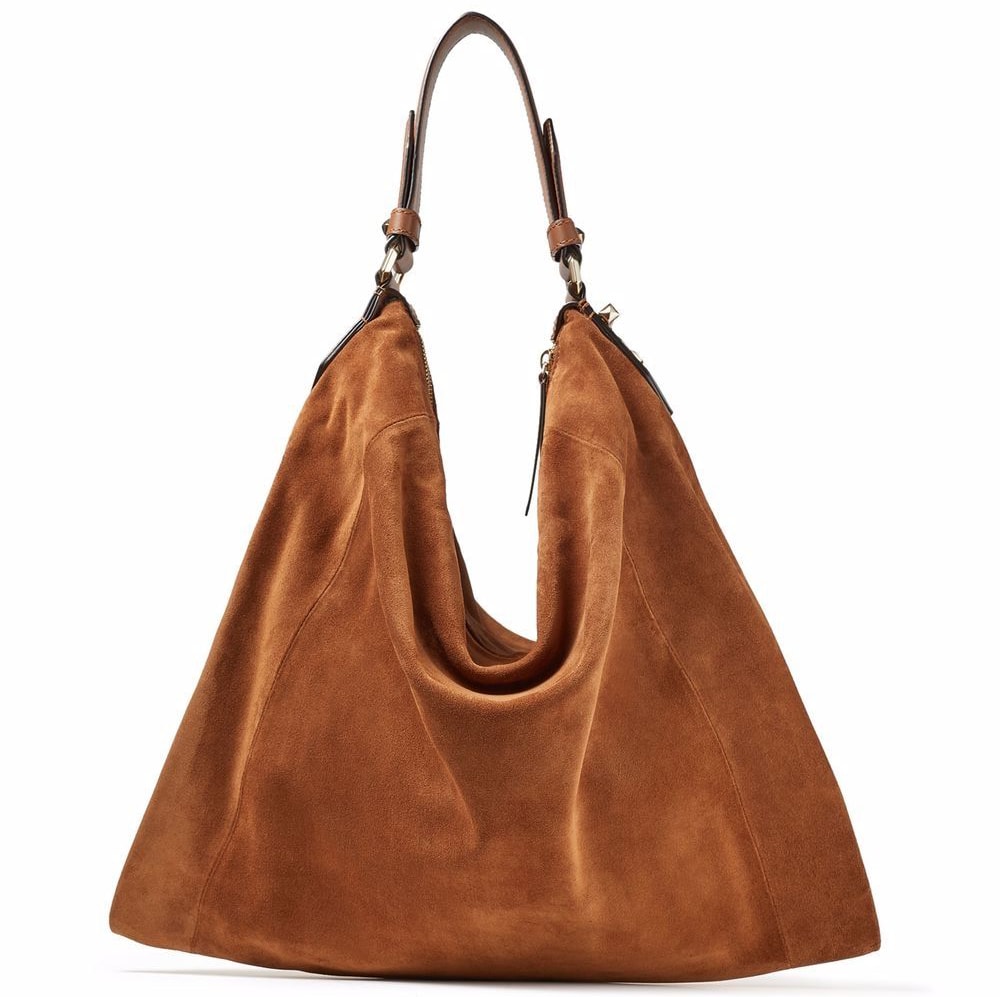 Jimmy Choo’s Ana hobo illustrates how suede creates a softer, more pronounced drape.
Print and surface decoration can change the character of the bag without changing its basic construction. Paisley, tassels, woven finishes, and prominent hardware draw more attention to the accessory, while plain leather emphasizes the silhouette itself.
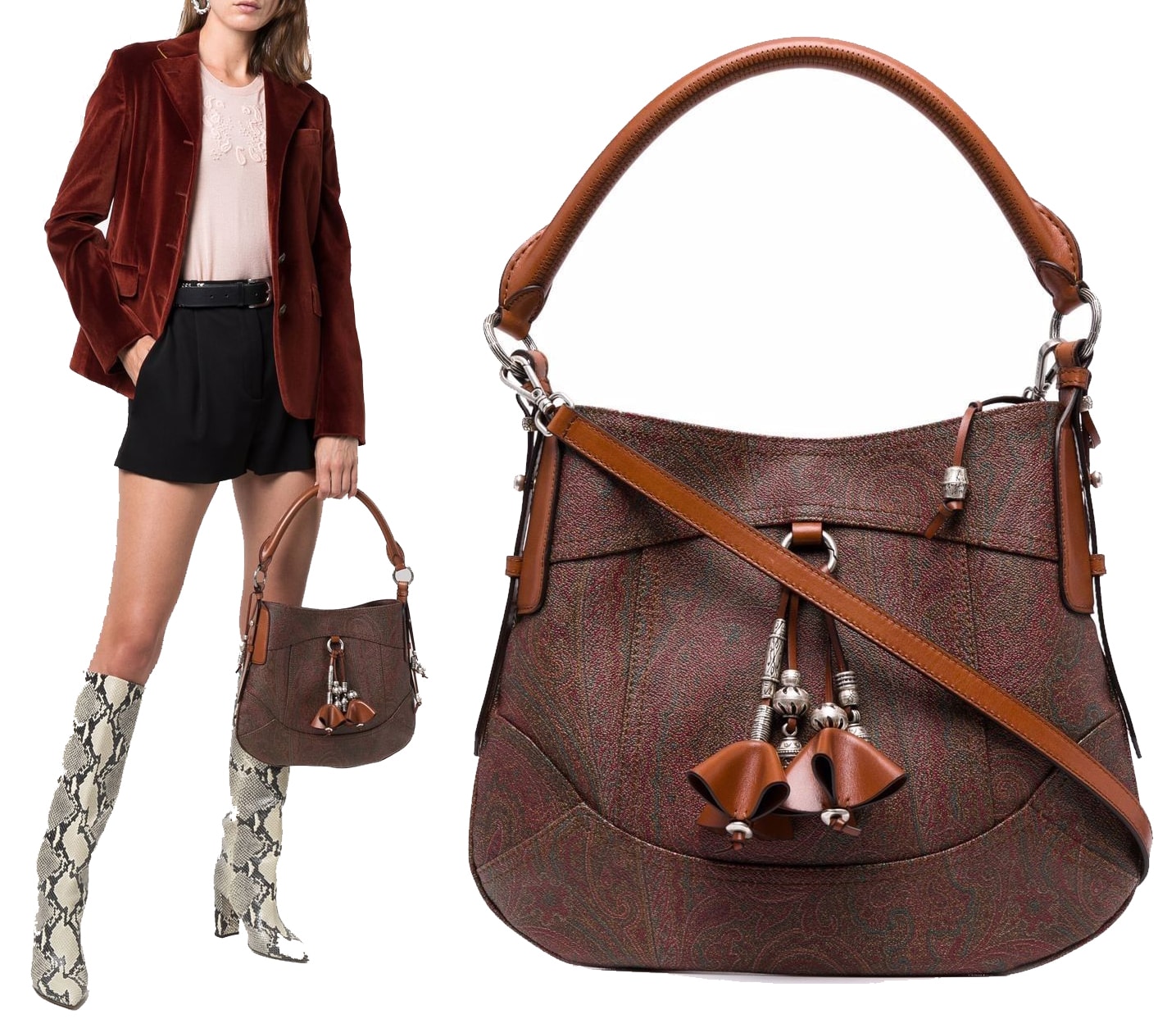 Etro pairs a relaxed bag shape with its signature paisley pattern, leather trim, and decorative tassels.
More structured leather and recognizable hardware can give the hobo shape a cleaner appearance while preserving its curved profile.
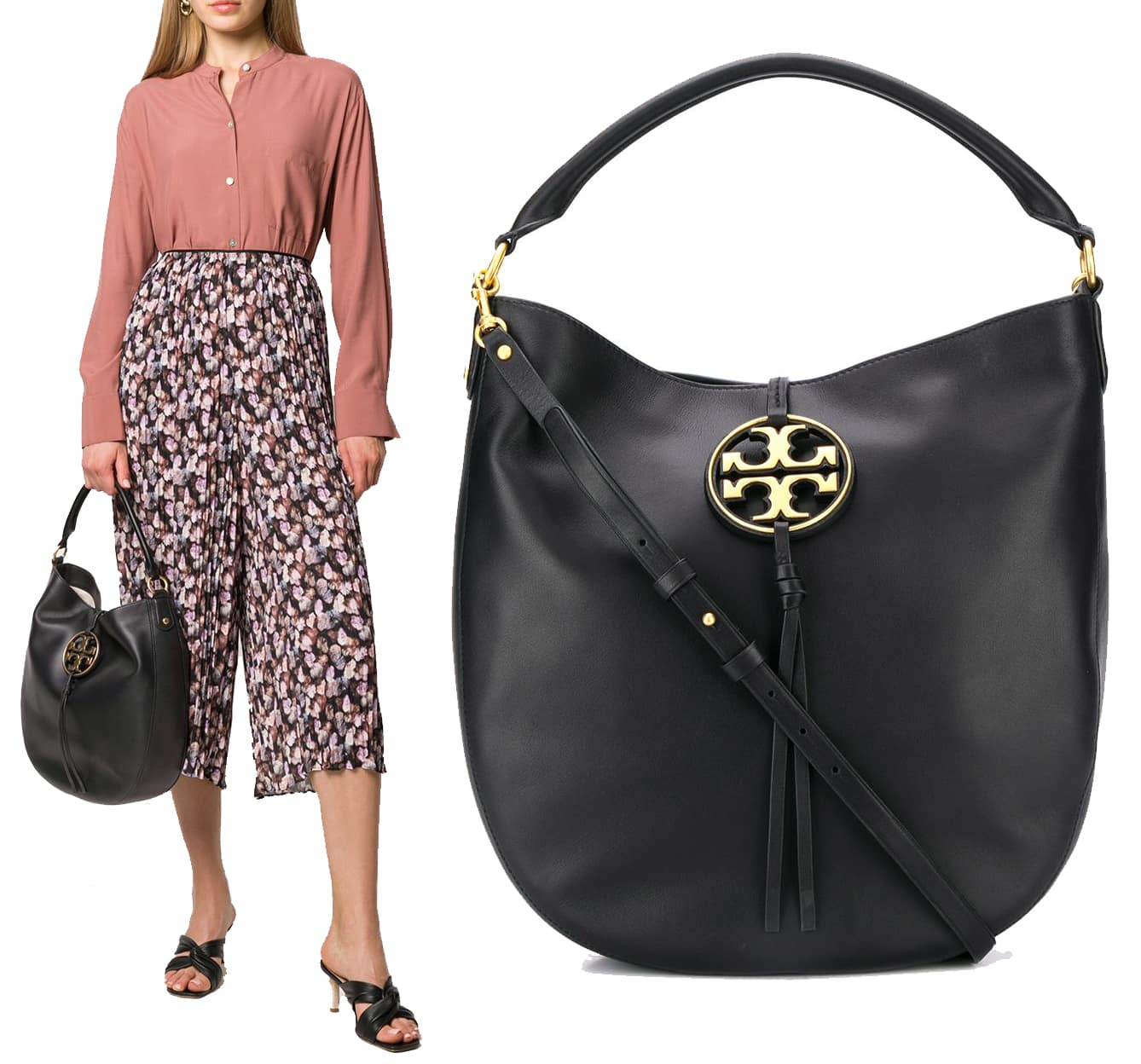 The Tory Burch Miller hobo combines a rounded leather body with recognizable Double T hardware and an adjustable shoulder strap.
Are Hobo Bags Practical? What to Know for Everyday Wear
A hobo bag can be practical for everyday use, but construction matters more than the silhouette itself. A medium-size leather hobo with a secure closure, comfortable strap, and useful interior pockets can work well for daily wear, while an oversized, unlined version may offer more capacity but less organization and protection.
If you like the relaxed shape but dislike searching through a large open compartment, a lightweight bag insert can add pockets while allowing the exterior to retain its natural drape. For commuting or travel, also consider whether the bag closes fully and whether the strap remains comfortable when loaded.
Shoes help determine how that relaxed shape reads as part of a complete outfit. Sneakers and loafers reinforce the hobo’s easy, everyday character, while pumps, heeled sandals, and sharper boots can give a smaller or more structured version a polished finish. Material matters, too: suede naturally feels more casual, while smooth leather, velvet, metallic finishes, and distinctive hardware can shift the same basic silhouette toward evening or dressier styling.
That versatility explains why the hobo has been reworked repeatedly rather than belonging to a single trend cycle. It sits within a much broader family of handbag shapes—from structured totes and top-handle bags to compact shoulder bags—and understanding those differences can make it easier to choose both the bag and shoes that suit an outfit.
👠 From Shoes to Bags: Explore the Accessories That Define a Look:
- 👜 Learn the differences between nine classic handbag silhouettes — from hobo and shoulder bags to totes, satchels, clutches, crossbody bags, and top-handle styles.
- ✨ Discover the stories behind some of fashion’s most enduring designer handbags, including the Hermès Birkin and Kelly, Chanel 2.55, Louis Vuitton Speedy, Lady Dior, Fendi Baguette, and Balenciaga City.
- 🖤 Explore Chanel’s signature handbag designs — including the 2.55, Reissue, Boy, Wallet on Chain, Grand Shopping Tote, and hobo-style Gabrielle.
- 🐎 Trace the history of the Hermès Birkin, from Jane Birkin’s role in its creation to the craftsmanship and design details that turned the leather carryall into a fashion icon.
- 🇮🇹 Explore Gucci’s most recognizable handbag styles and house signatures, with a closer look at the Italian label’s enduring designs, materials, craftsmanship, and authentication details.
- 🎀 Meet Dior’s defining handbag silhouettes, from the Lady Dior and Saddle to the Book Tote and other designs that connect the house’s accessories to its couture heritage.
- 🥖 See how the Fendi Baguette helped define the compact shoulder bag, from its 1997 debut to its famous association with Sarah Jessica Parker’s Carrie Bradshaw.
- 🔍 Learn what to examine when authenticating a designer handbag, including stitching, hardware, logos, materials, serial details, and the warning signs commonly found on counterfeit luxury bags.