
Since Guccio Gucci founded the house in Florence, Italy, in 1921, the brand has become a global benchmark for craftsmanship. However, as one of the most imitated labels in fashion history, Gucci shoes are often difficult to distinguish as authentic.
Even high-end luxury consignment stores have faced scrutiny over their authentication processes, proving that the secondary market always carries a degree of risk.
💫 Jump to a Section:
- 📦 Gucci Boxes: Packaging & Logos
- 🧵 Dust Bags: Fabric, Logos & Quantity
- 🏷️ Box Sticker Labels & Product Details
- 📜 Firenze 1921 Authenticity Card
- 👜 Materials: Leather & Hardware Quality
- 🪡 Construction & Stitching Standards
- 👞 Interior Lining & Logo Stamping
- 🔢 Serial Numbers & Style Codes
- 🟢 Gucci Web Stripes Explained
- 👣 Soles, Imprints & Materials
- 🛍️ Smart Shopping Tips & Red Flags
To ensure authenticity, the most reliable method is to purchase directly from authorized retailers such as Farfetch, Mytheresa, or Nordstrom.
If you are buying vintage or pre-owned, follow these 11 essential steps to distinguish genuine Italian craftsmanship from a counterfeit. For additional protection, review our guides on identifying scam websites and verifying the authenticity of Gucci belts.
1. Examine the Gucci Box: Packaging Details That Matter
Despite passing through the hands of one talented designer after another, the iconic Gucci boxes did not change much over the years. To this day, the brand uses only two box designs: black-and-white and the iconic brown.
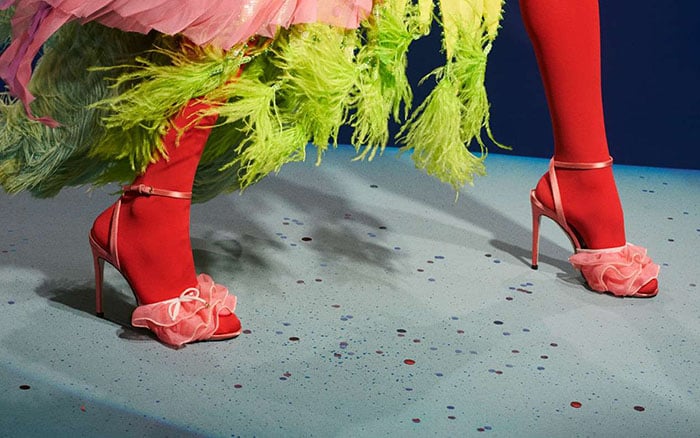 Knowing the subtle details is key—learn how to spot authentic Gucci shoes and avoid convincing counterfeits
For the former, the entire box should be black, except for the cover. The cover will have a black frame around the white part, which makes the packaging look more seamless.
A delicate ‘Gucci’ logo is typically placed at the bottom. The white part should be stark and should feel slightly corrugated.
 James Corden steps out carrying a Gucci shopping bag after a visit to the luxury house’s boutique, underscoring the brand’s instantly recognizable packaging and retail presentation (Credit: Winston Burris / WENN)
The brown box should have the ‘Gucci’ logo printed on the center of the cover. Most fake boxes use a tightly-spaced logo or print it too big – the original one will always look sophisticated.
The ‘GG’ emblem is embossed in a chain-like pattern all over the box. The box should feel strong and not flimsy.
2. Inspect the Dust Bags: Fabric, Logos, and Quantity
As with the boxes, Gucci dust bags also come in black and white or brown. Dust bags are harder to distinguish because they have changed several times over the years.
If you come across an unfamiliar dust bag, always check the following: material quality, accurate printing, alignment, and stitching. Luxury goods should get all of these perfectly.
 Hilary Duff exits a Gucci boutique carrying the house’s signature red shopping bag, pairing her off-duty athleisure look with a touch of unmistakable luxury branding
The newer dust bags are usually white with black drawstrings. A small ‘Gucci’ logo should be on a gray background with a black frame. The bag’s material should be satin-like.
Authentic Gucci products should come with two dust bags (one for each shoe). Counterfeit Gucci usually includes only one.
3. Verify the Box Sticker Label and Product Information
The sticker label on the box should match the details of your purchase. Most counterfeiters won’t bother changing the information, so make sure to check this thoroughly.
An authentic Gucci label typically includes a serial number, description or model name, color, size, barcodes, and a line drawing of the product. Watch for labels with actual product images or handwritten information.
The label on the side should not be plastered on a separate piece of paper. It should be stuck directly onto the box.
4. Look for the Firenze 1921 Authenticity Card
Some Gucci shoes come with a Firenze 1921 card. These are brown cards with the ‘Gucci’ logo printed in yellow gold at the center and ‘Firenze 1921’ right underneath it.
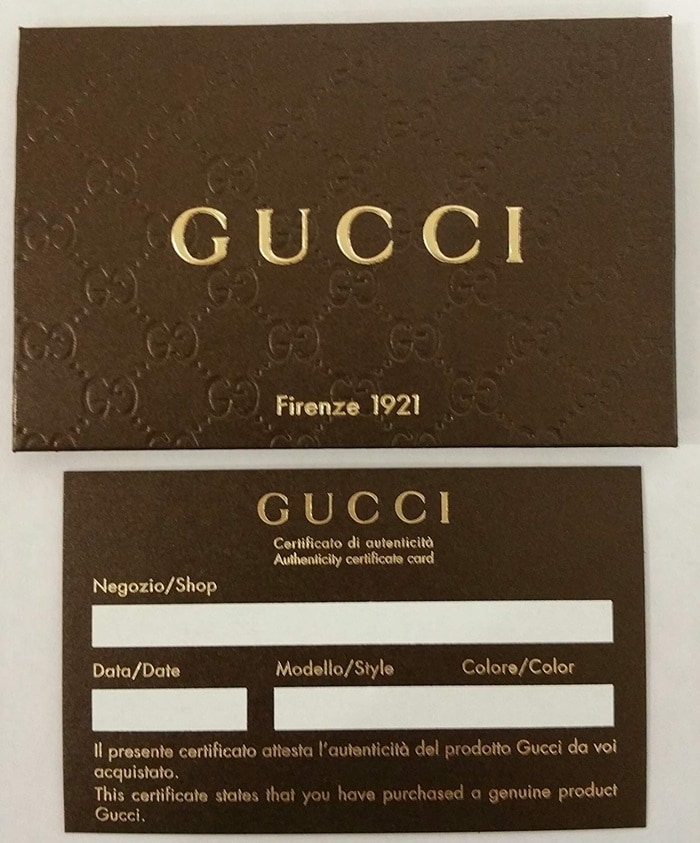 The Gucci “Firenze 1921” card, embossed with the house’s signature GG motif, is included with select authentic styles as an additional mark of authenticity
The ‘GG’ logo pattern is embossed across the card.
5. Assess the Materials: Leather, Hardware, and Finish
It goes without saying that luxury goods connoisseurs should be able to identify high-quality materials from a distance. The two main materials are hardware and leather.
Go window-shopping and familiarize yourself with the feel, smell, and look of authentic leather. Know the weight and shine of quality hardware versus painted plastic ones. Read up, ask questions, and explore different types of luxury materials.
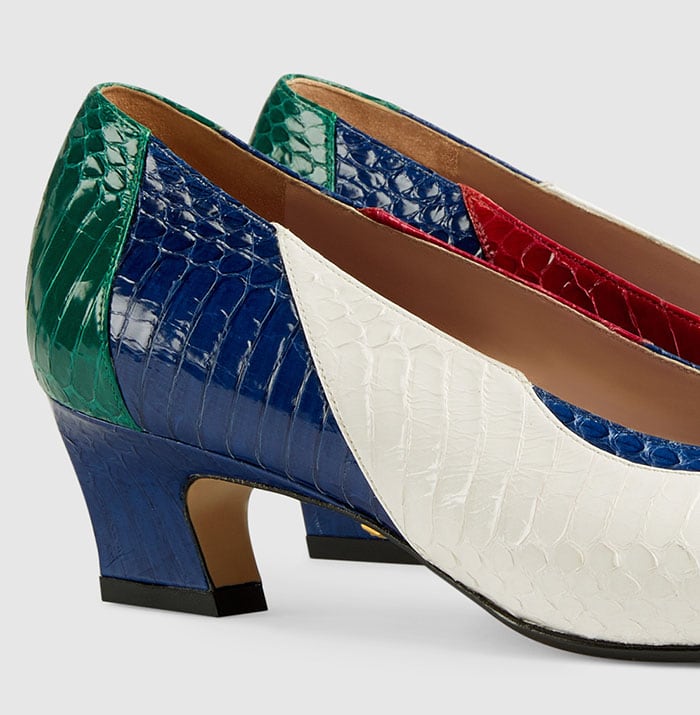 Authentic Gucci shoes are crafted from premium leathers, with consistent texture, precise stitching, and a refined finish that counterfeits struggle to replicate
6. Check the Construction: Stitching, Glue, and Craftsmanship
Luxury goods cost a lot of money for a reason. Beyond material quality, the main difference between originals and counterfeits is evident in their construction.
One of the basic things you must familiarize yourself with is stitching. Gucci prides itself on accurate construction, so expect the stitching to be perfect. Be wary if you spot even one stitch out of place.
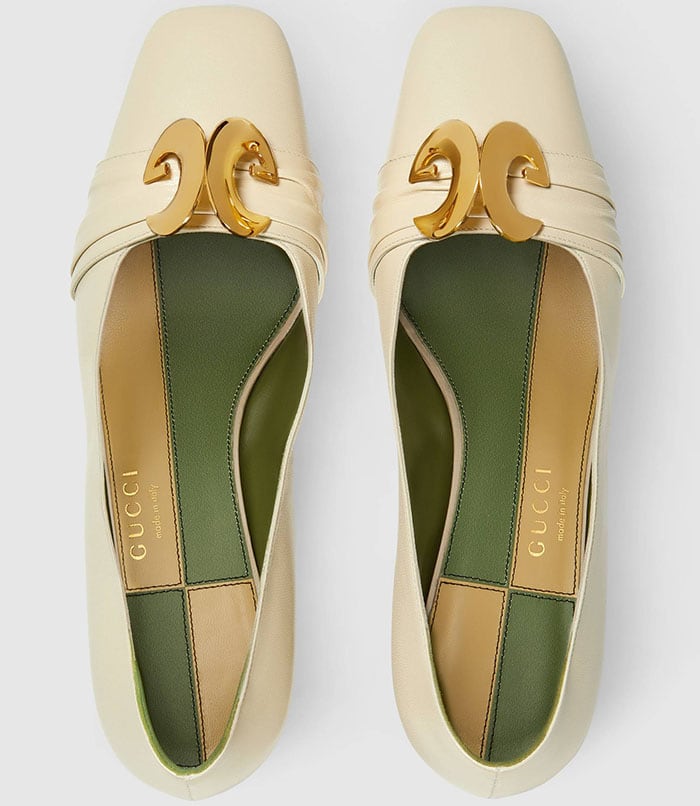 Authentic Gucci shoes feature flawless stitching and smooth leather lining, with clean edges and precise logo stamping throughout
Another thing to watch out for is glue. Luxury goods are typically not glued; they are stitched from start to finish.
7. Examine the Lining and Interior Logo Stamping
Counterfeit shoes often skimp on quality lining materials. The inside lining of an original Gucci shoe should be made of supple leather.
Examine the logo with a picky eye—authentic stamping looks sharp, evenly inked, and never “bleeds” at the edges. Just don’t treat the country mark as a one-size-fits-all tell: depending on the era and style, Gucci may use either “made in Italy” or “MADE IN ITALY,” and the font, spacing, and placement can vary across insoles, linings, and soles.
8. Decode the Serial Number and Style Code
Each style carries a serial code discreetly stamped somewhere on the shoe, but the format isn’t universal. Vintage Gucci pairs often feature a shorter, eight-digit configuration, typically combining a style reference with sizing. Modern Gucci shoes, however, typically display a six-digit style code followed by a four- to six-digit factory or size code, for a total of 10–12 digits.
On sneakers, the code is commonly found at the heel of the lining; on some women’s styles, it may appear on the outsole just above the size marking. Always cross-check this number against the shoebox label—on authentic pairs, the codes should align exactly, even if the layout or length varies by era and model.
9. Study the Gucci Web Stripes: Color, Width, and Finish
One Gucci trademark that is frequently counterfeited is its iconic stripes. The green and red hues are distinctive: a Ferrari red stripe runs across the middle of the forest green stripes. The width of the green stripes should be about 3/4 inch on each side.
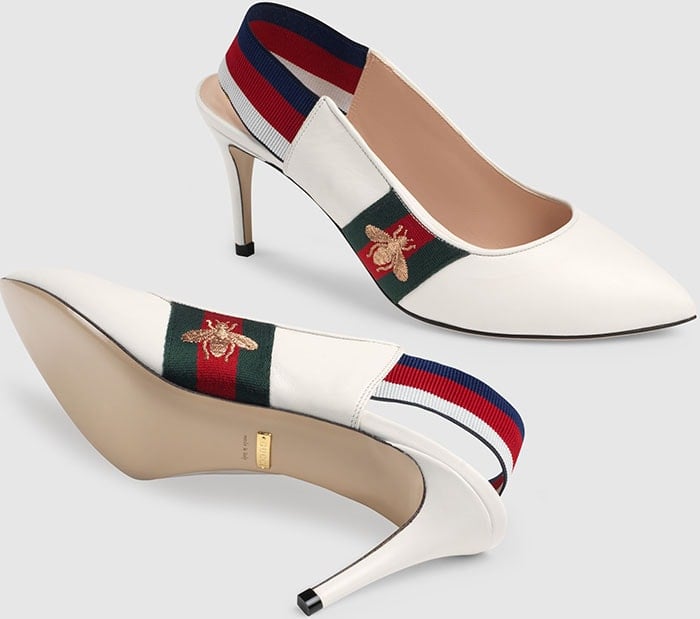 Gucci’s iconic web stripe features muted green and red tones with precise spacing, a detail that counterfeit versions often get wrong
Some counterfeiters are sloppy when it comes to getting the colors right. Fakes usually have brighter green and red tones.
If you come across merchandise with glossy or bold stripes, be wary. Gucci typically renders its iconic stripes in a matte, muted finish.
10. Inspect the Soles: Materials, Markings, and Imprints
For dress shoes, the soles are usually made of authentic leather. Knockoffs typically have soles wrapped in synthetic material.
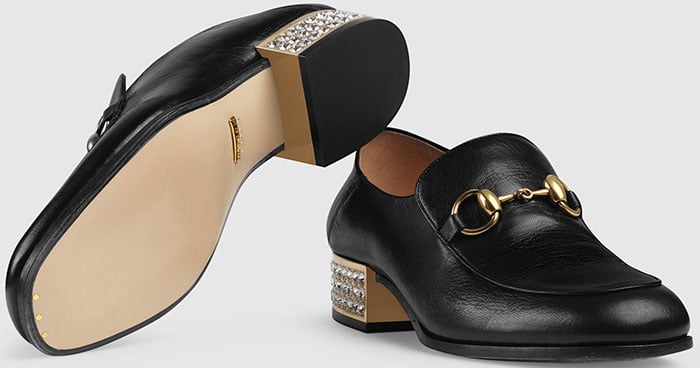 Authentic Gucci shoes feature genuine leather soles with clean edges, precise stamping, and a smooth, refined finish
You can usually find the ‘GUCCI’ logo, ‘Made in Italy’ mark, and the shoe size on the soles. Less traditional designs, however, may vary.
11. Buy Smart: How to Avoid Counterfeits When Shopping
Even the savviest shoppers can be tripped up by ill-intentioned eBay sellers, which is why buying from accredited retailers remains the safest way to avoid counterfeits landing at your door.
Take time to study official product images on Gucci’s website and compare every detail—logos, proportions, materials, and finishes—with the pair you’re considering.
Finally, trust your instincts on pricing. If a style that normally retails around $400 is suddenly listed for $89.99, that “deal” is almost always a red flag. Be equally cautious of sellers offering large quantities of the same style and size, as unusually high inventory is rarely consistent with authentic luxury footwear.
Explore Gucci Shoe Style, Sizing, and Celebrity Moments
Once you know how to authenticate Gucci shoes, the next step is understanding how they’re worn in the real world—from red carpets and premieres to street-style moments and sizing considerations.
Below, explore our curated Gucci features on Your Next Shoes, including celebrity looks, platform-heel moments, and a detailed size guide to help you shop with confidence.
👠 Explore Gucci Shoe & Fashion Features on Your Next Shoes:
- 📏 Gucci shoe size chart & fit tips (conversion, sizing advice, and style highlights) — a comprehensive guide to Gucci sizing and styling.
- ✨ Pink turns London streets into a runway in Gucci “Angel” platform heels — effortless street style meets maximalist platform flair.
- 🌟 Brit Marling’s Gucci Sylvia sandals moment — standout sandals elevate a maximalist fashion moment.
- 👡 Elle Fanning’s Gucci platform pumps & fashion look — dramatic heels and editorial style in standout red carpet coverage.
- 🔥 Chloë Grace Moretz in Gucci Angel platform heels — bold platform footwear fuels memorable fashion impact.
- 👢 Bella Thorne’s Gucci Olympia booties at the TMNT premiere — luxe booties boost playful red-carpet style.