
Founded in 1854 in Paris, French luxury fashion house Louis Vuitton established a standard for travel trunks and handcrafted leather goods that remains a benchmark in the industry.
While the brand is synonymous with its iconic monogram canvas, its enduring appeal lies in a manufacturing process that favors durability and specific European craftsmanship over mass production.
💫 Jump to Authentication Checks:
For those looking to invest in the brand’s history, you can find authenticated pre-owned Louis Vuitton bags, jewelry, and shoes on Farfetch.
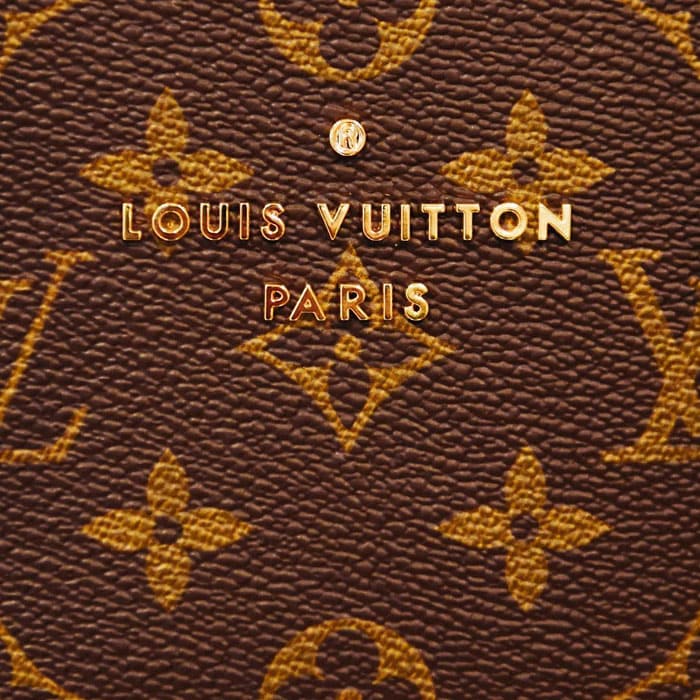 The classic Louis Vuitton logo embellished on monogrammed leather
The longevity of these pieces is a result of specific material choices, from the treated waterproof canvases to the vegetable-tanned Vachetta leather trims.
However, as the brand’s global presence has grown, so has the sophistication of the counterfeit market.
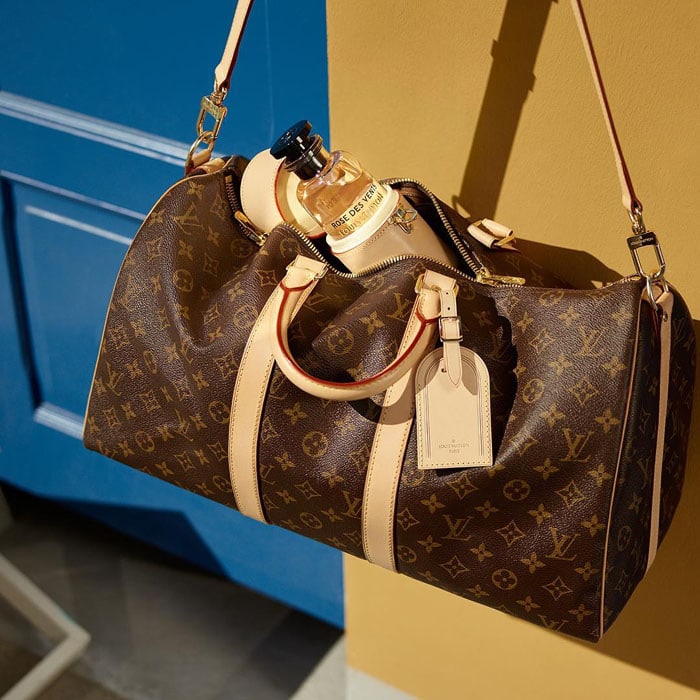 Louis Vuitton bags are made with high-quality materials, such as leather, canvas, and hardware
Distinguishing an authentic piece from a replica now requires a close observation of technical details—ranging from stitch counts to the integration of modern authentication technology.
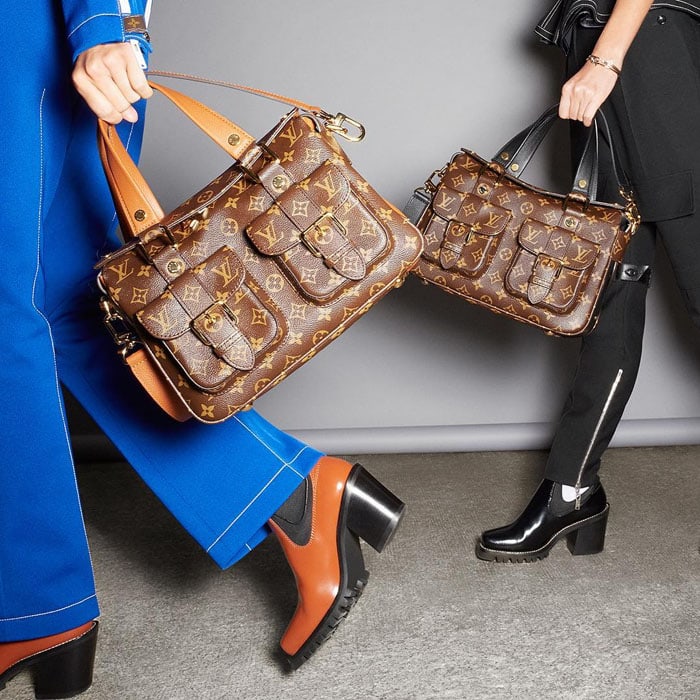 The hardware on a Louis Vuitton bag should be made of high-quality metal
Unfortunately, with the rise in the brand’s popularity also comes counterfeiters. Fake Louis Vuitton bags have dominated the e-commerce market, prompting numerous eBay sellers to offer knockoffs at ridiculously low prices.
In November 2019, CNBC reported that the world’s largest online consumer marketplace for luxury items, The RealReal, had been selling fake luxury products.
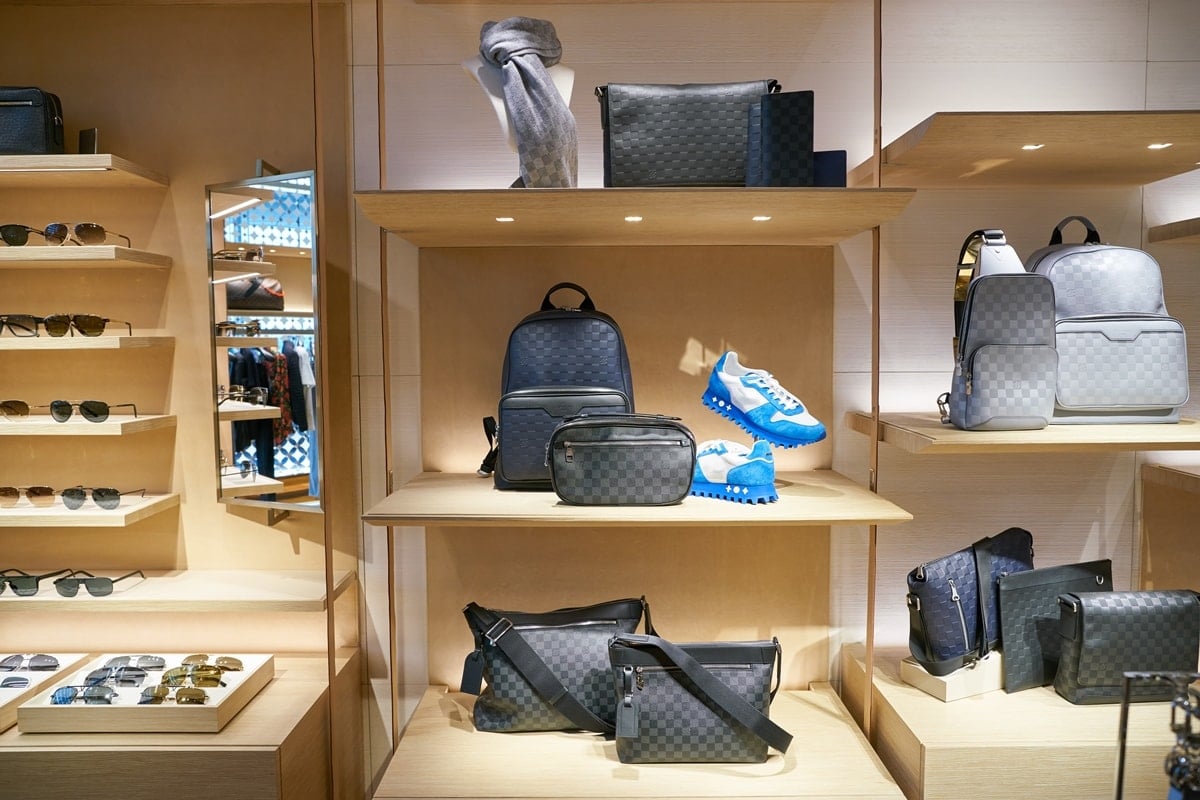 Most real Louis Vuitton bags and purses are made throughout Europe and the United States, and the company does not manufacture handbags in China (Credit: Sorbis / Shutterstock)
In late 2025, the European Union reported that authorities seized over 112 million counterfeit items in 2024 alone, with an estimated value of €3.8 billion. This marked one of the highest volumes in the last decade, specifically targeting luxury labels like Louis Vuitton, Gucci, and Prada.
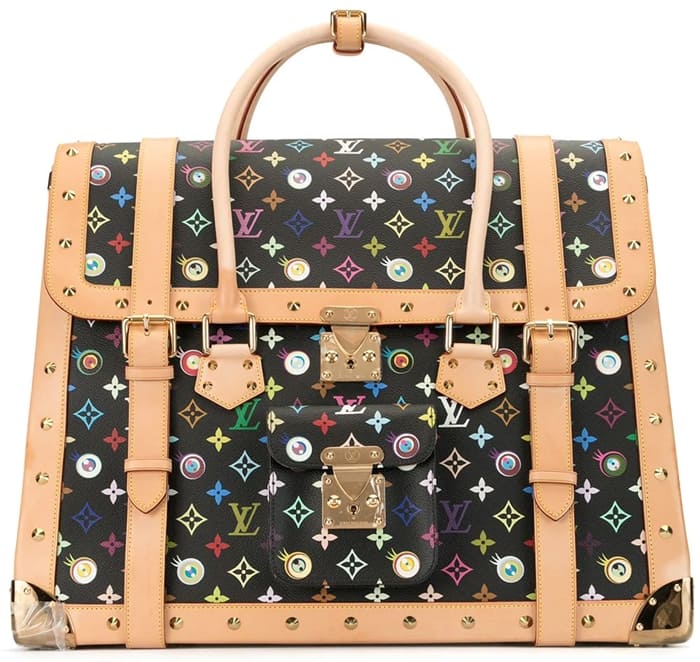 Louis Vuitton 2003 pre-owned Monogram Multicolor Eye Love holdall
Don’t worry – all hope is not lost. We have the know-how to bust those fake Louis Vuittons, saving you the money and hassle of falling prey to counterfeit bag predators.
Without further ado, we bring you nine easy ways to tell whether your LV is the real deal:
1. Stitching & Craftsmanship Should Be Precise
One of the more common ways to know if a bag is authentic is to check its workmanship. Just like Gucci handbags and other luxury designer bags, an authentic purse will have perfectly aligned stitches that are the same length.
The artisans behind authentic bags are so skilled that the number of stitches on one handle matches the other.
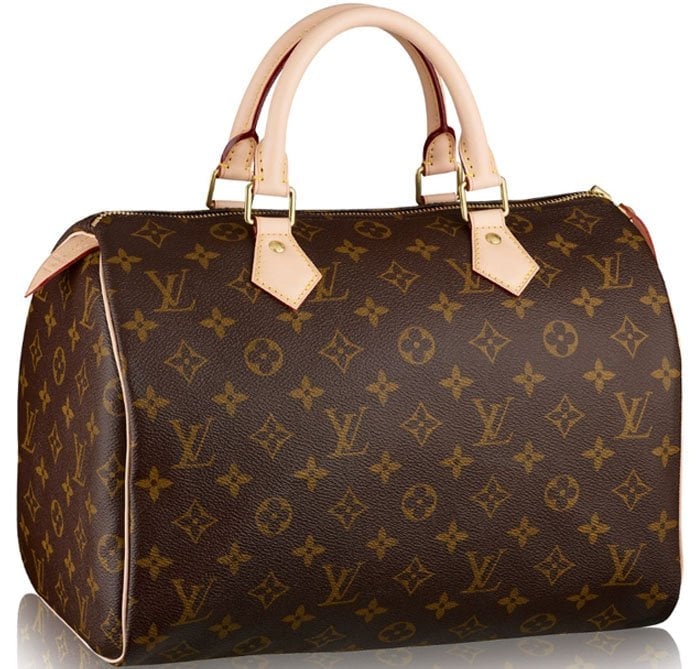 Authentic Louis Vuitton bags will have perfectly aligned stitches that are the same length
For Louis Vuitton bags, the stitching thread is more mustard-colored than a bright yellow hue.
The leather pieces that make up the bag are perfectly cut and fitted together. You might want to put that bag down if there are creases, bubbles, or misalignment due to a poor fit.
2. Hardware Should Feel Solid and Luxurious
Bag connoisseurs know that the next thing to check for is hardware. Louis Vuitton uses top-grade brass hardware that usually comes in a shiny or matte finish.
Do a reflection test for shiny zippers and locks – the brass should reflect as a mirror would.
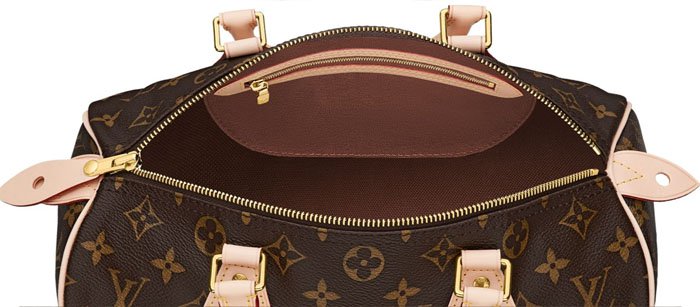 Louis Vuitton uses top-grade brass hardware
The zippers should not snag when you try to unzip the bag. Louis Vuitton also manufactures their own zippers and does not use YKK or other branded zippers.
Hardware should not be covered in plastic. Counterfeit bag makers wrap the hardware in plastic to prevent it from tarnishing right away. Quality hardware will not tarnish and is usually uncovered.
3. The Monogram Pattern Must Be Perfectly Balanced
Another obvious thing to look at in monogram bags is the shell pattern. Louis Vuitton’s classic LV logo should be balanced, with the letter L always lower than the V.
The bag is not authentic if the letters are wonky and misaligned.
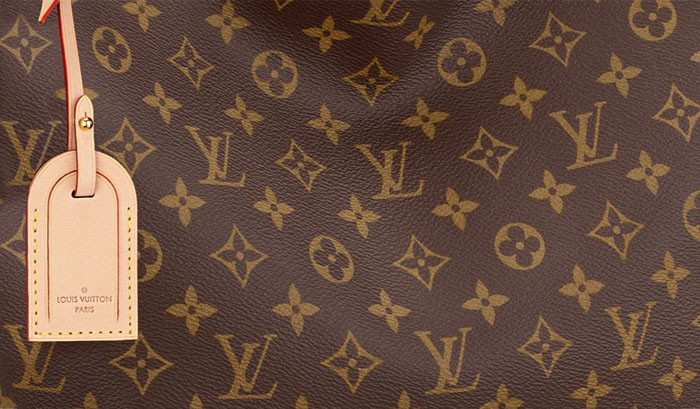 Louis Vuitton’s classic LV logo should be symmetrical, and the letter L should always be lower than the V
It is also important to note the placement and consistency of the monogram pattern. If you look at the pattern diagonally, the order of one strip should be a fleur-de-lis, a circle, another fleur-de-lis, and then the LV logo. The strip, alternating, should contain only the fleur-de-lis symbol.
Look closely at logo embellishments—they should appear perfectly balanced and crisply executed. The house signature typically reads “Louis Vuitton Paris” across two clean, evenly spaced lines, with no distortion or uneven lettering.
4. Vachetta Leather Should Darken Over Time
The leather strips that run across and make up the handles are called Vachetta leather. Vachetta leather is made out of natural, untreated European calf hide that darkens with oxidation over time.
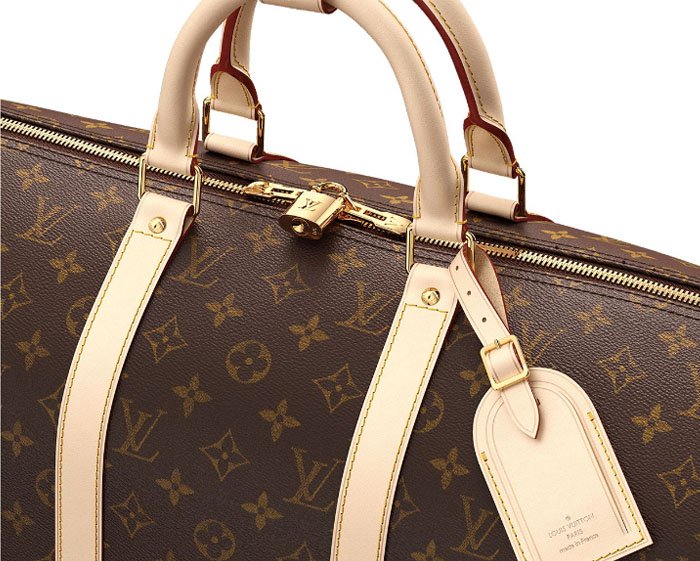 Vachetta leather oxidizes and darkens over time
If the strips remain a pale color over time, they are fake. The leather should darken into a beautiful golden shade as it ages.
5. Edge Glazing Should Be a Deep, Controlled Red
Many great things about Louis Vuitton monogram bags keep us preoccupied. One such detail, often overlooked by the casual observer but cherished by connoisseurs, is the red trim or edge dye that accents the Vachetta leather.
This trim, sometimes called “glazing,” is a testament to the brand’s attention to detail. The subtle red edge provides a sharp contrast to the pale Vachetta leather, enhancing its visual appeal.
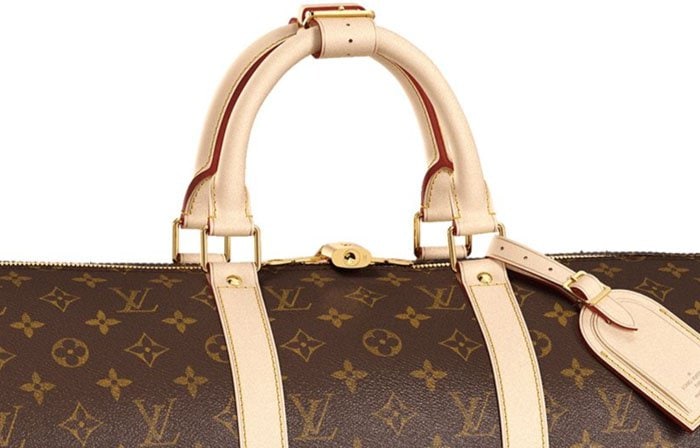 Identify fake Louis Vuitton bags by studying the shade of the trim
Beyond aesthetics, the glazing serves a practical purpose. It helps seal the edges of the leather, protecting them from wear and potential damage caused by moisture or dirt.
Over the years, this red glazing has also become an important marker of authenticity. Replicas or counterfeit bags might get this detail wrong – either by using an incorrect shade of red, applying it messily, or neglecting it altogether.
Just like the Vachetta leather itself, which develops a beautiful patina over time, the red glazing can change slightly as the bag ages, adding to each piece’s individual character.
6. Check for a Date Code or RFID Chip
Louis Vuitton phased out date codes in March 2021, replacing them with discreet RFID microchips embedded inside its handbags and small leather goods.
For pieces produced after this shift, you won’t find the traditional stamped code—authentication instead relies on scanning the internal chip, typically via specialized tools used by professionals and resale platforms.
Earlier designs, however, feature embossed date codes on interior leather tabs, indicating the item’s place and period of manufacture.
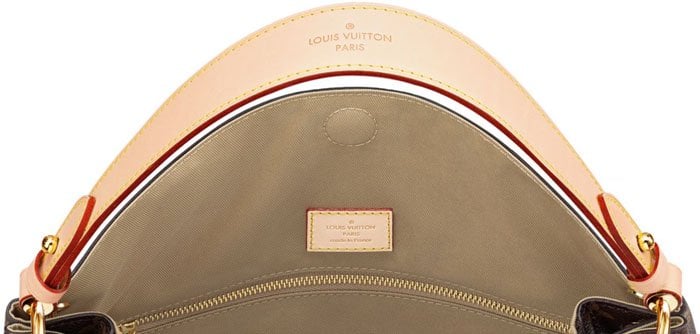 The Louis Vuitton logo should be crisp and clear
If you are looking for a Louis Vuitton bag made before March 2021, you must check for the date code. The date code can be found on a leather tab inside the bag. If the bag does not have a date code, it is likely a counterfeit.
7. Packaging Details Reveal Authenticity
Counterfeiters often get lazy when it comes to details. Knowing the history of Louis Vuitton dust bags and boxes is an excellent way to spot counterfeit products.
Dustbags before 2004 are made of beige flannel with the LV logo and brown drawstrings. Some older bags may have blue drawstrings, and some have felt-like material with jagged cut edges.
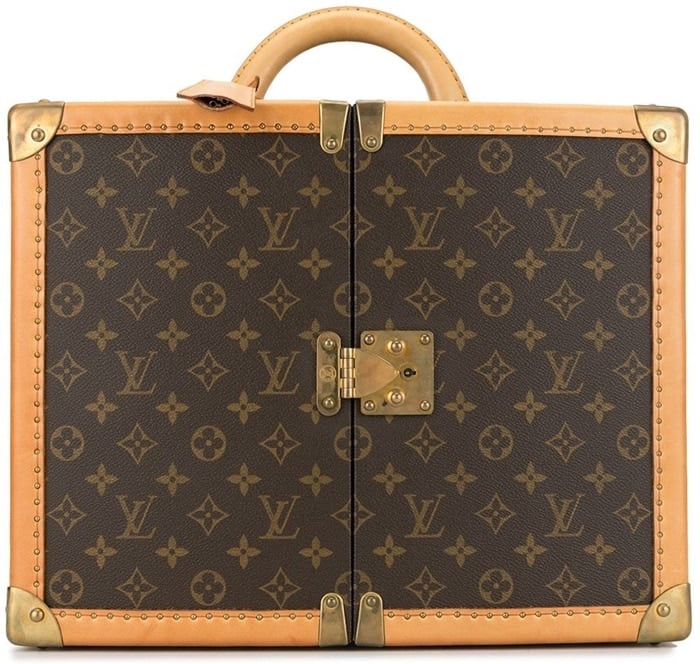 This brown leather trunk case from Louis Vuitton features a round top handle, a push-lock fastening, an all-over logo print, gold-tone hardware, a hanging key fob, an internal mirror, internal drawers, two removable logo-print bags, and two detachable shoulder straps
From 2004 to 2016, the beige dust bag was made of flannel or linen. A perfectly symmetrical and centered LV logo is printed in brown on it. A small white tag saying where the bag was made can be found inside.
In 2016, Louis Vuitton revamped their packaging. All their boxes are orange with navy blue text. The dust bags followed suit, turning into a cream color with navy blue writing.
8. Trust the Smell—and the Price
This one takes some time to practice. It’s good to know what authentic leather smells like to differentiate it from synthetic ones. Also, if the bag reeks of chemicals, you might reconsider purchasing it.
If you have a bag that retails for $1,000 and is being sold to you at $100, there is much reason to be wary. Research the original retail price online before considering a purchase.
Louis Vuitton also lists the retailers where their bags can be purchased. The brand also limits online resellers, so be careful when purchasing bags online.
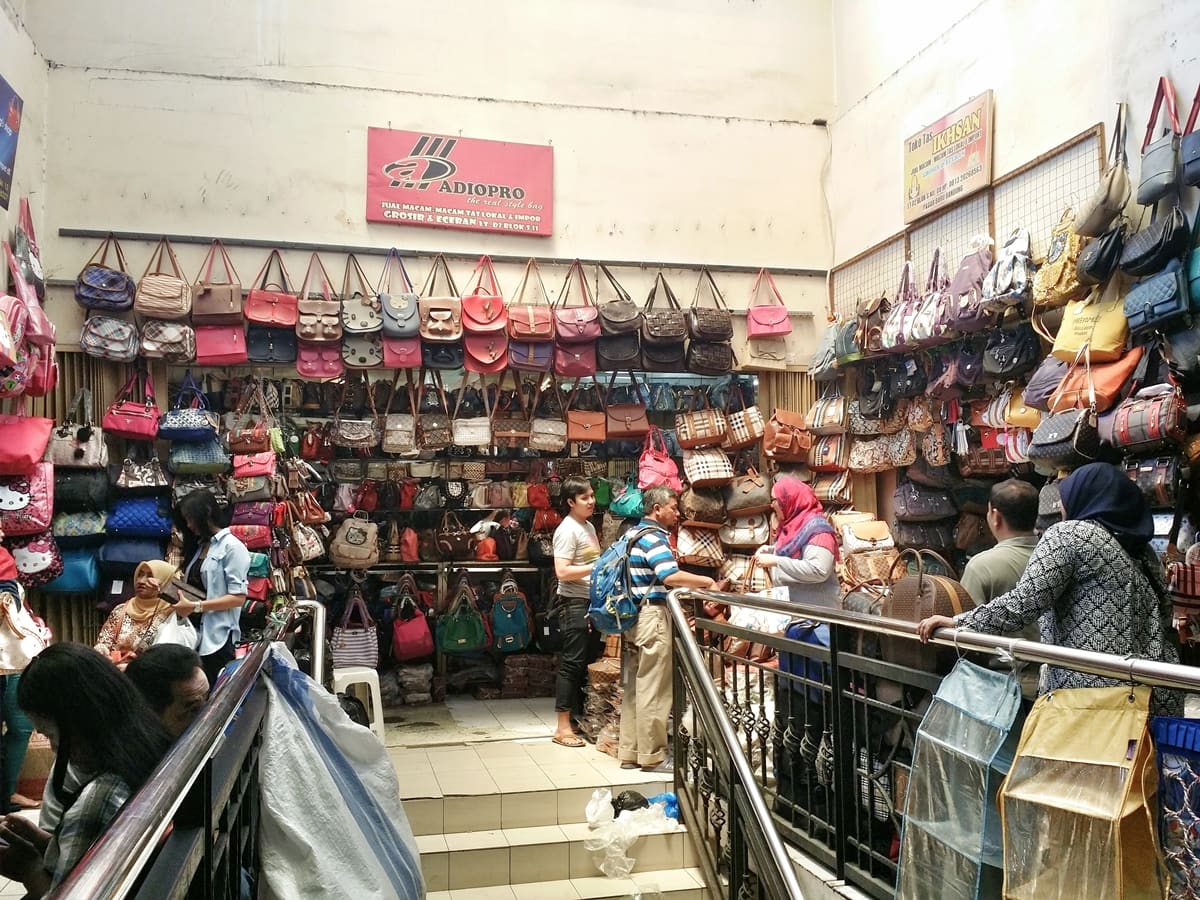 Large collection of fake Louis Vuitton handbags and other counterfeit designer purses sold in Bandung, Indonesia (Credit: Ahmad Faizal / Shutterstock)
Louis Vuitton Authentication: From Date Codes to RFID Chips
Louis Vuitton bags don’t use traditional serial numbers. Since March 2021, the house has replaced stamped date codes with discreet RFID microchips embedded inside its handbags and small leather goods.
While this technology adds a more advanced layer of authentication, it isn’t entirely foolproof—counterfeiters have been known to mimic scannable tags that lead to convincing but unofficial sites.
In practice, the most reliable authentication still comes down to craftsmanship: precise stitching, balanced monograms, and high-quality materials should always align with any digital verification.
Why Are Louis Vuitton Bags So Expensive?
One reason is the high manufacturing cost. The luxury brand produces handbags in workshops in France, Spain, and the United States and does not outsource manufacturing to lower-cost locations such as India and China.
Some leather products are produced in other European countries, such as Switzerland and Germany. Louis Vuitton shoes are primarily made in Italy.
In 2019, Louis Vuitton opened a 100,000-square-foot factory in Johnson County, Texas, its third factory in the United States. Purses and bags made in the United States are stamped with “Made in the USA” tags.
Since Louis Vuitton bags are not made in China, handbags and purses with “Made in China” tags are fake.
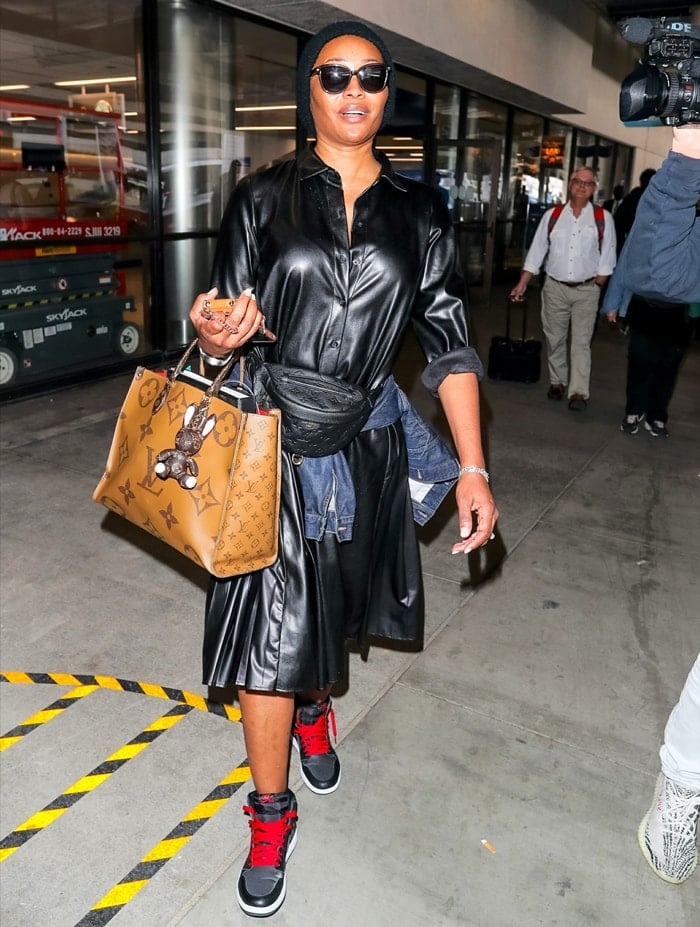 Cynthia Bailey shows off her large Louis Vuitton tote at LAX on March 5, 2020 (Credit: WENN)
In addition, the company spends billions of dollars every year on marketing. According to Reuters, Louis Vuitton spent 5.6 billion euros ($6.3 billion) on marketing in 2018, reaching 12% of group revenues.
Does Louis Vuitton Ever Go on Sale?
No, Louis Vuitton does not have sales. They never discount their products, not even during the holiday season.
This is because Louis Vuitton wants to maintain its image as a luxury brand. They want their products to be seen as exclusive and desirable, and discounting them would go against that image.
Why Does Louis Vuitton Destroy Unsold Bags?
For years, luxury houses like Louis Vuitton were rumored to destroy unsold inventory to preserve exclusivity and prevent excess stock from diluting the brand’s image.
The logic was simple: limited availability sustains desirability, while keeping unsold goods out of secondary markets protects both pricing and perception.
Today, that practice has largely been phased out. Under France’s Anti-Waste for a Circular Economy law—now influencing broader EU standards—brands are prohibited from destroying unsold non-food items, including clothing and leather goods.
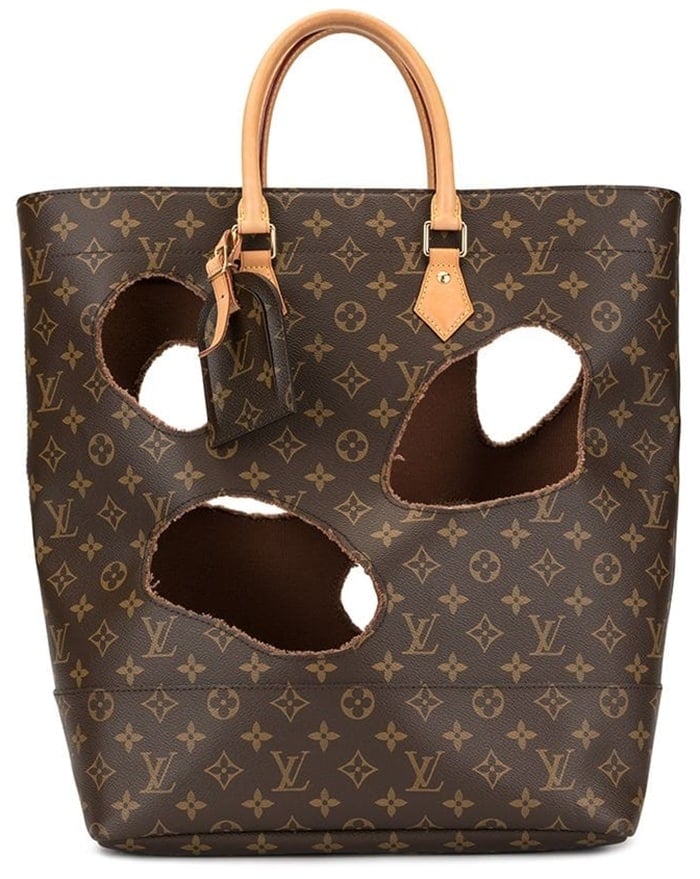 This dark brown and beige leather tote from Louis Vuitton features a monogram pattern, gold-tone hardware, round top handles, an internal logo patch, a hanging luggage tag, a drawstring closure, and a removable lining
In response, Louis Vuitton and its peers have shifted toward more sustainable strategies. Unsold pieces are typically repurposed, recycled, or quietly redistributed through internal channels, rather than discarded.
While the goal of preserving exclusivity remains, the approach has evolved—balancing luxury’s traditional scarcity model with growing expectations around sustainability and responsible production.
Common Louis Vuitton Authentication Myths
1. “The leather will never cut off at the LV logo.”
Some have claimed that pieces of leather will usually not cut off at the LV logo, but that is not necessarily true. For smaller bags, the logos are cut off at the edge.
One thing you can check, however, is whether all the logos are cut off at the same point. This means that the pattern is symmetrical.
2. “Louis Vuitton does not invert their logo.”
Again, this is not true. For models that use a single continuous leather piece, such as the Keepall, one side will have inverted logos.
Louis Vuitton is continually coming up with designs beyond the classics, so it’s good to know their bags well. A great way to familiarize yourself is to study their photos online.
If you’re in doubt about your purchase, you can call Louis Vuitton for help authenticating your product.
Celebrity Fans of Louis Vuitton Bags
Some celebrities who go gaga over Louis Vuitton include Selena Gomez, Kim Kardashian, Taylor Swift, Rihanna, and Miranda Kerr.
Check out more celebrities who love their LVs below:
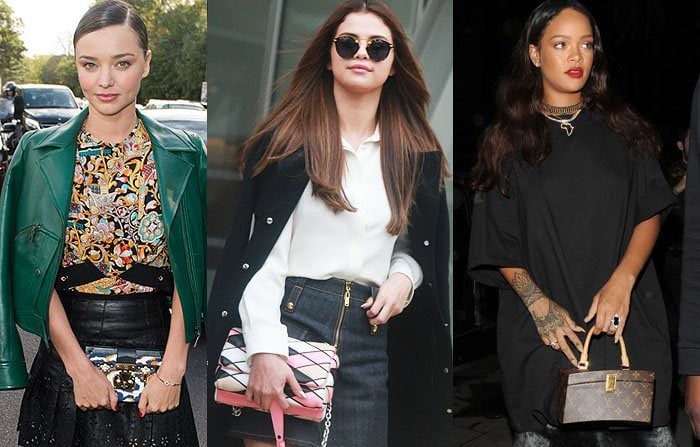 Miranda Kerr, Selena Gomez, and Rihanna love their Louis Vuitton purses (Credit: WENN)
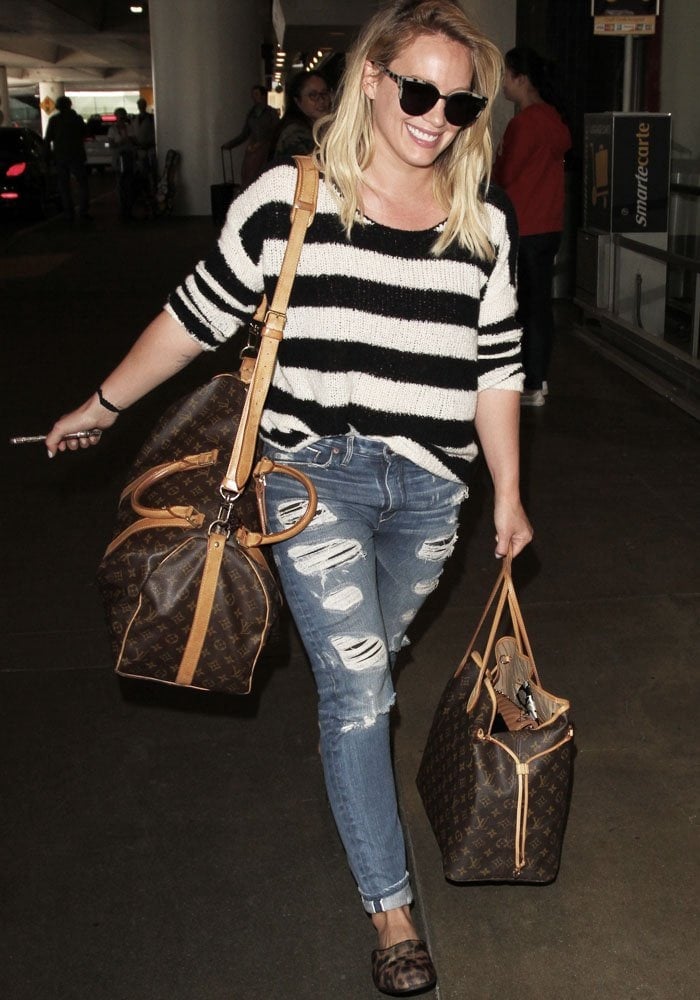 Hilary Duff gleefully strolls through the Los Angeles Airport (LAX) with her two-piece Louis Vuitton luggage (Credit: WENN)
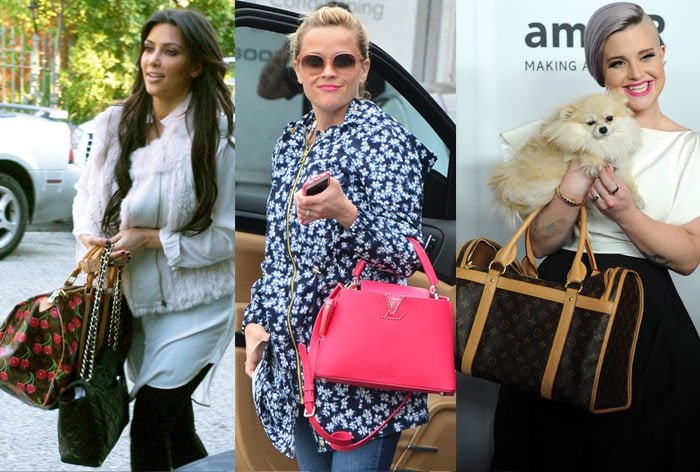 Cherries, pinks, and furry things: Kim Kardashian, Reese Witherspoon, and Kelly Osbourne prefer their Louis Vuitton with a dash of cuteness (Credit: WENN)
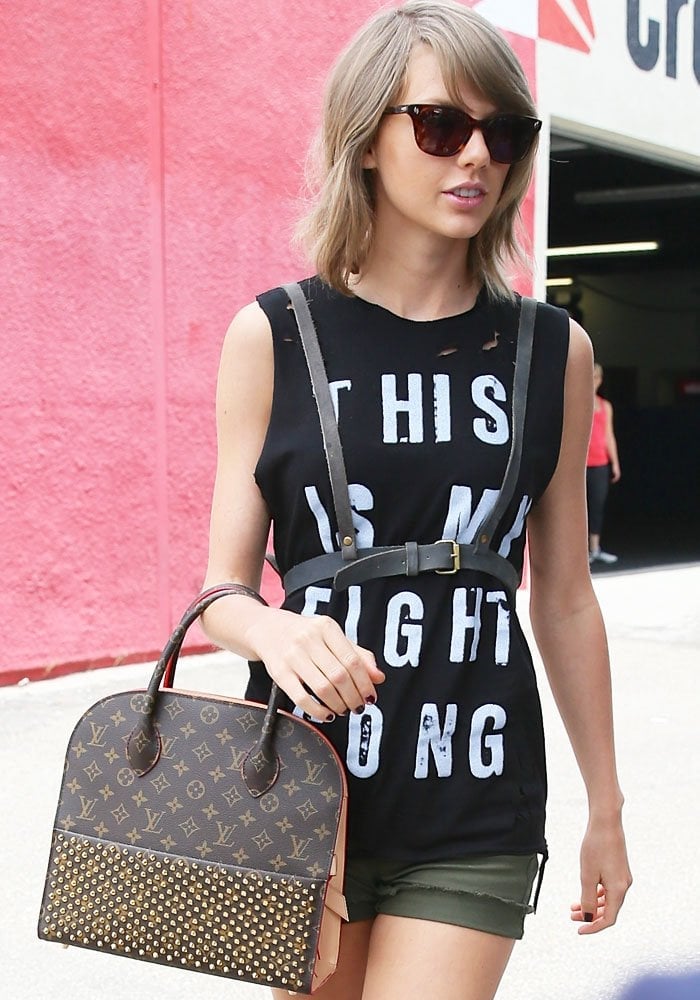 Taylor Swift dresses up her casual outfit with a Louis Vuitton x Christian Louboutin “Shopping Bag” (Credit: WENN)
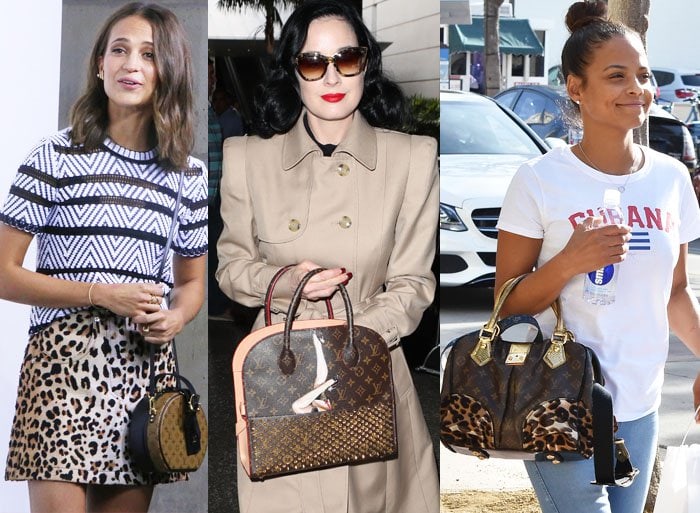 Alicia Vikander, Dita Von Teese, and Christina Milian pick out variations of the infamous LV monogram (Credit: WENN)
Explore More Designer Bag Authentication & Fashion Insights
From signature hardware to stitching precision, the details that define an authentic Louis Vuitton bag often echo across other luxury houses.
If you’re refining your eye for craftsmanship, these guides break down how to spot the real thing—while tracing the intersection of iconic handbags and shoes in modern fashion.
👜 Explore Designer Bag Authentication & Fashion Moments:
- ✨ The ultimate guide to spotting fake designer handbags breaks down material quality, stitching precision, and brand-specific details that define true luxury.
- 👠 Louis Vuitton shoes and how to spot fakes connects handbag craftsmanship to footwear—highlighting how construction, branding, and materials translate across categories.
- 👜 How to tell if a Mulberry bag is real focuses on signature hardware, embossed logos, and leather quality—key markers of authenticity.
- 💼 Coach bag authentication guide shows how weight, stitching consistency, and logo placement reveal whether a piece is genuine.
- 🖤 How to spot fake Marc Jacobs handbags highlights interior branding, zipper construction, and dust bag details that distinguish authentic designs.
- ✨ Fendi authentication guide for bags, belts, and shoes explores serial numbers, RFID tags, and craftsmanship across accessories.