
From its humble beginnings as a Massachusetts rubber shoe company specializing in galoshes in the early 1900s, Converse has grown into one of the world’s most iconic sneaker brands, with factories around the world.
Converse’s most recognizable creation is the Chuck Taylor All Star, first introduced in 1917 as a basketball shoe. More than a century later, the design has transcended its sporty roots to become a global fashion icon—a sneaker that bridges generations, trends, and cultures.
👟 Jump to a Section:
Affectionately known as “Chucks,” “Chuck Taylors,” “Cons,” or simply “All Stars,” the canvas-and-rubber classic remains one of the best-selling and most instantly recognizable sneakers of all time—a wardrobe staple spotted on everyone from athletes to A-list celebrities.
Celebrities Wearing Converse Chuck Taylors: From Street Style to the Red Carpet
Chuck Taylor’s versatility resonates with individuals from diverse backgrounds, spanning everyday people to A-list celebrities and global fashion icons. It pairs with just about everything in your closet, whether casual or classy.
 Kaia Gerber teams her black Converse All Star high tops with an orange blazer, jeans, and baseball cap while out in New York City on September 5, 2019 (Credit: WENN / Instar)
👟 Explore More Converse Chuck Taylor Style Moments:
- ❤️ Emma Roberts proves red Converse Chuck Taylors can go from denim to leopard print, bringing a playful pop of color to her petite off-duty style.
- ✨ Jessica Alba makes metallic Converse low-tops feel effortless, pairing them with ripped American Eagle jeans for a relaxed Beverly Hills errand look.
- 🎬 Jennifer Lopez gives white Chuck Taylors an undercover-chic twist while filming Shades of Blue in cuffed jeans, a blazer, and classic low-tops.
- 🖤 Kylie Jenner turns Converse into streetwear-luxe styling, moving between classic black high-tops and Comme des Garçons PLAY collabs.
- ⚡ Amber Rose shows how black high-top Converse sharpen a leggings look, balancing comfort, curves, and biker-jacket attitude.
- 🎨 Bella Thorne channels punky Hollywood energy in black Converse high-tops, styling them with pink hair, mesh, fishnets, and lace-up details.
- 🍂 Blake Lively brightens fall layering with pastel yellow Converse high-tops, turning the classic sneaker into a cheerful city-style anchor.
- ⏳ See why Converse Chuck Taylor high-tops remain one of fashion’s defining retro sneakers, standing alongside timeless silhouettes like the Nike Cortez.
 Millie Bobby Brown wears a pink sequined Calvin Klein by Appointment dress with white Converse Chuck Taylor All Star sneakers at the 24th SAG Awards in Los Angeles on January 21, 2018 (Credit: WENN / Adriana M. Barraza)
 Off-duty cool: Katie Holmes pairs a light-wash denim jacket and jeans with classic white Chuck Taylor All Star high-tops, April 27, 2017 (Credit: WENN / TNYF)
Unfortunately, along with popularity comes imitation and counterfeit goods. And with the high demand and popularity of Converse All Star, it has become a frequent target of counterfeiting.
How to Spot Fake Converse Chuck Taylors and Buy Authentic Pairs
While some shoes are easily recognizable as fake, others are made by skilled counterfeiters and are convincing knockoffs.
🔍 Jump to an Authentication Check:
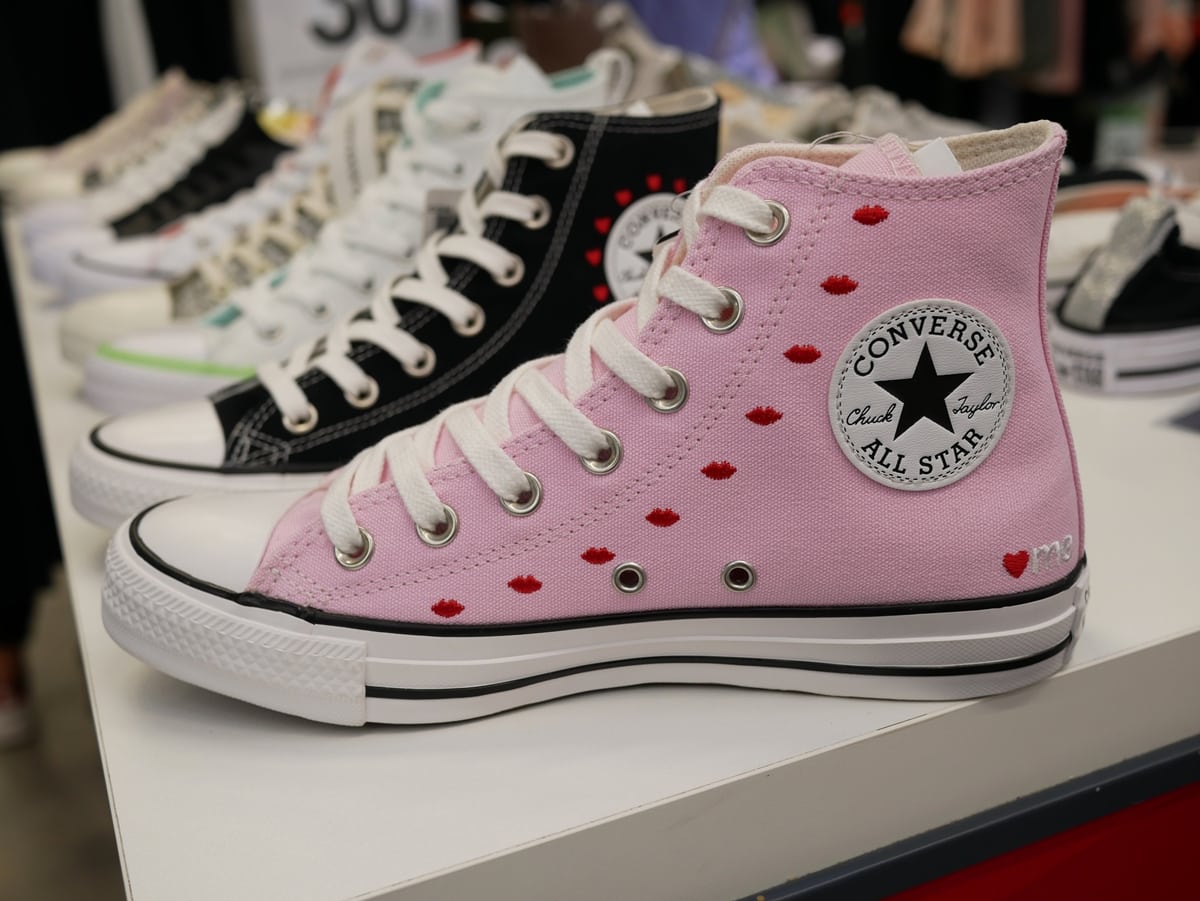 The pink Converse Chuck Taylor All Star high-top, featuring embroidered red hearts — a playful twist on the brand’s most iconic silhouette (Credit: Chanonnat Srisura / Shutterstock)
Before spending money on a new pair of Converse Chuck Taylors, learn how to spot a fake. Below are the easiest ways to tell whether your Chucks are authentic.
1. Verify the Retailer: Buy Converse Only From Authorized Sellers
The easiest way to avoid getting scammed is to buy from reputable retailers. Converse offers a store locator on its official website to help shoppers find authorized sellers nearby.
When shopping online, take a close look at seller reviews and product photos, as counterfeiters often reuse or heavily edit images to make fakes appear authentic. Sticking with established retailers such as Amazon and Nordstrom is the safest bet.
You can also shop for Converse on eBay, but be sure to read our eBay shopping guide before making a purchase.
2. Compare Prices: Extremely Cheap Converse Are Usually Fake
The original Converse Chuck Taylors are typically sold for $55 for low-tops and $60 for high-tops. Anything cheaper than that should set off the alarm bell unless it is stated that they are running a promo or the shoes are discounted.
Converse stores and authorized retailers usually offer the best marked-down prices and clearance sales, with discounts of up to 75% off the original price. You can also find discounted Converse shoes on sale at Nordstrom Rack.
3. Inspect the Box and Packaging for Authentic Converse Branding
All fresh, original Converse All Star shoes come in a properly labeled Converse box. It’s a black box with brown stripes around the bottom. Prints of the company’s wordmark logo should be seen on the top, front, and right sides of the lid.
 Authentic black Converse Chuck Taylor All Star low-top sneakers displayed with retail packaging featuring the brand’s iconic logo (Credit: Mas Yudhi / Shutterstock)
The side of the box should also display information about the shoes, including size, style, and color, along with a barcode and a QR (Quick Response) code. There should also be a print of the All Star shoe sole on the bottom part of the box.
The package also has tissue wrapping and, at times, stuffing paper inside the shoes.
4. Examine the Converse Logo Patch and Placement
Authentic high-top Chuck Taylors feature the round logo patch on the inner ankle — not the outer side.
This placement isn’t arbitrary; it was originally designed to provide extra protection and support for athletes’ ankles. Any pair with the patch on the outside is a clear counterfeit.
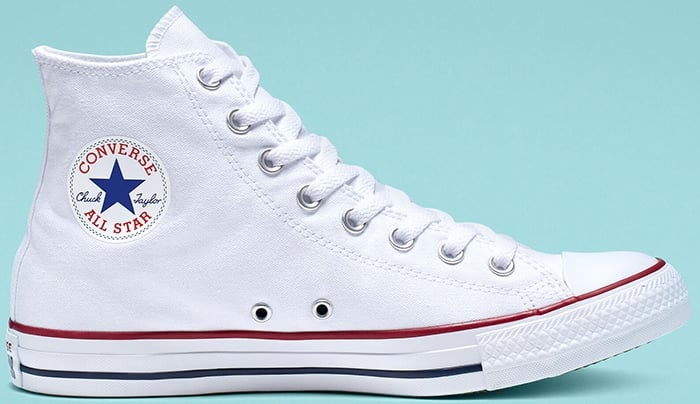 Authentic Converse Chuck Taylor All Star high-top sneaker featuring the classic navy star ankle patch on white canvas
The signature Converse patch features a crisp white circle stamped in rubber, framed by bold red “CONVERSE ALL STAR” lettering and finished with Chuck Taylor’s navy-blue script and a five-pointed star — a timeless emblem recognized across generations.
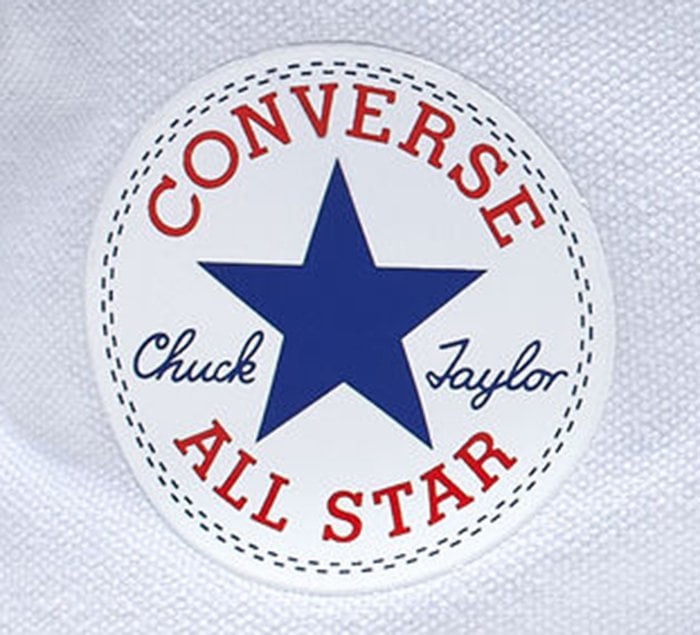 “CONVERSE ALL STAR” in red uppercase letters and “Chuck Taylor” signature in navy blue script with a five-pointed star
Note that this red, white, and blue badge is not used on monochromatic Chuck versions. Instead, monochrome pairs feature the logo in 3D and the same color as the canvas upper.
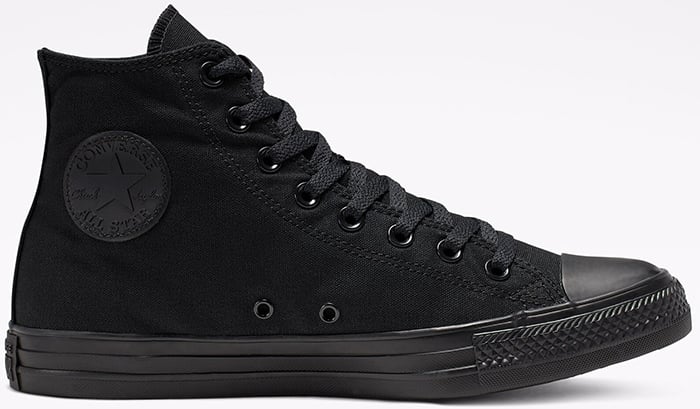 Black Converse Chuck Taylor All Star high-top featuring a tonal 3D logo patch and matte black hardware
On low-top All Star sneakers, the Converse All Star logo patch is placed on the tongue.
It is a thin, rectangular canvas fabric, neatly sewn onto the tongue, that reads “CONVERSE” in white against a red background and “ALL STAR” in navy blue, with the star logo separating the two words.
This particular color combination of the badge is only used on the white and natural ivory color versions of the low-top All Star.
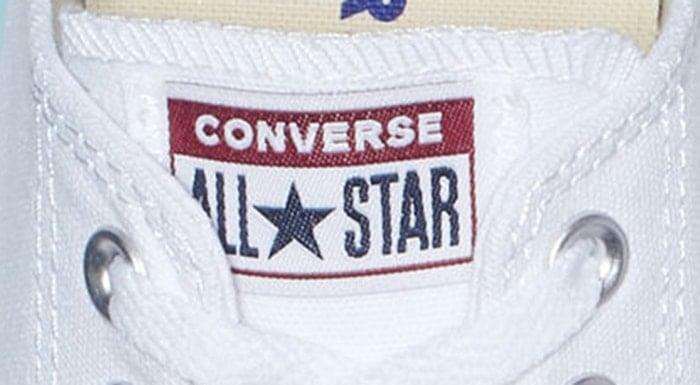 Low-top Converse Chuck Taylor All Star tongue logo patch featuring the classic red, white, and navy color scheme
The two-tone versions of the All Star sneakers feature the rectangular logo patch in black and white, while the monochromatic pairs have the logo in the same color as the shoes.
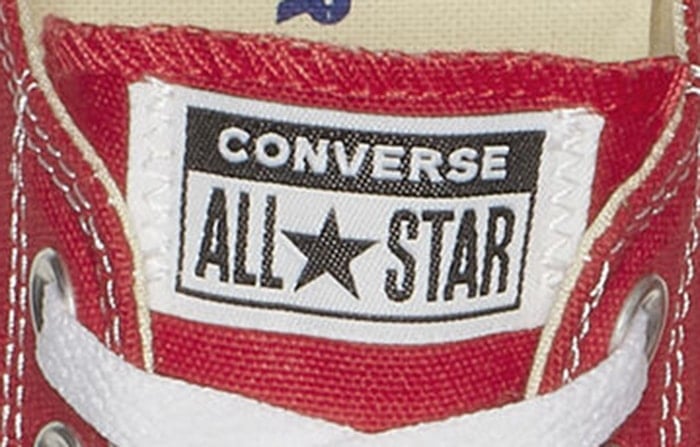 Red low-top Converse Chuck Taylor All Star featuring a black-and-white tongue logo patch with star detail
5. Check the Heel Patch for Correct Converse Branding
Every Converse Chuck Taylor sneaker has a rubber patch on the heel. This rectangular patch features the same branding as the fabric logo patch on the low-top All Stars.
It is labeled with a small “CONVERSE” lettering on top and “ALL STAR” with a trademark star logo in between on the bottom.
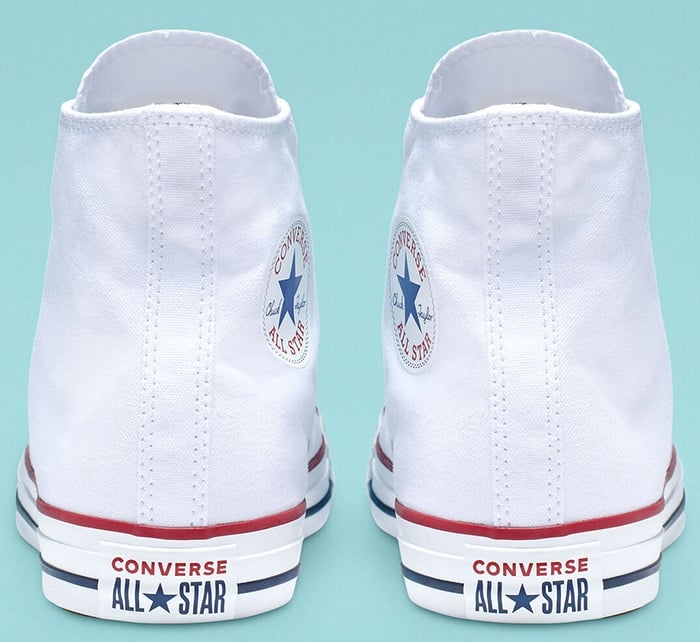 Authentic white Converse Chuck Taylor All Star sneakers featuring the signature rubber heel patch with red and navy branding
The heel patch’s font color shifts to match the shoe’s design, maintaining a clean, tonal balance.
Authentic pairs feature crisp, straight lettering and a perfectly molded patch that follows the curve of the midsole. Any uneven printing or traces of excess glue along the edges are telltale signs of a counterfeit.
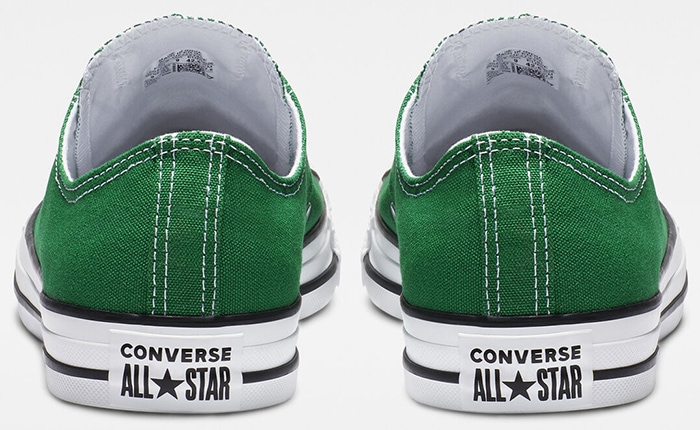 Authentic green Converse Chuck Taylor All Star low-top sneakers featuring the signature white rubber heel patch with black branding
For monochrome versions, the back logos are in 3D.
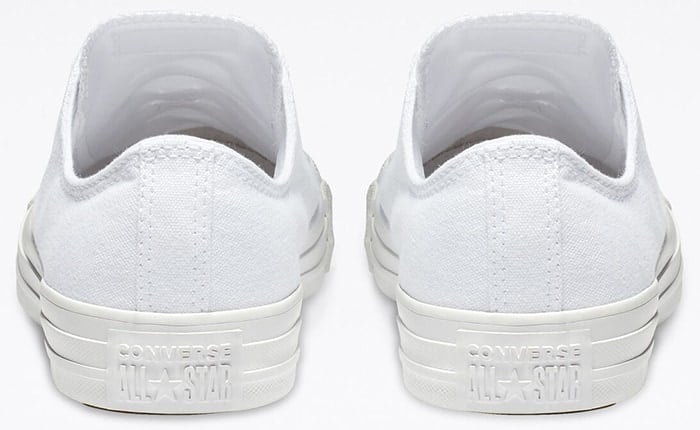 White monochrome Converse Chuck Taylor All Star low-top featuring a tonal 3D heel patch and matching white midsole
6. Inspect the Inner Tongue Label, QR Code, and Stitching
Whether low- or high-top, the tongue should have a small patch on the inside. This patch contains information about the shoe’s country of manufacture, model number, size, material, QR code, and a unique serial number for each shoe.
Also, notice the zigzagged stitching around the border of the tongue. If it’s done loosely or crookedly, chances are it’s fake.
 Authentic Converse sneaker tongue featuring the inside patch with product details, size, and QR code
7. Evaluate the Rubber Toe Caps and Toe Guards
Converse shoes’ distinctive white toe caps must be made of solid rubber material. It should also be positioned straight and parallel to the bottom laces.
Fake Chucks usually have bigger toe cap sizes than genuine All Star shoes. Monochromatic Chuck Taylors, on the other hand, have toe caps that match the canvas.
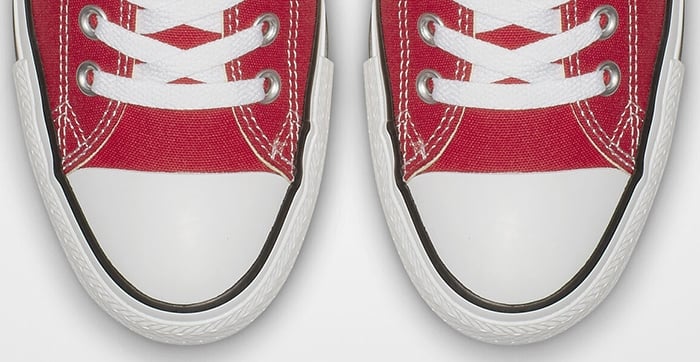 Authentic Converse Chuck Taylor All Star sneakers featuring signature solid white rubber toe caps and clean black piping
The rubber toe guards must be solid. It should have diagonal lines at the top, a crisscrossed diamond pattern at the middle, and a smaller diamond pattern at the bottom.
This should be neatly trimmed and bonded to the shoe, with no excess glue anywhere.
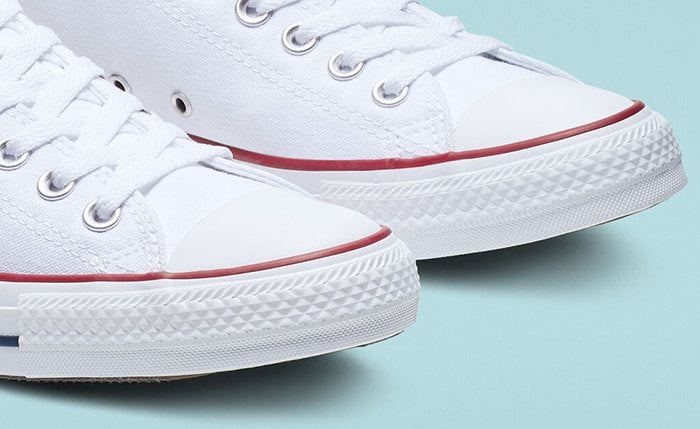 Authentic white Converse Chuck Taylor All Star sneakers featuring the signature solid rubber toe caps and textured diamond toe guards
8. Check the Insoles and Outsole Pattern for Authenticity
The insoles of Converse All-Star shoes should match the color of the canvas lining.
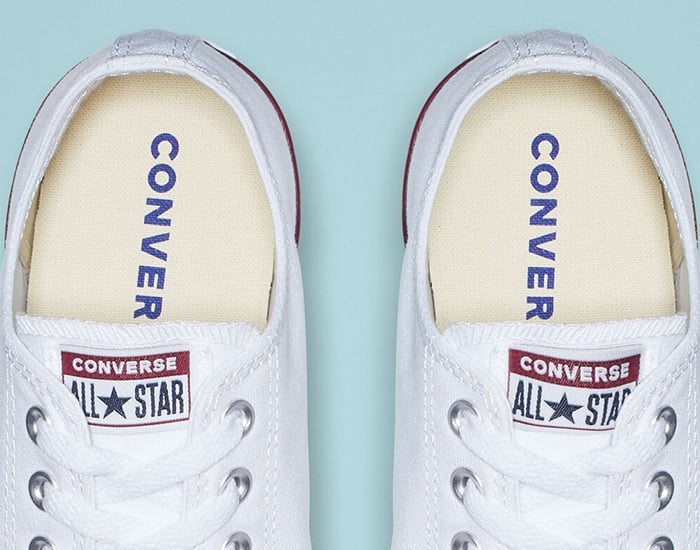 The inner soles of authentic white Converse Chuck Taylor All Star sneakers, featuring the signature navy “CONVERSE” print
They should also have the “CONVERSE” wordmark printed in navy blue capital letters, except for the black monochrome model, which features the insole inscription in white.
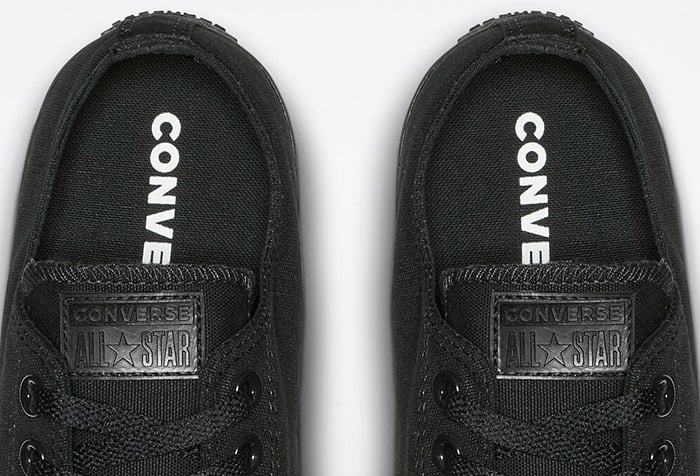 Authentic black monochrome Converse Chuck Taylor All Star sneakers featuring tonal “CONVERSE” insoles and matching black logo patches
Converse All Star sneakers boast a unique waffle-patterned sole. It resembles a combination of various patterns, including diamond shapes, diagonal lines, crisscrossed, and horizontal lines.
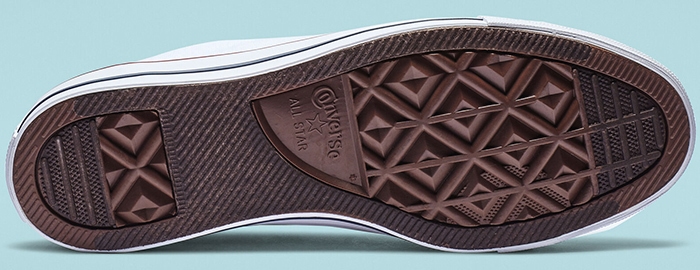 Authentic Converse Chuck Taylor All Star outsole featuring the signature brown waffle-pattern sole with diamond and line detailing
Original Converse All Star sneakers also have a tiny part on the outsole that shows the Converse logo. You should see the “CONVERSE ALL STAR” lettering and five-pointed star insignia.
A small hexagonal star should also be in the corner, which is usually missing in counterfeits.
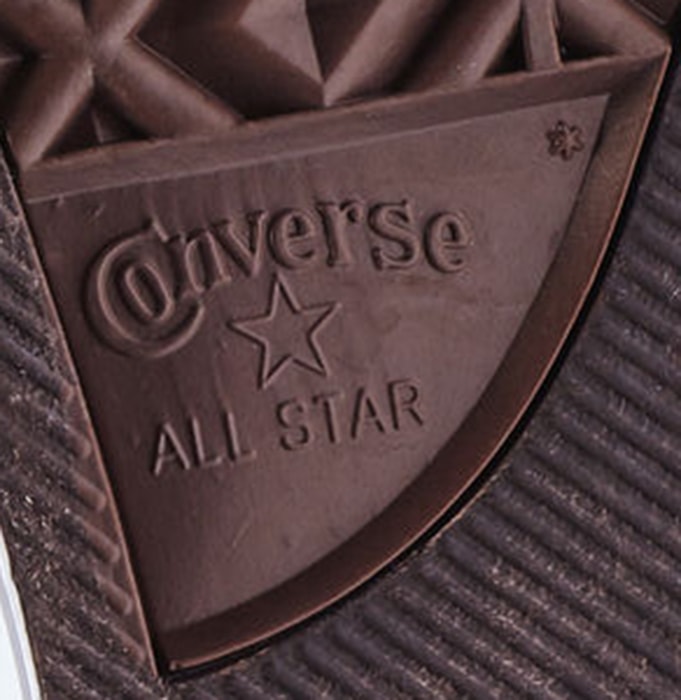 Close-up of the Converse Chuck Taylor All Star outsole showing the embossed “CONVERSE ALL STAR” logo and signature star detail
9. Inspect Stitching, Rubber Piping, and Overall Craftsmanship
All Authentic Converse sneakers feature sturdy stitching on the upper. The stitching is usually white, except for the monochrome and ivory versions, which feature tonal stitching.
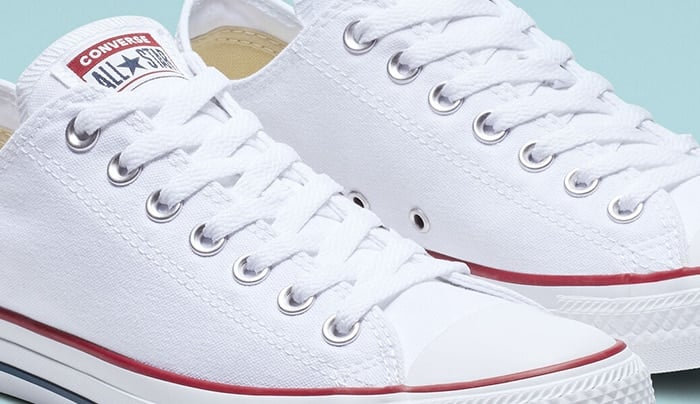 Authentic white Converse Chuck Taylor All Star low-tops featuring sturdy double stitching on the canvas upper and polished metal eyelets
The paint on the rubber piping should also be straight and solid. Fake ones are usually faded and uneven.
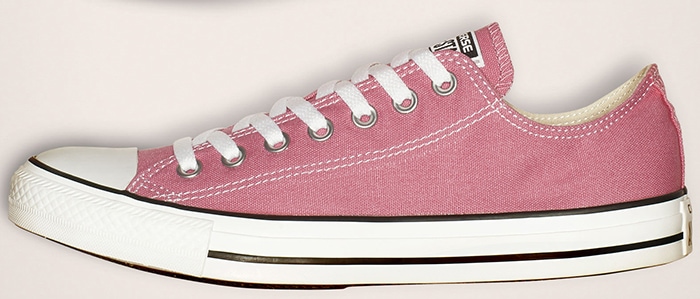 Authentic pink Converse Chuck Taylor All Star low-top featuring straight, solid paint along the rubber piping and classic white midsole
10. Examine the Eyelets: Authentic Converse Use Matte Hardware
If the eyelets, including the medial ones, are polished, they are definitely knockoffs. Authentic Converse All Stars have matte eyelets. They are also neatly aligned on the upper and don’t come off easily.
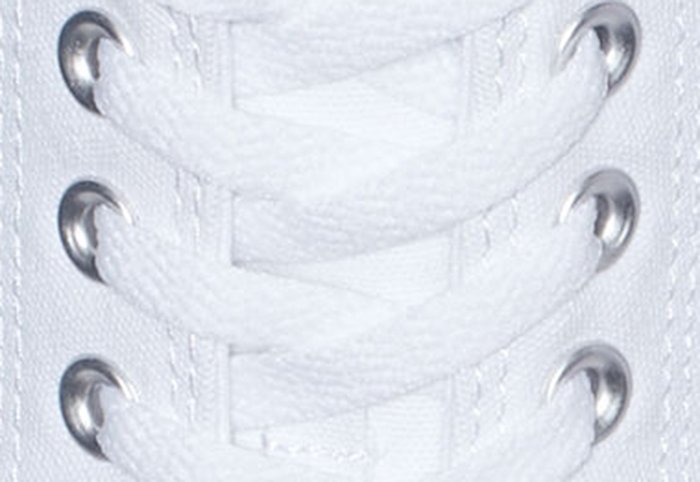 Authentic Converse Chuck Taylor All Star sneakers featuring neatly aligned matte metal eyelets and clean stitching
Converse Today: How Nike Revived the Iconic Sneaker Brand
Acquired by Nike in 2003 for $305 million, Converse is now a subsidiary of the American multinational corporation.
 A curated display of the Sage Elsesser x Converse One Star Pro collection at the New York City launch event, February 10, 2017 (Credit: Derrick Salters / WENN)
Converse offers several main product lines, including the iconic Chuck Taylor All Star, known for its classic canvas-and-leather sneakers.
The Jack Purcell line features sneakers with a distinctive smile design on the toe cap. Converse One Star offers sneakers with a one-star logo, often with a retro-inspired look.
The CONS line is designed for athletes and skateboarders, with a focus on durability and performance. Chuck 70 offers a modern take on the classic Chuck Taylor All Star sneakers, often featuring premium materials.
Converse also allows customers to customize Chuck Taylor All Star sneakers and frequently collaborates with designers and brands to create limited-edition collections, resulting in unique, sought-after designs.
As of June 2026, some of the highest resale prices aren’t vintage Chuck Taylors but rather modern, fashion-forward Converse collaborations and platform silhouettes. According to StockX data, the Converse Run Star Hike Hi Triple Black Leather commands a premium of roughly 443%, with asking prices around $146. The Converse Pro Leather pgLang White—created in collaboration with Kendrick Lamar’s creative company pgLang—follows closely with a 428% premium and asks starting near $153.
Even more dramatic is the futuristic Converse Run Star Motion Platform “Lime Twist”, which has reached asking prices of approximately $465, representing a premium of about 385%. These figures highlight how limited-edition collaborations and bold platform designs have become some of the most sought-after Converse releases among collectors.
 Nike acquired Converse in 2003, bringing the iconic Chuck Taylor brand under the global sportswear giant’s umbrella
When Nike acquired Converse, the heritage sneaker brand was generating just over $200 million in annual sales. Two decades later, that figure has soared more than tenfold to $2.08 billion in 2024.
This growth can be attributed to several factors, including Nike’s global reach, marketing expertise, and supply chain efficiencies.
It’s worth noting that Nike’s overall revenue for 2024 was $51.1 billion, with Converse accounting for approximately 4% of that total.
Why Is Converse Called Converse? The Story Behind the Name
The company is named after its founder, Marquis Mills Converse, who established the Converse Rubber Shoe Company in February 1908 in Malden, Massachusetts, which specialized in galoshes.
Also known as dickersons, gumshoes, rubbers, or overshoes, it is a type of rubber boot that is slipped over shoes to keep them from getting muddy or wet.
Who Founded Converse and Why Was the Brand Created?
Marquis Mills Converse was an American entrepreneur who founded the Converse Rubber Shoe Company in 1908.
He was inspired to create rubber-soled shoes after he fell down the stairs while wearing slippery shoes. This incident led him to believe that there was a need for footwear with better traction.
Why Are Converse All Stars Called “Chucks”?
In 1923, a basketball player named Charles H. “Chuck” Taylor walked into Converse’s Chicago office complaining of sore feet. He was hired to improve an earlier version of the Converse All Stars, released in 1922 as one of the first basketball-specific shoes.
In recognition of his hard work, Taylor’s signature was added to the All Star patch on the classic, high-topped sneakers in 1932. Since then, they have become known as Chuck Taylor All Stars.
Charles Hollis “Chuck” Taylor worked as a salesman and ambassador for the brand until his death from a heart attack in Port Charlotte, Florida, on June 23, 1969. The design of the Chuck Taylor All Star has remained essentially unchanged since its introduction in the 1920s.
Keep Your Sneaker Game Strong: More YNS Reads
Love the story of Converse? Keep exploring the world of classic sneakers and fashion-forward kicks in these curated YNS features:
👟 More Must-Reads for Sneaker & Converse Enthusiasts on Your Next Shoes
- 🌟 From Ruby Slippers to Nike Cortez: The 15 Most Iconic Shoes in Movie History — why timeless silhouettes like Chucks still steal the scene.
- 👟 Women’s Retro Sneakers You Can Still Buy Today — the ultimate roundup of vintage-inspired kicks, including the Chuck Taylor.
- 📈 2026 Shoe Trends You Need to Know — from slim retro sneakers to satin sneakerinas.
- 🧥 Comprehensive Shoe Style Guide — YNS’s go-to glossary for every shoe trend and timeless design.
- 📚 How Chunky Sneakers Conquered the Fashion World — exploring how the streetwear era revived staples like the Chuck Taylor.